
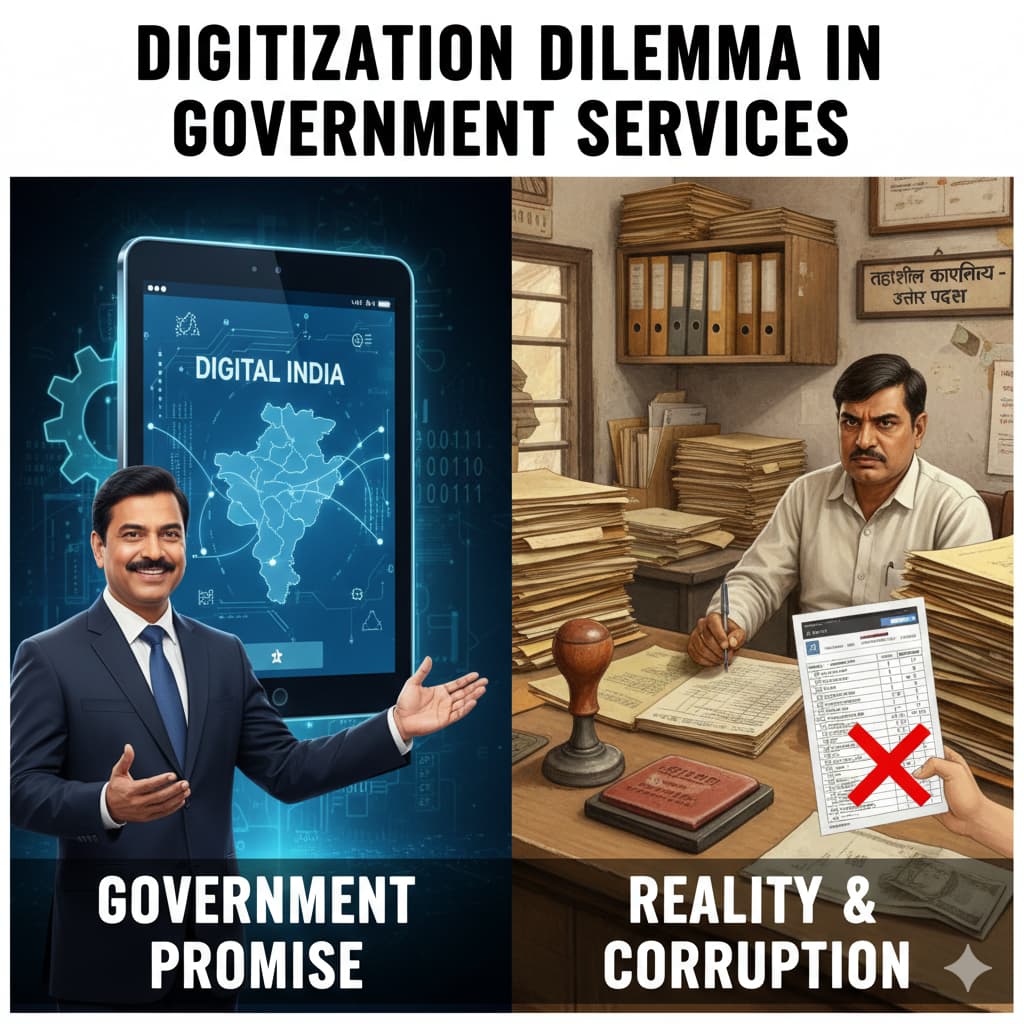
Digitization is being touted by the government and Political Masters in their claim of Digital India. However, there is no effective use of digital records uploaded by the government functionaries in Uttar Pradesh, which raises significant concerns about the efficacy of such initiatives.
Online revenue records, a significant result of digitization, are often not accepted by the tehsil itself, creating a paradox in the very implementation of these digital tools. This scenario is further complicated by the rampant corruption that permeates the working of the tehsils in Uttar Pradesh, leading to skepticism among the citizens.
As a result, many residents find themselves in a frustrating position, where they are expected to rely on digital records that hold little value in the face of bureaucratic inefficiencies. This undermines the intended benefits of digitization, which was supposed to streamline processes and enhance transparency, yet seems to falter due to deeply entrenched systemic issues.
Digitization Dilemma: The PM-KISAN Portal vs. Tehsil Verification
The promise of digital governance often clashes with ground-level bureaucracy, creating a significant gap between policy intentions and practical implementation. Digitization should help ease this tension by streamlining processes and enhancing accessibility for all citizens; however, a recent grievance filed with the Uttar Pradesh Chief Minister’s Secretariat brings to light a critical conflict in the Prime Minister’s Kisan Samman Nidhi (PM-KISAN) application process. This situation underscores the administrative value of online land records (Khatauni), which should ideally facilitate the verification of ownership claims and expedite the disbursement of benefits. Yet, the existing bureaucratic hurdles often complicate what should be a straightforward procedure, ultimately leaving farmers in a vulnerable position where their entitlements remain uncertain, disrupting their financial stability and undermining the very objectives of these digital initiatives.
Keshav Pratap Singh (Aadhaar No. 8224 3509 7042) from Mirzapur recently closed his application, which had been pending since October 31, 2024, with a report but without resolution, leaving him feeling frustrated and dissatisfied with the process. The applicant, Yogi M. P. Singh, noted that the Tehsildar, while handling the situation, instructed subordinates to “Authenticate revenue record,” indicating that there was a need for specific verification procedures to be followed, yet this step did not lead to the clarity or solution that Keshav was hoping for, as the lack of resolution continued to linger, affecting his trust in the administrative system.
The Clash of Systems due to faulty Digitization policy: Digital vs. Bureaucratic
The Government of Uttar Pradesh has successfully digitized land records through the Bhulekh UP portal, offering citizens easy access to their Khatauni. This system promotes transparency and simplifies documentation, showcasing the benefits of digitization.
However, the rejection based on the need for “authentication” creates a paradox:
- Online Portal’s Requirement: The PM-KISAN online application portal simply asks the applicant to upload the “Revenue Record” (Khatauni). It does not specify that it must be a stamped, physically certified copy. The applicant uploaded the document downloaded directly from the official UP government website.
- Tehsil’s Demand: The Tehsil’s requirement for a Lekhpal/Kanungo to “authenticate” the uploaded record suggests that the government’s own digital record is not trustworthy. Until physically verified against the manual records, it remains untrusted, thus undermining digitization efforts.
If the government itself provides the online Khatauni and farmers deem it insufficient for verification, they lose the utility of the entire digitization effort. This effectively forces them back into the loop of official harassment and delay.
Administrative Inquiry and Systemic Clarification regarding Digitization
The inquiry, filed under registration number GOVUP/E/2025/0117160, urges the state administration to address this systemic contradiction in digitization practices that has become increasingly apparent over recent years. This discrepancy not only hampers efficiency within government operations but also affects citizen engagement in vital processes. Shri Arvind Mohan (Joint Secretary) at the Chief Minister Secretariat is the recipient of this directive, as his position places him in a pivotal role to mediate between various departments and facilitate necessary reforms. He is expected to take appropriate action to ensure that these issues are rectified promptly. For further correspondence, Email: arvind.12574@gov.in, Contact No.: 0522-2226350 provide straightforward access for interested parties to share their concerns or suggestions, thereby fostering an atmosphere of transparency and collaboration within the administration.
The core questions put forth by the grievant are:
1. What is the Legal Value of the Online Khatauni?
The state must clarify whether the document downloaded from the Bhulekh UP portal has legal standing. Specifically, it is vital to determine if it is a valid and acceptable document for various government schemes, which are designed to assist citizens in accessing their rights and entitlements effectively. Alternatively, if all applicants must pay for and obtain a physically stamped certified copy before uploading it, this could create unnecessary barriers to access. Such a requirement may disproportionately affect lower-income applicants who may struggle to afford the fees involved in acquiring a certified copy. If the latter is true, then officials must immediately update the online portal and public guidelines to reflect this requirement, ensuring transparency and clarity for users. Additionally, these updates should align with the principles of digitization, aiming to simplify processes and enhance the accessibility of government services while embracing modern technology that facilitates easier access to essential documents for all citizens.
2. Applicant’s Authority vs. Official Duty
The authority to “authenticate” a revenue record rests solely with the Revenue Department (Lekhpal, Tehsildar, etc.) as they are specifically trained and designated to handle such sensitive financial information. The applicant has no legal right or means to perform this action independent of the approved channels within the department. This exclusivity is necessary to maintain the integrity and security of revenue records, which are critical to various administrative functions and decision-making processes. Therefore, the Tehsildar’s directive is an internal verification step that serves to ensure accuracy and compliance with regulations; however, the DDA incorrectly used this procedure. By doing so, it has led to undue delays and complications in the application process, effectively blocking an application based on an unstated or unclear public requirement. Such practices not only create confusion for applicants but also undermine the trust in the administrative system designed to support them.
Call for Action against officials not accepting online revenue records accessible due to Digitization
The prayer for action seeks not just resolution for Keshav Pratap Singh, but a systemic correction to improve digitization:
- Investigation: Investigate the specific administrative instruction issued by the Tehsildar (Chhanvey, Mirzapur) that led to the delay.
- Clear Directive: Issue a clear, public directive to all concerned departments (Deputy Director of Agriculture, SDM, Tehsildars) on the legally acceptable form of “Revenue Record” for PM-KISAN applications.
- Expedited Approval: Expedite the review and approval of the applicant’s file. This ensures timely benefit delivery, in the spirit of efficient public service.
This incident underscores the need for clear alignment between the government’s digital policy and its ground-level administrative procedures, which should work in tandem to ensure seamless operations. Effective communication between these layers of governance is crucial to prevent harassment and uphold trust in the governance system, as discrepancies can lead to confusion, inefficiencies, and a lack of accountability. By establishing robust protocols that facilitate cooperation and understanding, the government can create a more transparent and responsive administrative framework that not only addresses the concerns of citizens but also reinforces their confidence in public institutions, ultimately fostering a healthier and more participatory democratic process.
S.D.M. Sadar may entertain the appeal of Anil Kumar Maurya
S.D.M. Sadar may entertain the appeal of Ashok Kumar Maurya against Arun Kumar Giri Designation Tehsildar who denied information arbitrarily


Facing a similar challenge? Share the details in the box below, and our team of experts will do their best to help.