
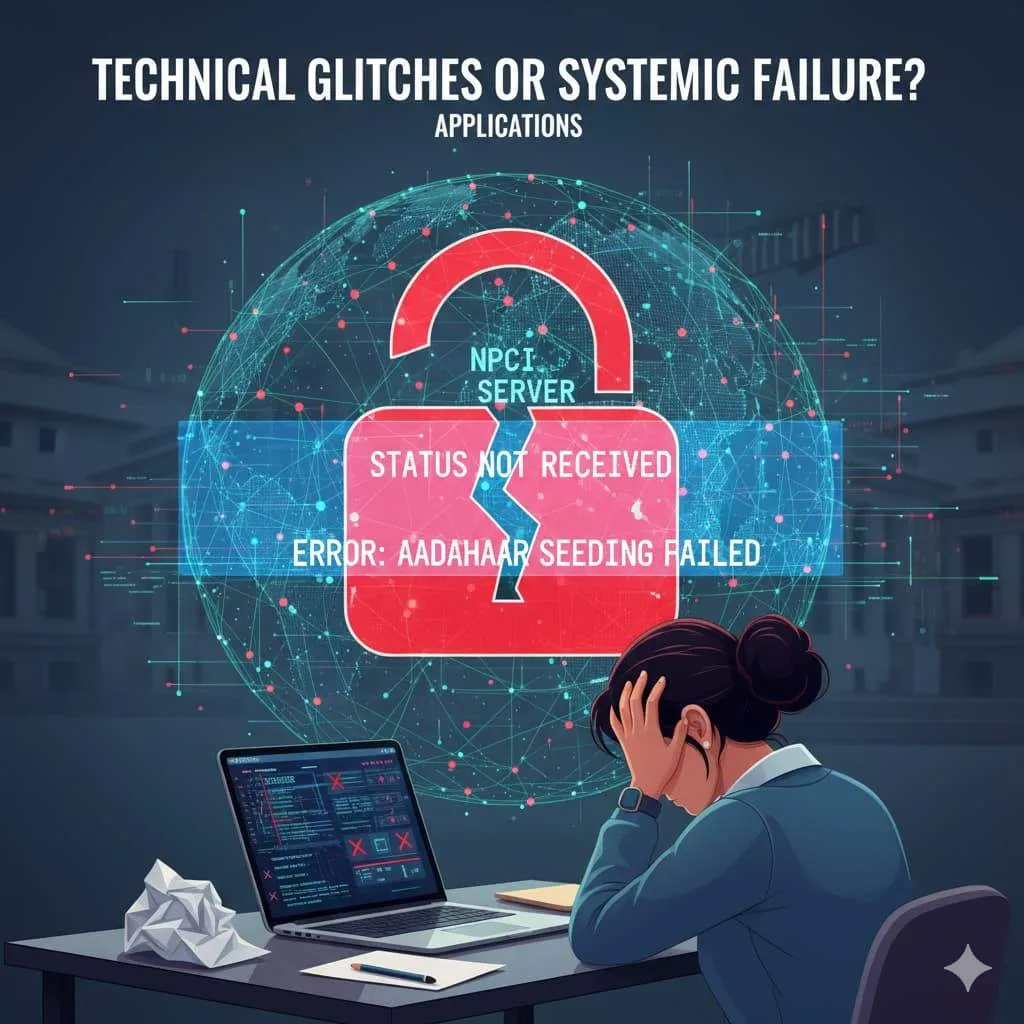
Technical Glitches or Systemic Failure? A Scholarship Applicant’s Struggle with NPCI Server Status
The government scholarship process confronts applicants with bureaucratic challenges that can often feel overwhelming and discouraging.
A public-spirited individual has filed a grievance against the Uttar Pradesh government, highlighting the pressing need for a more streamlined and efficient application process.
Applicants struggle to finish their applications due to technical glitches or systemic failure issues with the National Payments Corporation of India (NPCI) server, which not only hampers their ability to submit required documents but also creates anxiety about missing critical deadlines.
This situation has led to increased complaints from hopeful students who feel their chances of receiving financial assistance are jeopardized by factors beyond their control, indicating a larger systemic issue that needs to be addressed for the benefit of future applicants.
The Core Problem Technical Glitches or Systemic Failure: A Frozen Application Status
The grievance, filed by Yogi M. P. Singh. It was on behalf of his daughter Bhoomika Singh for the Dashmottar Scholarship and Fee Reimbursement (session 2024-25). This highlights a clear failure in the application process, illustrating the systemic failure or technical glitches applicants face.
The timeline of events is worrying:
- October 23, 2024: The applicant registers and fills out beginning entries for the scholarship application.
- From October 23 onward: The application stalls when the NPCI server requires approval.
- November 2, 2024 (and for 10 days prior): The application continuously shows the error: “Status not received from NPCI server”.
This persistent status prevented any further progress. It effectively halted the application for a crucial 10 days. This situation raised questions about the accountability of the network. An inquiry under Article 51 A of the Constitution of India is necessary. This will tackle the lack of response from the NPCI server amidst technical glitches or systemic failures.
The “Case Closed” Paradox and the Truth Revealed
The officer in the Government of Uttar Pradesh has updated the grievance’s status, providing a detailed account of the resolution process. It is now officially marked as “Case closed” on November 18, 2024.
In the communication, the officer remarked, “letter no 2598 date 18 nov 2024,” highlighting the specifics of the documentation that confirm this closure. Additionally, the officer stated, “अधीनस्थ अधिकारी के स्तर पर निस्तारित” (resolved at the level of the subordinate officer), indicating that the issue was addressed effectively at a subordinate level, ensuring that all necessary protocols were followed.
This resolution reflects the government’s commitment to addressing grievances promptly and transparently, showcasing the meticulous efforts made by the officers involved in the process to ensure complete satisfaction for the concerned parties.
Nonetheless, the applicant’s rating reveals the true, frustrating root cause. The subsequent remarks highlight a system that neglected to communicate adequately whether it was a systemic failure or technical glitch causing the issue.
The Applicant’s Rating and Revelation
Despite the official closure of the case, the applicant provided a crucial “Rating Remarks” that finally explained the issue in detail, rating the service as ‘1 Poor’. This rating was not just a simple number; it encapsulated a series of experiences that the applicant endured throughout the interaction. From delayed responses to unfulfilled promises, each aspect contributed to the overall dissatisfaction, highlighting the need for the service providers to re-evaluate their practices. The applicant’s feedback served as an essential insight into the areas that require immediate improvement, emphasizing the importance of customer satisfaction and the potential ramifications of neglecting client concerns.
“Your request for Aadhaar Seeding to your A/c XXXXXXXX6674 has been initiated. You will receive the final status of the request within 2-3 days.”
The Indian Post Payment Bank holds the bank account in question, which the account holder originally opened using the Aadhaar card. The critical, uncommunicated fault is that the account holder did not seed (link) the Aadhaar card to the bank account. This seeding is essential for verification and is also crucial for the direct benefit transfer, ultimately revealing the root of the technical glitches or systemic failure.
The Management Failure:
The grievance powerfully highlights the systemic failures:
- Cryptic Error Messages: That repeatedly showed a vague “Status not received from NPCI server.” The screen should have indicated the actual, actionable problem: “Aadhaar not seeded.” This misleading error cost the applicant valuable time.
- Mismanagement: An account opened with an Aadhaar card should, logically, have it seeded. This was not done. Additionally, no one informed the applicant. These issues show a significant lapse in the operating procedures of both the bank and the concerned government departments.
- Lack of Transparency: The setup was “cryptic.” It hid the root cause. This prevented the applicant from taking the necessary corrective action.
Conclusion: A Call for Transparency and Accountability
This episode underscores a vital demand from citizens: government digital platforms must be transparent and informative. A complex technical error is forgivable;
however, deliberately or negligently providing a vague, non-actionable error message is not acceptable. In an age where digital interaction is integral to civic engagement, users depend on clear communication from their government services.
When systems fail or errors occur, it is essential that these platforms offer comprehensive explanations and actionable steps for resolution. Citizens deserve to understand not only what went wrong but also how they can address the issue, fostering trust in public institutions.
The lack of clarity can lead to frustration, misinformation, and a breakdown in trust, highlighting the importance of effective communication in maintaining a resilient government-citizen relationship.
When the software displays “Status not received from NPCI server,” it usually indicates a missing Aadhaar seed, whether due to technical glitches or systemic failure. This situation highlights the necessity for a quick technical review. It focuses on improvements to the application portal to deliver clear, precise, and actionable error messages to students. No student should miss out on crucial financial support. This happens due to poor management and a lack of clarity in the digital application process.
What are your thoughts on this type of technical failure impacting crucial government benefits? Share your experiences below.
Status not received from NPCI server from 10 days reflects mismanagement


Facing a similar challenge? Share the details in the box below, and our team of experts will do their best to help.