
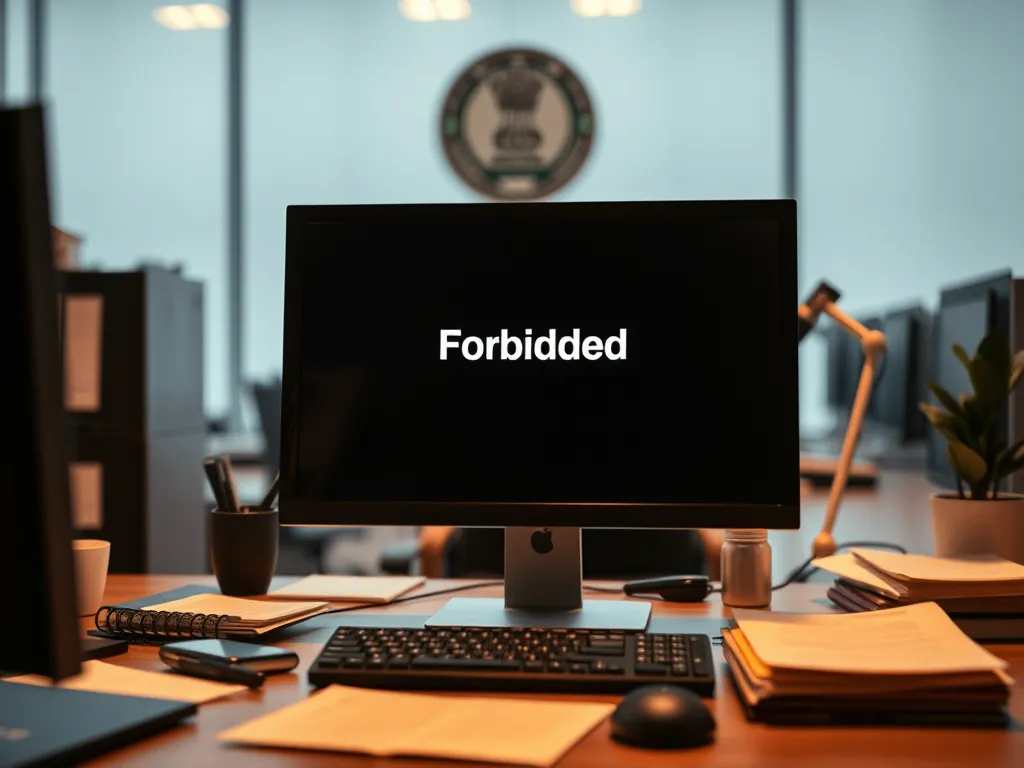
The Uttar Pradesh Govt scholarship portal is currently facing issues and is not functioning properly, which has raised concerns among students who rely on it for financial assistance.
The Department of Information Technology and Electronics is responsible for maintaining this crucial scholarship portal, ensuring that it operates smoothly and serves its intended purpose of helping students access various scholarships and aid programs.
Many students are dependent on these scholarships to support their education, so it is vital for the department to address the technical difficulties promptly and restore full access to the portal, thereby enabling students to apply for and receive the financial aid they need to continue their studies without interruption.
Closed but Not Resolved: A Citizen’s Struggle with Digital Governance in Uttar Pradesh
In an era of Digital India, citizens access essential services through government web portals, which serve as the front door to a plethora of benefits and resources. They exercise their right to information and apply for vital scholarships that can make significant differences in their lives and futures. However, the reality of navigating these digital landscapes can often be disheartening.
What happens when these digital doors remain locked, are bug-ridden, or lead to dead ends filled with error messages? Frustration mounts as citizens seek assistance and clarity, yet encounter barriers that impede their progress.
A recent grievance filed by a citizen in Uttar Pradesh vividly illustrates this frustrating reality, showcasing not only the challenges faced by individuals in accessing necessary support, but also raising critical questions about the efficacy of these platforms designed to empower the populace.
As the nation moves forward into a more technologically integrated era, it becomes imperative to address and rectify these digital hurdles to ensure that every citizen can seamlessly access the services they need and deserve.
This case study draws from a public grievance record and highlights a cascade of system failures and bureaucratic buck-passing. It also includes a resolution process that closes a case without solving the underlying problem.
The First Hurdle: A Simple Payment Fails
The ordeal started with a routine task. Mr. Singh needed to file a Right to Information (RTI) application to get clarity on certain public services that he felt were being inadequately provided. He did this through the official Uttar Pradesh government portal, which was designed to simplify the process for citizens seeking information.
The citizen, let’s call him Mr. Singh, attempted to pay the requisite ₹10 fee online, navigating through the various options presented on the portal. He reviewed the instructions carefully, hoping that this digital approach would provide him with a swift and hassle-free resolution to his query.
However, little did he know that this seemingly simple task would soon evolve into a frustrating ordeal, filled with unexpected challenges and delays.
The bank debited his account, confirmed by an SMS alert on December 11, 2024. However, the RTI portal did not generate a registration number; instead, it displayed a jarring error message:
“Forbidden. You don’t have permission to access this resource.”
Mr. Singh made the payment, but the service was denied. This initial failure prompted him to file a grievance with the Uttar Pradesh government. He plans to do this on December 12, 2024. He will flag the poor functioning of websites managed by the Department of IT and Electronics.
The Plot Twist: A Deeper Problem Uncovered
The official response to the grievance revealed a more complex issue. They acknowledged a temporary problem with the portal and claimed they had fixed it. Then, they shifted the focus to the scholarship application. It seems Mr. Singh struggled with the state’s scholarship portal, which became the central point of the subsequent investigation.
The scholarship portal was unable to verify his bank account’s seeding status with the National Payments Corporation of India (NPCI). The platform showed a persistent error:
Status not received from NPCI server, Checked Date:-(12/12/2024 10:38:34)
This is a critical failure, as an NPCI-verified, Aadhaar-seeded bank account is mandatory for receiving scholarship funds directly.
The Official “Resolution”
On December 27, 2024, the team officially closed the grievance, marking the conclusion of a thorough review process that had taken several months.
The closing remarks stated: this resolution not only addressed the concerns raised but also emphasized the importance of transparency and communication moving forward, ensuring that all parties involved felt heard and respected throughout the procedure.
In addition to resolving the initial issues, the team expressed their commitment to implementing new measures that would help prevent similar grievances in the future, thus fostering a more harmonious working environment for everyone involved.
- The matter is a policy issue concerning the Social Welfare Department.
- The citizen is facing a problem with the scholarship portal regarding the NPCI seeding of his bank account.
- The authorities have contacted NPCI, provided the citizen’s details, and requested a solution.
- The Social Welfare Department and NPCI are addressing the issue, and they have made a request for resolution.
The government addressed and closed the ticket, shifting the responsibility to other departments.
The Citizen’s Rebuttal: “The Problem Remains”
Mr. Singh rated the resolution as “Poor,” and his feedback cuts to the heart of the matter. He raised a crucial and logical question:
The official UIDAI (Aadhaar) website confirms that the system successfully links and activates his bank account. Why does the Uttar Pradesh scholarship portal fail to fetch this same status from the NPCI server?
This discrepancy points to a significant technical flaw in the state’s portal integration with the national payment infrastructure.
In his final remarks, Mr. Singh expressed his deep dissatisfaction:
“Most respected sir, undoubtedly you have closed the grievance. However, it is the bitter truth that the problem of the applicant remains unresolved even after the grievance was closed. The application of the applicant could not be submitted.”
A Systemic Issue
This case is more than just one person’s frustration. It is a clear example of a systemic breakdown where:
- Technical Glitches Block Access: Basic functions like online payments fail without a clear recourse.
- Siloed Departments: The grievance was passed from the IT Department to the Social Welfare Department. It was also passed to NPCI. No single entity took ownership of the final solution.
- Process Over People: The focus was on closing the grievance ticket within a timeframe. They did not ensure the citizen’s problem was actually solved.
For countless students in Uttar Pradesh, a functioning scholarship portal is not a convenience; it is a lifeline. When e-governance fails, it disproportionately impacts those who rely on it most. This case calls for greater accountability. It demands robust IT infrastructure. It also requires a grievance redressal system that truly prioritizes resolution over closure.
Administrative reform is running away from its responsibility to check authenticity of contents
Administrative reform escaped from misleading contents uploaded on RTI portal


Facing a similar challenge? Share the details in the box below, and our team of experts will do their best to help.