
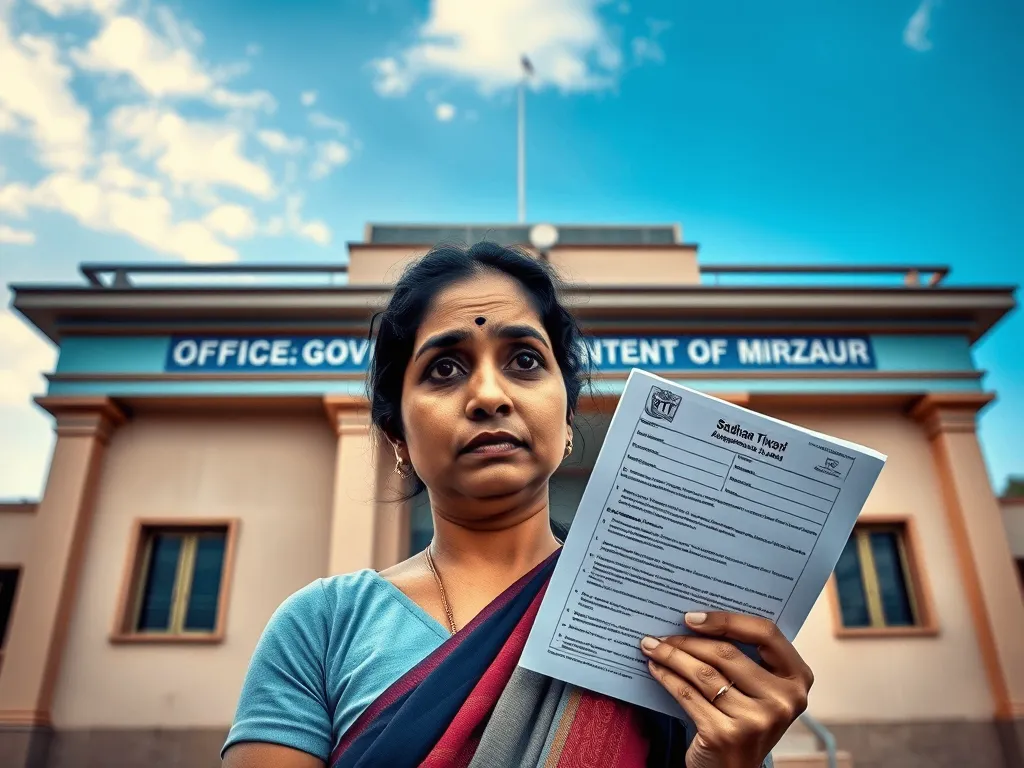
RTI Appeal Process Explained
The Right to Information (RTI) Act empowers citizens to seek information from public authorities, promoting transparency and accountability in governance. However, if applicants are dissatisfied with the response from an authority, they can file an appeal against it. They typically make the first appeal to a higher official in the same department, often known as the Appellate Authority. If the response from the first appeal remains unsatisfactory, applicants can escalate the matter to the Central or State Information Commission, which has the authority to provide a final decision.
Here are the key takeaways from the analysis of your RTI case and the blog post:
- Identification of “Administrative Ping-Pong”: The core issue presents a jurisdictional paradox. The Public Information Officer (PIO) denied the request, citing a subordinate’s claim that the data wasn’t available, despite it belonging to the main headquarters (Superintendent of Police Office).
- The “Right to Reason” Doctrine: A major highlight is that administrative silence does not serve as a valid defence. According to Supreme Court precedents, if the SP office fails to act on the Human Rights Commission’s order, it must legally provide the reason for that inaction as part of the RTI disclosure. (RTI Appeal Process Explained)
- Failure of Section 6(3) Compliance: The PIO failed their statutory duty. If they believed the information sat with a different desk or officer, the RTI Act mandates they internally transfer the request rather than issuing a flat denial.
- Significance of the June 16th Hearing: The State Information Commission (SIC) achieved a major procedural win by bypassing the initial “scrutiny rejection” to set a hearing date. It suggests that the Commission sees a prima facie case of “unreasonable denial.”
- Human Rights Accountability: This case is not just about a document; it is about the transparency of the Human Rights Commission’s oversight. If the police office can hide the “Action Taken Report” regarding a Human Rights order, it effectively nullifies the Commission’s power.
- Personalised Accountability: The appeal identifies specific high-ranking officials—including the SSP and ASP—placing the responsibility for transparency directly on the leadership of the Mirzapur Police.
RTI Appeal Process Explained: When Jurisdictional Shifting Obstructs the Right to Information
In the heart of Uttar Pradesh’s administrative machinery, a familiar but frustrating pattern has emerged in the case of Sadhana Tiwari vs. The Office of the Superintendent of Police (SP), Mirzapur. This case exemplifies “administrative ping-pong,” where departmental silos and jurisdictional denials trap a citizen’s fundamental right to know. To navigate these challenges, understanding the RTI Appeal Process is crucial; it allows citizens to challenge responses they deem inadequate, ensuring transparency and accountability from public authorities.
The core issue is simple yet profound: When a Public Information Officer (PIO) claims that requested data “belongs to another office”, even when that office falls under the same administrative umbrella, does it constitute a valid denial or a deliberate obstruction of justice?
The Genesis of the Dispute: A Human Rights Mandate
The matter traces back to an order issued by the Uttar Pradesh Human Rights Commission (UPHRC) dated September 5, 2024. In any functional democracy, a directive from a Human Rights Commission is important, requiring prompt action and transparent documentation.
Seeking to ensure accountability, the applicant, Sadhana Tiwari, filed an RTI application (Registration No: SPMZR/R/2025/60085) on April 5, 2025. The request was surgical in its precision, asking for the following:
- The identity of the staff who received the UPHRC order.
- The internal file contains notings regarding the communication.
- The Action Taken Report (ATR) is based on the Commission’s directions.
- The names of the personnel currently processing the file.
The “Not Our Office” Defence (RTI Appeal Process Explained)
The response from the authorities was a blanket denial, orchestrated through a peculiar administrative manoeuvre. The Public Information Officer relied on a communication from the Circle Officer (CO) of Lalganj, who stated that the information was “not related to this office.
Herein lies the logical fallacy. While the Circle Officer of Lalganj may not physically hold the files, the RTI was directed at the Office of the Superintendent of Police, Mirzapur. As the apex authority for the district police, the SP’s office is the custodian of all communications from the State Human Rights Commission. By redirecting the inquiry to a subordinate Circle Office and then using that office’s lack of records as a reason for denial, the public authority has engaged in a circular logic that defeats the purpose of the RTI Act, 2005.
Section 6(3) and the Duty to Transfer
Under the RTI Act, a Public Information Officer (PIO) is legally mandated under Section 6(3) to transfer a request for information held by another public authority to the concerned department within five days.
In this case, the PIO did not facilitate a transfer; instead, they created a dead end. By admitting that the information “concerns the working of the office of the Superintendent of Police” but failing to provide it from that very office, the administration has created a transparency vacuum.
The Spiritual and Legal Battle: A Second Appeal Breakthrough
In a turn of events that the appellant describes as a “miracle of God,” the legal trajectory of this case has seen significant movement. While the initial RTI faced resistance, the Uttar Pradesh Information Commission successfully processed a parallel Second Appeal (A-20250300419 / S09/A/0719/2025).
Despite a scrutiniser initially flagging it, the appeal has been forwarded to the hearing room, with a fixed date of June 16, 2025. This development is crucial because it brings the matter under the direct oversight of the Information Commissioner, who has the power to:
- Summon the PIO and the First Appellate Authority (FAA).
- Impose penalties of ₹250 per day (up to ₹25,000) for unreasonable denial.
- Please ensure the immediate disclosure of the documents.
The “Right to Reason”: An Indispensable Administrative Pillar
A standout feature of Ms. Tiwari’s appeal is the invocation of the “Right to Reason.” As noted in her prayer, the Supreme Court of India has repeatedly held that “reasoning is the heartbeat of every conclusion.
When a public authority ignores a Human Rights Commission order, the “reason” for that inaction is itself “information” under the RTI Act. If no action was taken, the public has a right to know why. Silence is not an administrative privilege; it is a breach of the social contract.
Key Players in the Accountability Chain (RTI Appeal Process Explained)
To comprehend the complexities of this specific case, one must look at the hierarchy involved:
- The Appellant: Sadhana Tiwari, seeking transparency on human rights compliance.
- The PIO: Om Prakash Singh (ASP Operation), tasked with the initial disclosure.
- The FAA: Somen Verma (SSP Mirzapur), who oversees the first level of internal grievance.
- The UPHRC: The original body whose 2024 order remains “missing” in the administrative shuffle.
| Registration Number | Status | Key Stakeholder |
| SPMZR/R/2025/60085 | Application Rejected | PIO Om Prakash Singh |
| SPMZR/A/2025/60024 | First Appeal Received | FAA Somen Verma |
| S09/A/0719/2025 | Hearing Scheduled (16/06/2025) | UP Information Commission |
The Path Forward: What This Means for RTI Activism
This case highlights a growing trend of “jurisdictional evasion,” where departments use internal boundaries to confuse and exhaust the applicant. However, the progression of the case to the Information Commission provides hope.
The upcoming hearing on June 16, 2025, will likely focus on why the PIO failed to coordinate with the SP Office’s internal registry to locate the UPHRC correspondence. It serves as a reminder that while bureaucrats may hide behind files, the law pulls those files into the light.
Conclusion
Sadhana Tiwari’s denial of information in the Mirzapur SP office case poses a systemic challenge to the RTI framework. When citizens cannot track the implementation of a Human Rights Commission order, they render the “right to life and liberty” a hollow promise. Now, the State Information Commission must penalise this administrative stalling and restore the “Right to Reason.
Based on the official records and the details provided in your appeal, here are the structured contact details and web links for the concerned public authorities.
1. Primary Public Authority: Mirzapur Police (RTI Appeal Process Explained)
The Office of the Superintendent of Police (SP) Mirzapur is the primary custodian of the information you are seeking regarding the Human Rights Commission order.
| Designation | Name of Officer | Mobile Number (CUG) | Email ID |
| DIG/SSP Mirzapur (FAA) | Shri Somen Verma | 9454400299 | spmzr-up@nic.in |
| Addl. SP Operation (Nodal) | Shri Manish Kumar Mishra | 9454401105 | asp-op.mi@up.gov.in |
| Addl. SP City | Shri Nitesh Singh | 9454401104 | asp-city.mi@up.gov.in |
| Circle Officer (Lalganj) | Shri Amar Bahadur | 9454401592 | co-lalganj.mi@up.gov.in |
- Official Website: Mirzapur Police Officials
- Office Address: Superintendent of Police Office, Mirzapur, Uttar Pradesh – 231001.
2. Monitoring Authority: UP Information Commission (UPIC)
Since your second appeal is scheduled for a hearing on June 16, 2025, you may need to contact the Commission for updates to the cause list or for the submission of additional documents.
- Address: 7/7A, RTI Bhawan, Vibhuti Khand, Gomti Nagar, Lucknow, Uttar Pradesh.
- Office Phone: 0522-2724930
- Web Portal: UPIC Official Website
- Email: webmaster-upic@up.gov.in
- Jansuchi Section Email: jansu-section.upic@up.gov.in (For RTI-related queries).
3. Online RTI Resources (RTI Appeal Process Explained)
For filing further clarifications or tracking the status of your current appeal digitally:
- UP RTI Online Portal: rtionline.up.gov.in
- Note: Use this portal to track Registration No. SPMZR/A/2025/60024.
- Technical Help Desk: 0522-7118629 (10:00 AM to 5:00 PM).
- Technical Email: onlinertihelpline-up@gov.in.
Pro-Tip for your June 16th Hearing: (RTI Appeal Process Explained)
When you speak to the Information Commissioner, explicitly mention that Shri Somen Verma (SSP/FAA) and Shri Om Prakash Singh (Nodal Officer) are the individuals responsible for the administrative oversight of the UPHRC orders. Point out that the Circle Officer Lalganj is merely a field officer and would not naturally be the “receiving desk” for high-level Commission orders sent to the SP HQ.
Would you like me to draft a brief “Points of Argument” document that includes these specific names and contact details for your reference during the hearing?


Facing a similar challenge? Share the details in the box below, and our team of experts will do their best to help.