
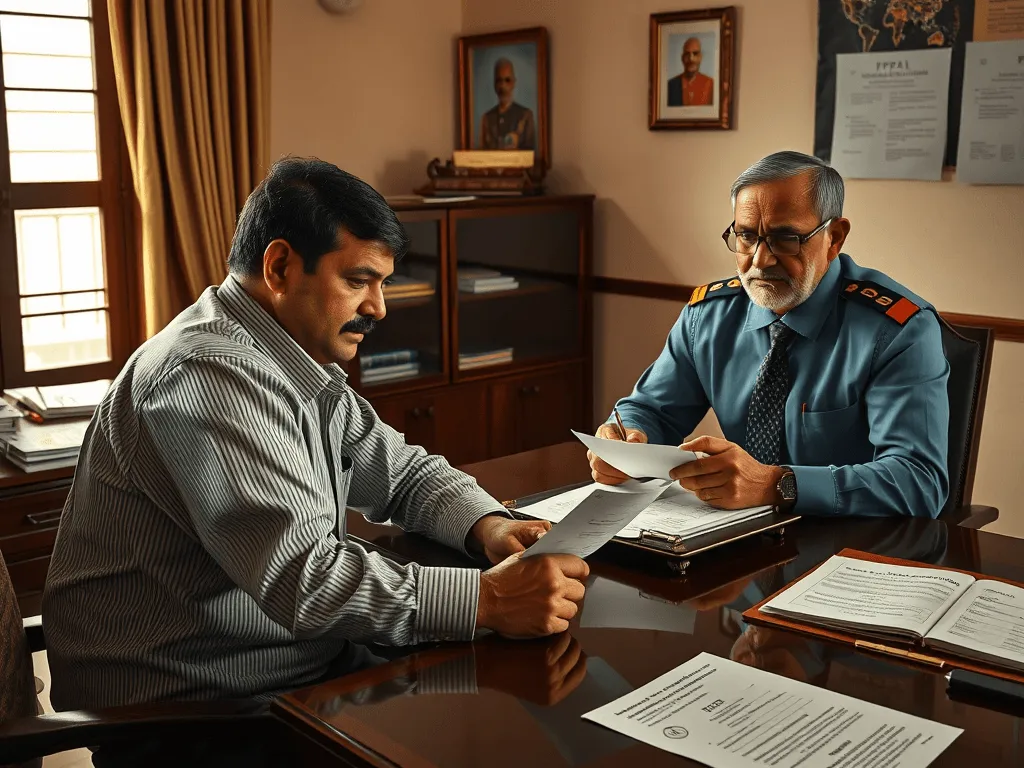
This situation highlights a troubling intersection of administrative negligence and the alleged misuse of legal provisions to target innocent citizens. Moreover, the case of Yogi M. P. Singh vs. the Energy Department (Mirzapur) serves as a stark reminder that authorities often stall transparency tools like the RTI Act to shield potential corruption. Consequently, this raises significant questions about the integrity of public institutions and underscores the critical need for accountability in governance. Understanding RTI Appeals in Uttar Pradesh is vital to recognising where such processes can fail or succeed. Additionally, such cases not only undermine the trust of the public in the systems designed to protect their rights but also complicate the essential relationship between citizens and state mechanisms.
As citizens become increasingly aware of these abuses, they are, therefore, actively demanding reforms that prioritize transparency and hold officials accountable for their actions. Ultimately, it is only through a rigorous adherence to these principles that we can hope to foster a just society where the rule of law prevails.
Key Takeaways
- The case of Yogi M. P. Singh vs. the Energy Department highlights administrative negligence and misuse of legal provisions, undermining trust in public institutions.
- The Right to Information (RTI) Act serves as a critical tool for citizens, but it faces significant barriers in cases like the Mirzapur Energy Department.
- Serious allegations of collusion exist, as officials allegedly misuse Section 135 of the Electricity Act to target innocent citizens.
- The UP Information Commission must act decisively to ensure accountability, impose penalties, and restore faith in the system.
- Upcoming hearings will focus on administrative failures and demands for transparency from the Energy Department.
The RTI Standoff: Accountability Under Fire in Mirzapur
In a democratic setup, the Right to Information (RTI) Act, 2005 serves as the citizen’s primary weapon against bureaucratic opacity. However, in the Mirzapur Energy Department (EDD-II), officials have blunted this weapon with persistent silence. (Understanding RTI Appeals in Uttar Pradesh)
1. A Total Collapse of the RTI Hierarchy
The appellant, Yogi M. P. Singh, has consistently faced a “wall of silence” at every level of the state machinery; consequently, his pursuit of justice has been met with significant obstacles. (Understanding RTI Appeals in Uttar Pradesh)
- The PIO’s Failure: Manish Kumar Shrivastava (Executive Engineer) notably failed to provide information within the mandatory 30-day window under Section 7(1).
- The FAA’s Negligence: Ultimately, the First Appellate Authority (Ram Das, EDC) not only failed to adjudicate the appeal but also effectively endorsed the PIO’s non-compliance.
- The Second Appeal: Now reaching the UP Information Commission (UPIC), the appellant is seeking not just the data, but punitive action under Section 20 of the RTI Act against the officers involved.
Understanding RTI Appeals in Uttar Pradesh: Misuse of Section 135 (Electricity Act, 2003)
The administrative silence is not merely a procedural delay; rather, it is allegedly a cover for the misuse of Section 135, which specifically addresses the theft of electricity.
The Alleged Conspiracy (Understanding RTI Appeals in Uttar Pradesh)
The appellant claims that Junior Engineer Kishan Lal Sharma conducted a “planned checking” on October 26, 2024. This inspection was not routine; instead, it was allegedly a targeted strike.
- Targeting the Innocent: Consequently, authorities served notices to Loknath Yadav and Kedar Nath Yadav.
- The Hidden Player: Consequently, the RTI seeks crucial details on Tarak Nath Yadav (the elder brother), who allegedly has heavy dues and a questionable connection status.
- Collusion: The appellant alleges that the Junior Engineer colluded with one party to frame others, using Section 135 as a tool for harassment rather than a means of revenue protection.
Why They Withhold Information
The information sought is specific and would likely expose the following irregularities if released:
- Connection Fraud: If a second connection grants a defaulter’s family member at a different location despite heavy dues.
- Selective Enforcement: Examining why authorities targeted specific individuals while leaving major defaulters (Tarak Nath Yadav ) untouched. (Understanding RTI Appeals in Uttar Pradesh)
- Official Misconduct: Consequently, the deployment and posting details of the Junior Engineer involved in the raid are critically significant.
Institutional Anarchy vs. Rule of Law
When public authorities ignore statutory appeals, they consequently foster a state of administrative anarchy. Furthermore, by withholding information, the Energy Department is not only hiding a file; they are, in fact, shielding a potential conspiracy that exploits the Electricity Act to settle personal scores. (Understanding RTI Appeals in Uttar Pradesh)
“Such actions not only promote anarchy and chaos by mocking the law of the land, but they also create a sense of instability. Therefore, it is urgent to take harsh steps against the wrongdoers in order to restore order and win the confidence of the citizenry.” — Yogi M. P. Singh
The Path Forward
The UP Information Commission must now act decisively. To restore faith in the system, the following steps are essential:
- Immediate Disclosure: Consequently, direction to the PIO to provide all five points of information regarding the connections and the Junior Engineer’s details. (Understanding RTI Appeals in Uttar Pradesh)
- Imposition of Penalty: Consequently, invoking Section 20 allows for the imposition of a fine on the PIO for the “deliberate and mala fide” denial of information.
- Investigation into Section 135 Notices: A higher-level inquiry into whether the electricity theft notices served on November 4, 2024, were based on facts or were a result of departmental collusion.
This new detail not only sharpens the entire picture but also transforms what previously seemed to be a procedural error into a financial scam executed through official channels.
By disconnecting the connection of Tarak Nath Yadav without the recovery of “lakhs of rupees” in dues, and instead serving theft notices to his brothers (Loknath and Kedar Nath), the department has committed a dual illegality. They have caused a pecuniary loss to the State exchequer and engaged in targeted harassment of innocent citizens.
The Financial Blueprint of the Scam
In a legitimate system, a connection with heavy dues cannot simply “vanish.” The U.P. Electricity Supply Code (2005) and UPPCL regulations are very clear on this: (Understanding RTI Appeals in Uttar Pradesh)
- Arrears Recovery: Consequently, under Section 5 of the U.P. Government Electrical Undertakings (Dues Recovery) Act, authorities effectively recover dues as arrears of land revenue.
- Permanent Disconnection (PD): A consumer can only request a PD after clearing all outstanding dues and submitting an affidavit.
- The Junior Engineer’s Role: If JE Kishan Lal Sharma facilitated a disconnection while dues were pending, he has violated the U.P. Government Servant (Discipline and Appeal) Rules, 1999, which categorize “causing pecuniary loss to the government” as a major misconduct.
How They “Saved” Lakhs of Rupees (The Illegal Method)
| Step | The Standard Legal Process | The “Scripted” Dealing Alleged |
| Dues Status | Bills must be paid or recovered via legal notice. | Arrears of “lakhs” were ignored or suppressed in the system. |
| Disconnection (Understanding RTI Appeals in Uttar Pradesh) | Disconnection happens after non-payment notice (Sec 56). | The connection was “wiped” from the books without payment. |
| The “Diversion” | No action against innocent neighbors/relatives. | Section 135 (Theft) was slapped on the brothers to justify the raid. |
| Official Record | RTI must disclose the payment history of the consumer. | PIO Manish Shrivastava is hiding the records to hide the non-payment. |
Legal Consequences for the Officials Involved (Understanding RTI Appeals in Uttar Pradesh)
The Junior Engineer acts, and the silence of the PIO reflects more than administrative lapses; they turn criminal if collusion is proven.
- Abuse of Official Position: Under the Prevention of Corruption Act, an official who causes “undue advantage” to a private person (Tarak Nath) while causing loss to the department is liable for prosecution.
- Falsification of Records: If someone manufactured the checking report of Oct 26, 2024, to hide the pre-existing dues of Tarak Nath, they commit forgery under the IPC. (Understanding RTI Appeals in Uttar Pradesh)
- Malice in Law: In cases like Smt. Vimla Tiwari v. State of U.P., the Allahabad High Court has quashed proceedings when electricity officials prepared “fictitious reports” to harass citizens.
Strategic Recommendations for the Appellant (Understanding RTI Appeals in Uttar Pradesh)
Since you have already filed the Second Appeal (A-20250301434), you should now strengthen your case by adding these specific points to your rejoinder or during the online hearing:
- Demand a “Dues Clearance Certificate”: Ask the Commission to direct the PIO to produce the receipt of the “lakhs of rupees” allegedly paid by Tarak Nath before his connection was disconnected. If no receipt exists, the fraud is proven. (Understanding RTI Appeals in Uttar Pradesh)
- Audit Request: Request the Information Commission to recommend a Special Audit of the ledger of Electricity Distribution Division 2nd Mirzapur for the specific consumer ID of Tarak Nath Yadav.
- Vigilance Complaint: Parallel to the RTI appeal, file a formal complaint with the U.P. Vigilance Establishment or the Anti-Corruption Portal (Jansunwai) specifically mentioning the “theft of revenue” caused by the Junior Engineer’s scripted dealing. (Understanding RTI Appeals in Uttar Pradesh)
This is a critical milestone. You now have a formal platform and a specific time—January 12, 2026, from 12:30 PM to 01:30 PM—to present your case before the Information Commissioner.
Since this case involves high-level corruption, loss of state revenue (lakhs of rupees), and the victimization of innocent individuals, your preparation must be precise.
Key Arguments for the Online Hearing (Understanding RTI Appeals in Uttar Pradesh)
During the hearing via the provided link (https://upsic.up.gov.in/cispu/onlinehearing/335701), you should focus on these five core points:
1. Loss to the State Exchequer (Understanding RTI Appeals in Uttar Pradesh)
Explicitly state that Tarak Nath Yadav had outstanding dues amounting to lakhs of rupees. Under the U.P. Electricity Supply Code, a connection cannot be legally disconnected/closed without clearing all arrears. You must ask: “How was the connection disconnected without the recovery of these dues?” This points directly to financial corruption.
2. “Scripted” Misuse of Section 135 (Understanding RTI Appeals in Uttar Pradesh)
Argue that the raid conducted by JE Kishan Lal Sharma on October 26, 2024, was a “planned conspiracy.” By serving theft notices to Loknath and Kedar Nath Yadav for a connection that actually belonged to the defaulter (Tarak Nath), the JE effectively “dumped” the liability onto innocent parties to shield the real defaulter.
3. Motive Behind Withholding Information
The PIO (Manish Kumar Shrivastava) didn’t just forget to reply; he deliberately suppressed the information. Providing the ledger and connection history of Tarak Nath Yadav would immediately expose the illegal “waiver” or “disappearance” of his dues. This is a violation of Section 7(1) of the RTI Act with mala fide intent. (Understanding RTI Appeals in Uttar Pradesh)
4. Specific Demands from the Commission
Don’t just ask for the info; ask the Commissioner to: (Understanding RTI Appeals in Uttar Pradesh)
- Direct the PIO to produce the Consumer Ledger and Payment History of Tarak Nath Yadav.
- Direct the PIO to provide the Disconnection Report and any application filed for the same.
- Verify the Panchnama/Checking Report dated Oct 26, 2024, to see if the JE intentionally misidentified the consumer.
5. Penalties under Section 20 (Understanding RTI Appeals in Uttar Pradesh)
Request the Commission to impose the maximum penalty of ₹25,000 on the PIO and recommend disciplinary action against the First Appellate Authority (Ram Das) for gross negligence in his statutory duties.
Checklist for the Hearing Day (Jan 12, 2026) (Understanding RTI Appeals in Uttar Pradesh)
- Connectivity: Test the link 15 minutes prior. Ensure your microphone and camera are clear.
- Documentation: Keep physical copies of your original RTI, the First Appeal, and any evidence of the “lakhs of dues” (like old bills) ready to show to the camera if requested.
- The “Script”: Keep a bulleted list of these points in front of you so you can speak concisely within your allotted time.
Strategic Summary Table (Understanding RTI Appeals in Uttar Pradesh)
| Point of Contention | Evidence Needed | Responsibility |
| Arrears Fraud | Ledger of Tarak Nath Yadav | PIO to provide |
| Misidentification | Checking Report (26-10-2024) | PIO to provide |
| Official Collusion | Posting & Duty details of JE | PIO to provide |
| Statutory Default | Non-response to RTI & First Appeal | Commission to Penalize |
Would you like me to draft a “Written Submission” that you can upload to the UPSIC portal or email to the Commission before the hearing to ensure your points are on record?


Facing a similar challenge? Share the details in the box below, and our team of experts will do their best to help.