
Is Your Smart Meter a Smart Move or a Scam? A Look at Grievances in Mirzapur
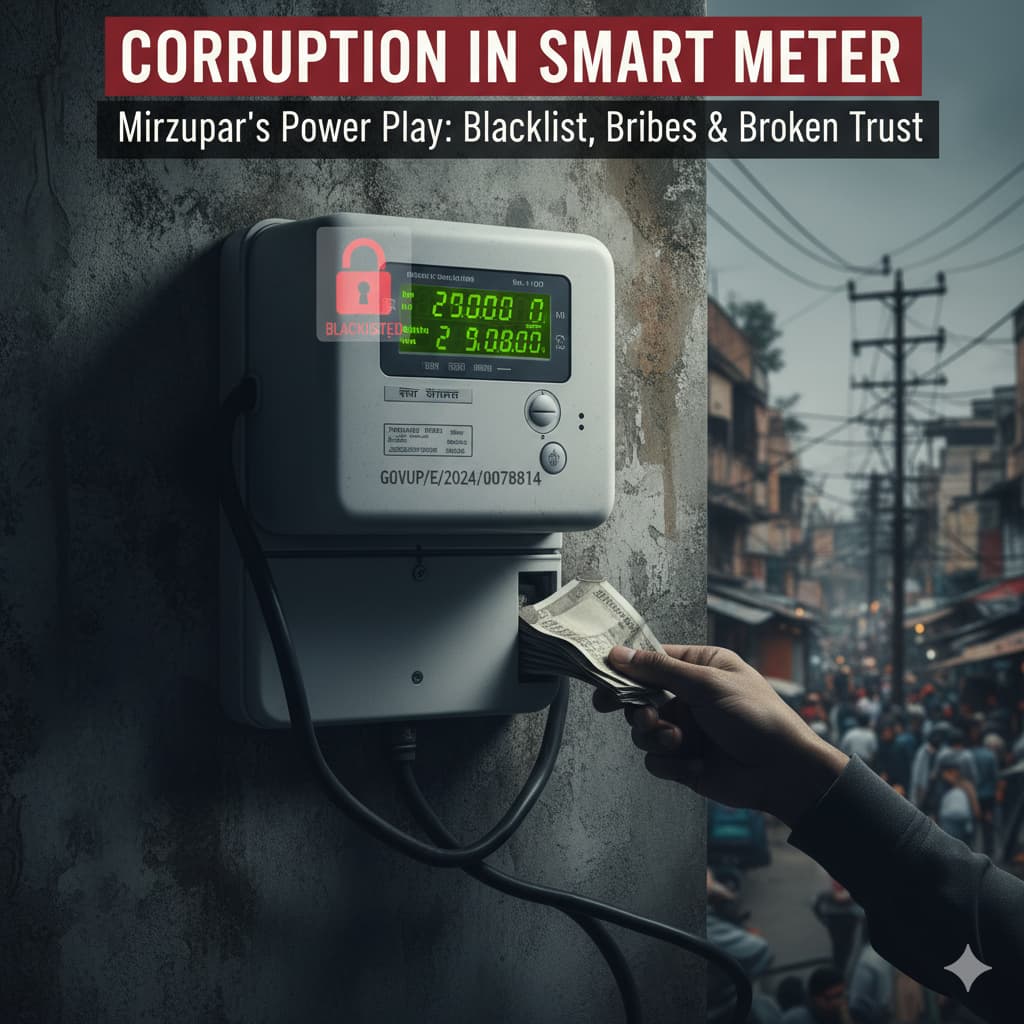
The installation of smart meters across Uttar Pradesh aims to modernise the power grid. However, concerns about corruption in smart meter systems have been raised, leaving many consumers confused and frustrated.
Serious allegations of corruption have surfaced, as a recent grievance filed by a citizen in Mirzapur highlights these deep-seated concerns. This complaint exposes issues like cryptic text messages and questionable meter readings.
Additionally, the complaint mentions the alleged involvement of redlisted companies.
This structured post breaks down the core issues raised in this official grievance. It examines the unsatisfactory response from the authorities. This makes it clear that corruption allegations in the smart meter initiative must be addressed. Additionally, it addresses the broader questions about the transparency of the UPPCL’s smart meter scheme.
The Heart of the Grievance: Redlisted Companies and Questionable Functioning
Keshav Pratap Singh filed a formal complaint against the consumer, seeking to address deeply concerning issues that he believes jeopardize both public trust and the integrity of essential services.
The complaint has two distinct and critical parts. One part is an accusation of corruption, alleging that unethical practices may have taken place within the organization, potentially affecting decision-making processes and leading to unfair advantages for certain individuals or groups.
The other part demands a thorough inquiry into the smart meters’ technical integrity, methodically questioning whether any instances of corruption could compromise the validity and reliability of these smart meters, which are crucial for accurate billing and consumer trust.
This inquiry aims to ensure transparency and accountability in the management of these devices, ultimately striving to protect consumer rights and uphold ethical standards in service delivery.
- The redlist Allegation: The complaint explicitly names the Uttar Pradesh Power Corporation Limited (UPPCL). It alleges that UPPCL purchased smart meters from two companies redlisted by the government of Goa. This serious charge reportedly prompted the Uttar Pradesh State Electricity Consumer Council to approach the Electricity Regulatory Commission. They demanded an intervention. This was to ensure the quality and legality of the installed meters.
- The Cryptic Message: The immediate trigger for the inquiry was a mysterious message. It was, received from the local UPPCL office: “कनेक्शन नं. 8667726000 डिमांड विगत 3 माह से स्वीकृत लोड से अधिक है। एक माह के अंदर लोड… पर नियमित करा लें – UPPCL” (Connection No. 8667726000 demand is higher than the sanctioned load for the past 3 months. Regularise the load… within one month – UPPCL). The consumer is asking for the basis of this message. They also want proof of any site visit by UPPCL staff to verify the consumption.
Inconsistencies and Demands for Transparency
The grievance raises specific, measurable concerns about the meter reading process. This is a potential facet of what may be considered corruption in smart meter systems.
Furthermore, it delves into the intricacies of the installation process. It emphasizes the technical aspects. Additionally, it highlights the implications of improper installations on billing accuracy and consumer trust.
These issues demand clear, transparent answers from the local electricity department. Accountability is paramount. It ensures that residents feel secure in the services they are provided. It also prevents their hard-earned money from being unjustly siphoned off due to systemic failures or unethical practices.
How the department responds to these grievances will significantly impact public perception and confidence in the utility provider.
- Sanctioned Load vs. Actual Use: The consumer states that his sanctioned connection load is one kilowatt (1 kW). He asserts that he actually needs closer to 500 watts. The smart meter allegedly shows only 250 watts. He demands an explanation for why the billing does not show the lowest and most precise figure: 250 watts.
- Selective Meter Installation: The most damning accusation concerns the department’s selective installation of smart meters. They installed these meters only outside the residences of consumers who paid their electricity bills on time. The department ignored areas where individuals committed electricity theft. Another common issue was the alleged involvement of its staff in these activities. The complainant alleges that the department did not handle premises known for electricity theft, often in collusion with its staff. The complaint demands an explanation from the department. It questions why the department neglected to use the smart meter scheme to proactively tackle large-scale theft. This action would have ensured the scheme’s integrity.
Corruption in Smart Meter obvious from arbitrary Closure: A General Reply and a “Poor” Rating
The official response to this detailed and serious complaint was brief. It lacked the depth and consideration one might expect in such important matters.
The response was highly unsatisfactory to the applicant. They had hoped for a more thorough investigation. They also sought a comprehensive understanding of the issues raised.
The case was closed as a result of this inadequate response. The applicant felt frustrated and unheard. They were left with lingering questions that remained unanswered. There was a sense that their concerns had not been treated with the attention they deserved.
- The Official Remark: The UPPCL closed the case and stated, “On line complaint no 60000240217303 has been, closed.” आख्या श्रेणी – प्रकरण सुझाव श्रेणी का है” (The report category is suggestion category). This categorisation effectively dismisses the complaint’s specific inquiries as merely general recommendations.
- The Consumer’s Rebuke: The complainant rated the resolution 1 (Poor). They stated, “How can submitting a general reply redress a specific grievance… even when the matter concerns the wide public interest and guarantees transparency and accountability?
The consumer’s concluding remarks directly challenge the department’s working culture. They accuse the public authority of “imposing arbitrary measures on the consumers.” These measures are seen as a way to exploit them. The public authority should be reforming the structure of the department instead. They also demand a transparent and accountable way to implement the scheme, ensuring no smart meter corruption is present.
The Bigger Picture of Corruption in Smart Meter: Accountability and Public Trust
This incident in Mirzapur is more than a single consumer complaint. It reflects a broader crisis of public trust in a critical infrastructure project. Serious allegations of redlisted vendors, selective enforcement, and technical discrepancies deserve more than a generic reply. A dismissive “suggestion category” response erodes faith in the entire process.
The questions raised concern the integrity of the buying process amidst increasing concerns of corruption related to smart meters. They also touch on the accuracy of the technology and the selective targeting of honest consumers. These concerns must be addressed with a detailed, fact-based inquiry. A blanket closure is not enough.
What has your experience been with the new smart meters? Has your electricity bill or communication from the department changed since the installation?
Smart meters are incredible like electronic voting machines in India



Facing a similar challenge? Share the details in the box below, and our team of experts will do their best to help.