
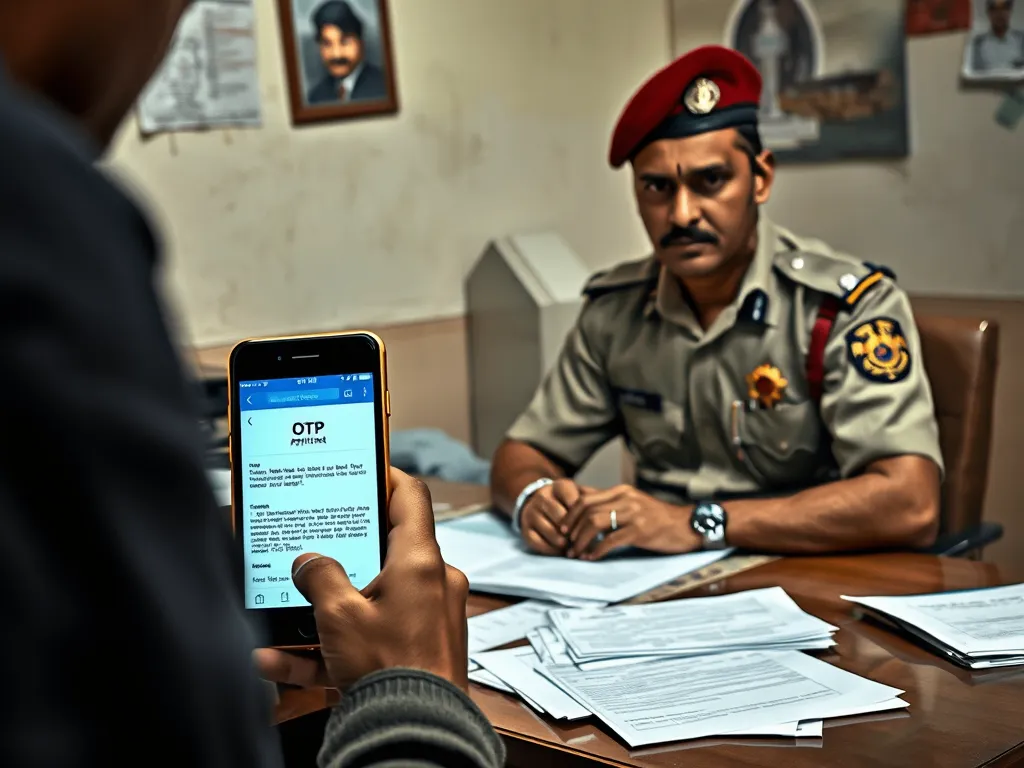
One-Time Passwords (OTPs) play a crucial role in the security of Right to Information (RTI) applications. As digital transactions become more prevalent, the use of OTPs ensures the applicant’s identity is verified, adding an essential layer of protection against fraudulent requests. When submitting an RTI application online, users typically receive an OTP on their registered mobile number or email, which must be entered to complete the process. This method not only safeguards personal information but also streamlines the application procedure, making it more efficient. Understanding OTP Usage in RTI Applications is vital for both applicants and the authorities managing RTI requests.
Key takeaways from the blog post
This case exposes how “Digital Coercion” operates in public grievance systems. While IGRS/Jansunwai aim to empower citizens, systemic pressure to maintain high satisfaction scores has allowed officials to misuse OTPs, turning citizen feedback tools into points of control.
The Essential Conflict:
- A systemic flaw emerges: the ‘Satisfied’ feedback mechanism, intended to let citizens check police performance, can be undermined. When police request the OTP, they control feedback submission, shifting power from the citizen to the administration, and allowing cases to be closed unilaterally.
- The Bureaucratic Defence: The police framed the request as “procedural assistance,” but for an experienced RTI activist, this is viewed as an illegal attempt to manufacture consent and bypass accountability.
- This leads to a transparency problem. Even though “taped conversations” could show if the OTP was demanded, authorities chose to rely on internal reports rather than independently verifiable audio evidence. This decision leaves the core issue unresolved.
Why It Matters:
Soliciting OTPs under the pretence of assistance compromises digital governance’s intent. This shifts accountability tools into methods for manipulating reported outcomes, undermining trust in the system.
This situation underscores the tension between digital governance and transparency, especially regarding OTP usage in RTI Applications. Below is an analysis of the incident involving Shri Yogi M.P. Singh and the Mirzapur Police.
The Digital Gatekeepers: Transparency vs Tactics in the IGRS Feedback System
In an era where the Indian government is pushing for “Minimum Government, Maximum Governance” through digital portals like Jansunwai (IGRS), a curious case has emerged from the district of Mirzapur. It involves an RTI activist, a Constable, and the controversial request for a One-Time Password (OTP).
At its core, this dispute is not just about the OTP code, but about the broader question of whether public grievance redressal systems are used to ensure real resolution for citizens, or if administrative bodies prioritise their own performance metrics instead. This tension drives the events described here.
1. Understanding OTP Usage in RTI Applications: A Question of Intent
The conflict began when Shri Yogi M.P. Singh, a veteran anti-corruption crusader with 27 years of experience, filed an RTI application following a suspicious interaction with the IGRS Feedback Cell of the Mirzapur Police.
According to Singh, police personnel—specifically identified later as Constable Surendra Kumar—requested his OTP. In the digital ecosystem of the Uttar Pradesh government, an OTP goes to a complainant’s mobile and serves as the final “key” to close a grievance with a status of “Satisfied.”
The Core Allegation:
The complaint contends that when the police acquired the OTP, they bypassed the complainant’s autonomy and registered “Satisfied” feedback on his behalf. This not only artificially boosts performance records but also closes cases without addressing the original issues.
2. The Police Response: “Instruction, Not Solicitation”
Following the initial RTI and subsequent appeal(Letter No. JSAP Appeal-28/2025), the Office of the Senior Superintendent of Police(SSP) Mirzapur provided a formal justification. Their defence rests on three pillars: (Understanding OTP Usage in RTI)
- Educational Outreach: The department claims the Constable was merely explaining the “prescribed procedure” to an applicant who might not know how to navigate the portal.
- Denial of Receipt: The IGRS Cell maintains that no OTP was ever actually received or used by the staff to submit feedback.
- Procedural Compliance: The Public Information Officer (PIO) asserts that explaining the system is part of their duty to ensure grievances are processed correctly.
3. The RTI Activist’s Counter-Strike: The Logic of Autonomy (Understanding OTP Usage in RTI)
Shri Yogi M.P. Singh’s rebuttal is sharp and grounded in the fundamental logic of digital security. He raises a point that resonates with every digital citizen: Why would a seasoned activist ask a Constable for a tutorial on how to use a portal?
The “Efficiency” Argument
Singh’s appeal poignantly asks: “Do you think that your constable is more efficient than me?” He argues that the police’s claim of “explaining the process” is a smokescreen. In his view, the request for an OTP is an illegal demand. Under no government protocol is a public servant authorised to ask a citizen for an OTP, especially one that serves as a digital signature for satisfaction.
4. The Structural Flaw: Performance Metrics vs Truth (Understanding OTP Usage in RTI)
The Mirzapur case illustrates a wider pattern: departments are evaluated based on “Satisfied” feedback percentages. This balance between metric achievement and truth shapes how staff interact with digital reporting.
| Grievance Resolution | Quality investigation and resolution. | Superficial report filing. |
| Feedback Trigger | Complainant receives OTP to confirm. | Official asks for OTP via phone call. |
| Portal Entry | Citizen enters OTP to close the case. | Official enters OTP to “manufacture” satisfaction. |
The “Satisfied” status is a KPI for senior officers. When systems value appearance over substance, lower-level staff are incentivised to obtain citizens’ OTPs for positive feedback—whether through persuasion or misrepresentation.
5. Legal and Ethical Implications
The demand for an OTP by a government official is not just a procedural lapse; it is a security risk.(Understanding OTP Usage in RTI)
- Violation of Privacy: OTPs are private credentials. A government official asking for one is overstepping legal boundaries.
- RTI Transparency: The applicant’s demand for the “taped conversation” is a masterstroke. Most feedback calls are recorded for quality purposes. If the police refuse to produce the audio, it suggests a lack of transparency that contradicts the spirit of the RTI Act 2005.
- Misleading Information: Under the RTI Act, providing “misleading information” is a punishable offence. If the Constable did indeed ask for the OTP, the PIO’s denial constitutes a secondary violation of the law.
6. The Verdict of the Appellate Authority (Understanding OTP Usage in RTI)
On June 16, 2025, the First Appellate Authority (FAA), Somen Verma (SSP Mirzapur), closed the appeal by forwarding the IGRS Cell’s report. However, for the applicant, this is an administrative routine, not a genuine resolution. The main concern—why the OTP was mentioned—remains unanswered amid official justifications.
This case warns of a “Digital Divide” enabled by power imbalances—officials use their authority to elicit digital feedback control from citizens, deepening the gap that digital tools were meant to bridge.
Conclusion: Understanding OTP Usage in RTI Applications—A Call for Audits
This dispute in Mirzapur reflects ‘Metric Fixation.’ To restore faith in the Jansunwai portal and improve understanding of OTP usage in RTI Applications, there must be a strict prohibition on officials discussing OTPs with complainants.
Digital governance should empower citizens, not let unchecked bureaucracy self-assess. Until the “taped feedback” is reviewed and accountability established, the satisfaction reported on the portal remains questionable. A genuine understanding of OTP usage is vital for transparency and trust in digital grievance systems.
What do you think? Should police personnel be allowed to guide citizens through the OTP process, or is this a clear conflict of interest?
Based on the documents provided and official UP Police records, here are the structured contact details and identifiers for the concerned public authorities in Mirzapur.
1. Concerned Public Authorities (Key Officials) (Understanding OTP Usage in RTI)
The following table provides the contact details for the primary officers mentioned in your appeal, along with the broader district hierarchy.
| SSP Mirzapur (First Appellate Authority) | Somen Verma | 9454400299 / 9125608556 | spmzr-up@nic.in |
| ASP Operation (Public Information Officer) | Om Prakash Singh | 9454401105 / 9125608556 | addlspopmzr@gmail.com |
| Addl. SP City | Nitesh Singh | 9454401104 | asp-city.mi@up.gov.in |
| CO City | Vivek Jawla | 9454401590 | co-city.mi@up.gov.in |
| Nodal Officer (RTI) | Om Prakash Singh | 9125608556 | aspopmzp@gmail.com |
2. Application & Appeal Identifiers (Understanding OTP Usage in RTI)
These are the specific tracking numbers from your provided case history for reference in any future correspondence with the State Information Commission.
- RTI Registration Number: SPMZR/R/2025/60087 (Filed: 09/04/2025)
- RTI Appeal Registration Number: SPMZR/A/2025/60022 (Filed: 04/05/2025)
- Appeal Disposal Date: June 16, 2025
- Reference Letter Number: JSAP Appeal-28/2025/SPMZR/A/2025/60022
3. Essential Web Links (Understanding OTP Usage in RTI)
To monitor your status or file a secondary appeal to the State Information Commission, use the following official portals:
- UP RTI Online Portal: rtionline.up.gov.in (For filing appeals and checking status).
- UP State Information Commission: upsic.gov.in (For filing a Second Appeal if dissatisfied with the FAA’s decision).
- Jansunwai (IGRS) Portal: jansunwai.up.nic.in (To check the status of the underlying grievance that led to the OTP request).
- Mirzapur Police Official Contact List: uppolice.gov.in/mirzapur
4. Technical Helpdesk Details (Understanding OTP Usage in RTI)
If you encounter technical issues while accessing the RTI portal:
- Phone: 0522-7118629 (10:00 AM – 05:00 PM)
- Email: onlinertihelpline.up@gov.in
Note: The mobile number 9125608556 appears repeatedly in your documents as a common contact for both the PIO and FAA. This may be a dedicated office line for the RTI/IGRS cell.
Would you like me to draft a Second Appeal to the State Information Commission (SIC) based on the “Refusal of Information” or “Misleading Information” grounds identified in your case?


Facing a similar challenge? Share the details in the box below, and our team of experts will do their best to help.