
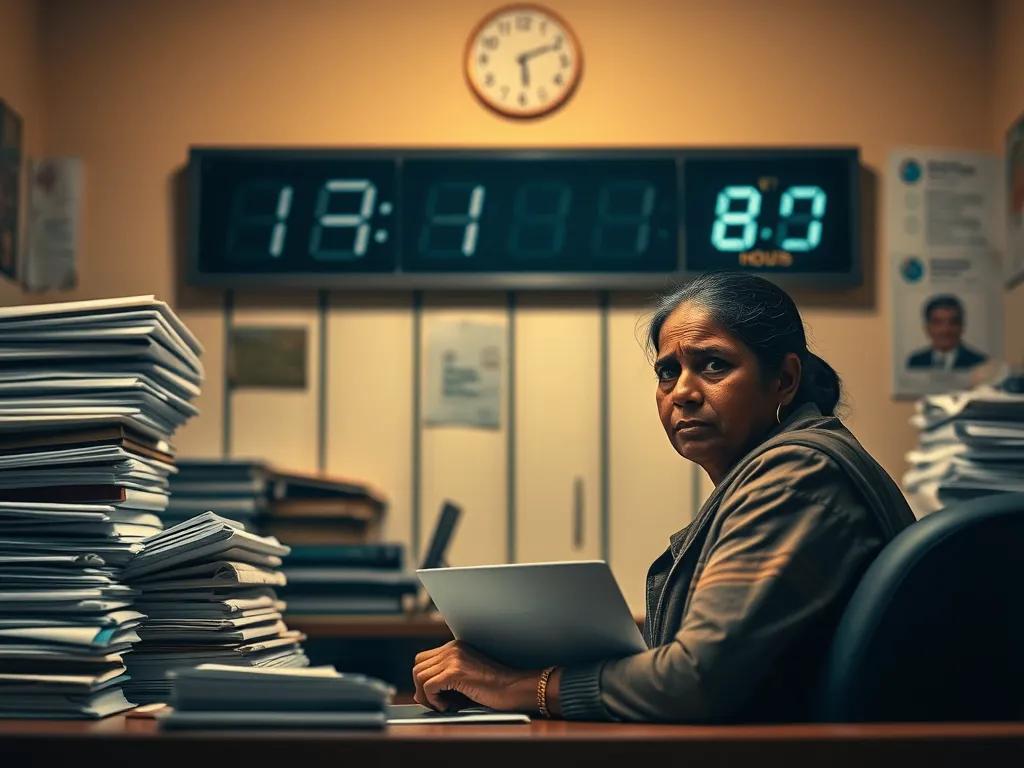
This document is a Second Appeal, filed under Section 19(3) of the RTI Act, 2005. Sadhana Tiwari submitted it to the Uttar Pradesh Information Commission (UPIC). At its heart lies a serious allegation that demands thorough investigation and accountability. The challenges in RTI Applications & Sadhana Tiwari’s fight for justice here centre on officials in Tehsil Lalganj, Mirzapur, arbitrarily striking her name from the list of Class-I heirs, a decision that has far-reaching repercussions for her rights and entitlements. In other words, what began as a routine administrative matter has now escalated into a prolonged fight against alleged corruption and malpractice within the local administration. Sadhana’s pursuit for justice highlights the importance of transparency in government operations and the need for systems that prevent abuse of power. She hopes that this appeal will shed light on her case and prompt action against those responsible.
Key Takeaways
- Sadhana Tiwari filed a Second Appeal under the RTI Act, alleging corruption by local officials in the inheritance process.
- Officials excluded her as a Class-I heir, prompting accusations of bribery and malpractice within the Lalganj administration.
- Despite repeated inaction, Tiwari’s persistence aims to hold corrupt officials accountable and highlight systemic issues.
- Her case demonstrates the widespread challenges in RTI applications and the struggle for transparency in Uttar Pradesh.
- The UP Information Commission now decides on the appeal, which could lead to accountability for the non-compliant officials.
🚨 Challenges in RTI Applications & Sadhana Tiwari’s Second Appeal
Sadhana Tiwari is using the Right to Information Act, 2005, to expose alleged corruption. Her target is the local police and the Lalganj Tehsil administration. Despite repeated official inaction, she has persisted. As a result, her persistence has become the central theme of her legal struggle. It also illustrates the wider challenges in RTI applications that ordinary citizens face when they try to hold local officials accountable.
🏛️ Core Issue Behind the Challenges in RTI Applications: Inheritance and Official Complicity
The appeal centers on a serious allegation. Officials mishandled the inheritance process for her grandfather’s property. Specifically, they excluded Tiwari from the list of legal heirs. This happened even though the law clearly entitled her to a share.
Details of the Alleged Irregularity
- Case summary: Tiwari says officials arbitrarily excluded her from the list of inheritors. This occurred even though she qualifies as a Class-I heir. Naturally, the exclusion raised immediate questions about the process.
- Key time-frame: Her father died five years before her grandfather. Therefore, under the Uttar Pradesh Revenue Code governing succession, she should have been recognised as a primary heir. As the daughter of a pre-deceased son, she held that right.
- Alleged corruption: According to Tiwari, the staff of Tehsil Sadar took bribes. They allegedly colluded with relatives to omit her name and usurp her property rights. Consequently, officials carried out the inheritance process improperly. In her words, they made a “mockery of the law.”
- Accused parties: The appeal names several individuals and positions as responsible. These include the Tehsildar Lalganj (Tarun Pratap) and the Revenue Inspector and Lekhpal of Lalganj Tehsil. It also names two uncles, Dayashankar Mishra and Hariprasad Mishra, both sons of Shambhu Saran Mishra. Finally, it names police personnel from Drummond Ganj Police Station, under Circle Officer Lal Ganj, for their alleged involvement in a “criminal act of deep-rooted corruption.”
Taken together, these allegations paint a troubling picture. The appellant links the police to this “criminal act of deep-rooted corruption,” suggesting collusion or inaction in investigating the alleged usurping of her property. Personal relationships and bribery, rather than the law, appear to have shaped the outcome — one of the clearest examples of the challenges in RTI applications & Sadhana Tiwari’s case brought to light.
📜 The RTI & Appeal Timeline: Challenges in RTI Applications and Administrative Insolence
Neither the Public Information Officer (PIO) nor the First Appellate Authority (FAA) met their obligations. Consequently, the timeline below shows a consistent pattern of silence at every stage. This pattern sits at the core of the challenges in RTI applications documented in this case.
| Step | Date | Official/Authority | Status |
|---|---|---|---|
| RTI Application (Sec 6(1)) | 09-09-2024 | PIO: Tehsildar Lalganj (Tarun Pratap) | No answer within the stipulated time |
| First Appeal (Sec 19(1)) | 20-10-2024 | FAA: SDM Lalganj (Gulab Chandra Second) | No answer or order issued |
| Second Appeal (Sec 19(3)) | 01-12-2024 | UP Information Commission | Filed due to officials’ insolence toward RTI provisions |
First, Tiwari filed her original RTI application in September 2024. She expected a response within the thirty-day window the law requires. However, the PIO never provided one. Then, in October, she escalated the matter. She filed a First Appeal with the SDM Lalganj. Once again, though, the authority failed to issue any order. Finally, faced with continued silence, she filed this Second Appeal in December 2024.
Relief Sought: Sadhana Tiwari’s Answer to the Challenges in RTI Applications
The lack of response from both the PIO and FAA reflects, in Tiwari’s words, “insolence.” Tiwari isn’t only seeking information. She also wants the Commission to act against the non-compliant officials. Indeed, she argues that their silence amounts to “anarchy.” Therefore, she urges the Uttar Pradesh Information Commission to take firm steps and strengthen democratic values. Moreover, she frames this request as necessary for the broader integrity of the RTI system.
🔍 Information Sought to Address the Challenges in RTI Applications
The original RTI application requested detailed records to identify all individuals involved in the inheritance process and the legal justification for the exclusion. Specifically, it requested the following:
- Names, designations, and current posting details of the Lekhpal, Revenue Inspector, and Tehsildar who processed the inheritance.
- Date the inheritance process was enforced.
- The specific reason for excluding her, a Class-I heir, from the list of inheritors.
Together, this information would have let Tiwari verify whether officials followed proper procedure. Alternatively, it would show whether they manipulated the process for personal gain. Unfortunately, since the PIO never responded, she still lacks the proof she needs. This is precisely why she escalated the matter to the Commission.
🌟 Local Impact and Public Perception Despite the Challenges in RTI Applications
The provided text emphasises the far-reaching impact of Sadhana Tiwari’s ongoing struggle. Her fight has reportedly exposed corruption within the police (Drummond Ganj personnel) and the Tehsil, which is described as “languishing” due to her impact. This impact is set against the backdrop of a prolonged legal and administrative battle against deep-rooted corruption and official non-compliance regarding a property dispute. Her case, in many ways, is a microcosm of the wider challenges in RTI applications & Sadhana Tiwari’s generation of activists continue to face across rural Uttar Pradesh.
Tiwari’s fight, according to the document, has had a visible local effect on Police and Tehsil staff alike. For instance, corruption is reportedly “languishing” in the Tehsil because of her impact, and this impact is said to show on the faces of Drummond Ganj police personnel too. In other words, her persistence appears to have made corrupt practices riskier to carry out openly. Her efforts are aimed at exposing a specific case of corruption where she alleges her name was arbitrarily excluded as a Class-I heir from her grandfather’s inheritance records.
Furthermore, local people reportedly admire her for confronting the system. She believes her struggle will prove historic at the local level. This admiration, in turn, reflects a broader public frustration with administrative corruption, and her fight has transformed into a public symbol against administrative malpractice.
⚖️ The RTI Act as a Response to the Corruption
Tiwari relies on the Right to Information Act, 2005, as her main tool for change. Essentially, her impact stems from forcing officials to comply with the law. So far, no formal enforcement action has been taken against them.
- Official resistance: The PIO (Tehsildar Lalganj) and the FAA (SDM Lalganj) failed to act on time. As a result, the appeal describes this failure as showing “insolence to the provisions of the RTI Act 2005.”
- The Second Appeal’s purpose: By escalating the matter to the Uttar Pradesh Information Commission (UPIC), Tiwari seeks more than information. She wants punitive action against the non-compliant officers. She argues that authorities must curb such conduct early. Otherwise, it risks spiralling into what she calls “anarchy.”
Meanwhile, this case also illustrates the broader challenges in RTI applications that citizens face across Uttar Pradesh. Even when the RTI sought specific information the law requires, officials can simply ignore requests. Consequently, the burden of enforcement often falls back onto the citizen. That citizen must then navigate a multi-step appeals process just to get basic information.
Key Information Sought to Expose Malpractice Amid Ongoing Challenges
To summarise, the RTI sought two categories of information that directly target the alleged corruption:
- Identity of Officials: Names of the Lekhpal, Revenue Inspector, and Tehsildar who processed the inheritance.
- Right to Reason: A specific request for the mandatory “Right to reason” for excluding her name, a Class-I heir, from the list of inheritors.
⏭️ Next Step in the Challenges in RTI & Sadhana Tiwari’s Fight
The Uttar Pradesh Information Commission now holds the next move. Specifically, it will decide whether to admit the Second Appeal. It will also decide whether to schedule a hearing and order the authorities to provide the information. Additionally, the Commission may choose to penalise the defaulting PIO and FAA.
Until then, however, Tiwari’s case remains an open example of the challenges in RTI applications & Sadhana Tiwari’s fight against them — a fight rooted in a broader pattern of RTI second appeals where information is denied across Uttar Pradesh, and one that raises the question of whether a Public Information Officer is hiding something. It shows how citizens in rural Uttar Pradesh face resistance when they use the RTI Act to challenge entrenched local corruption. Nevertheless, her persistence — and the public attention it has drawn — suggests that such resistance does not go entirely unnoticed.
Read the source document: TaruntehLalganj (PDF) FAA. for not entertaining RTI application


Facing a similar challenge? Share the details in the box below, and our team of experts will do their best to help.