
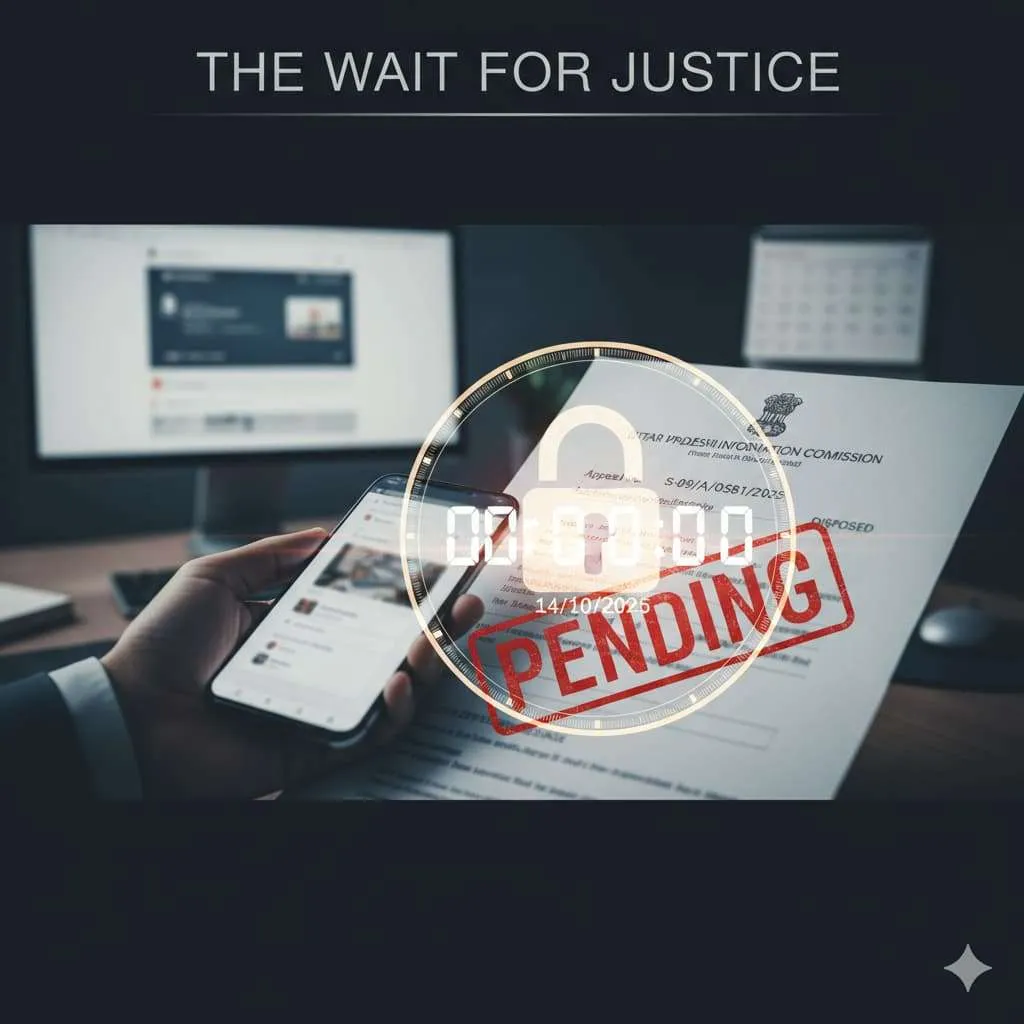
The Wait for Justice: Why Are Crucial Court Orders Taking So Long to Appear Online?
A fundamental part of a transparent judicial process is publishing final orders promptly, ensuring that all parties involved are kept informed of the outcomes of their cases.
For the appellant, knowing the outcome is not just a matter of curiosity; it is a significant turning point that dictates their next step in the pursuit of justice, influencing their decisions and potential actions moving forward.
Yet, citizens often express frustration over the agonizing wait for these crucial court orders, a delay that not only heightens anxiety but also casts doubt on the efficiency of the judicial system.
This wait persists even after the official websites have uploaded the case documentation, as many individuals are left in limbo, eagerly anticipating the moment when their cases are officially “disposed of.”
Such delays can hinder the overall perception of justice being served and raise questions about the accountability within legal institutions, thus emphasizing the urgent need for reform in the way final orders are communicated to the public.
The following outlines a recent, formal request made to the Uttar Pradesh Information Commission (UPIC). A citizen tries to understand the internal mechanisms for publishing orders. These orders are crucial to the court and final decisions.
The Case in Question because of Crucial Court Orders: A Formal Inquiry into an RTI Appeal
On October 15, 2025, a citizen filed an RTI inquiry. The citizen was Sadhana Tiwari, a proactive resident of the region who has been deeply engaged in community issues. She filed it with the Public Information Officer (PIO) of the UPIC, hoping to shed light on the case that had been the subject of much speculation and concern among the locals.
The application concerns an appeal case, Appeal No. S-09/A/0581/2025, which was heard and disposed of on October 13, 2025, yet Sadhana felt that the details surrounding the decision remained unclear. This underscores the importance of obtaining these crucial orders promptly, as they serve not only to inform the public but also to ensure accountability and transparency in government processes, a cornerstone for building trust in civic administration.
With her inquiry, Sadhana aims to encourage others to demand their rights and seeks clarity on the mechanisms of justice in her community.
The core problem? Two days after the hearing, the final order was nowhere to be found online. The RTI application meticulously addresses this delay and seeks accountability concerning this crucial court document.
5 Key Questions Posed to the Information Commission
The RTI request is a powerful tool for demanding transparency and accountability from governmental bodies. By utilizing this legal framework, citizens can effectively challenge the opacity of bureaucratic processes that often hinder the flow of critical information.
Here are the five points of information sought, which shine a light on the typical bureaucratic delays in information dissemination of these crucial orders: these points include the timeline for processing similar requests, the designated officials responsible for handling such inquiries, the standard procedures followed in disseminating information, any records of previously requested information on similar matters, and an outline of the reasons for any delays encountered.
Each of these elements not only highlights the inefficiencies within the system but also underscores the importance of upholding the fundamental right to information in a democratic society.
1. The Reason for the Delay
The applicant asked directly: Why has the Final Order passed on 13/10/2025 not yet been uploaded to the official portal? The case is listed as “disposed of.” The public deserves to know the order’s content promptly, as it dictates future action. This highlights the crucial nature of these court orders.
2. A Copy of the Final Order
The request asks for a legible copy of the Final Order itself. In the event it is still not finalized, the applicant demands the specific reason for the delay in its finalization.
3. The Official Time Frame for Publication
What is the Commission’s official commitment to transparency? The RTI seeks the standard or stipulated time frame in days. It asks for the time frame for uploading final orders to the website after the date they are passed. This seeks to set a clear benchmark for public expectation around crucial court orders.
4. Who is Accountable for the Upload?
To ensure accountability, the applicant requests the name of the staff member(s) responsible for uploading court orders. With the focus on these crucial orders, they also ask for the official designation of these staff members. Knowing who is responsible makes it easier for citizens to follow up on crucial orders.
5. Respondent Attendance Details
Finally, the application seeks clarity on procedural fairness. It asks for details about the presence of the respondent party (the District Magistrate/Tehsildar, Tehsil-Lalganj, District-Mirzapur) during the hearing. If they attended, their name and designation requested.
The Takeaway on Digital Transparency
The prompt publication of judicial and quasi-judicial orders is more than just good customer service—it’s a necessity of good governance that underpins the trust between citizens and their institutions.
When a public body, like an Information Commission, champions the right to information, it is not merely fulfilling a legal obligation but also fostering an environment where transparency is prioritized and citizens feel empowered to engage with their government.
Nevertheless, if it delays the release of its own decisions, especially regarding critical matters, it raises serious questions about the integrity of the process. This is particularly worrying about crucial court orders that can significantly impact the lives of individuals and communities.
Such delays not only reflect on its efficiency but also cast doubt on its commitment to digital transparency and accountability, ultimately undermining public confidence in the judiciary and the institutions that uphold the rule of law.
To maintain a robust democratic framework, it is essential for these entities to act swiftly and decisively, ensuring that information is accessible and readily available, as timely communication reinforces the very foundation of democracy itself.
This RTI inquiry serves as a crucial reminder. Citizens are actively monitoring official processes. They will use the Right to Information Act, 2005 to seek justice in their original case. They aim to enforce accountability within the network itself by understanding how crucial court orders play a role.
What are your thoughts? Have you ever had to wait too long for a court order to be, published online? Was the delay unreasonable for a commission order online?
4 second appeals arbitrarily rejected by research officer of U. P. S.I.C.
More than two dozen second appeals rejected by research officer of UPSIC now saying returned to appellant for rectification


Facing a similar challenge? Share the details in the box below, and our team of experts will do their best to help.