
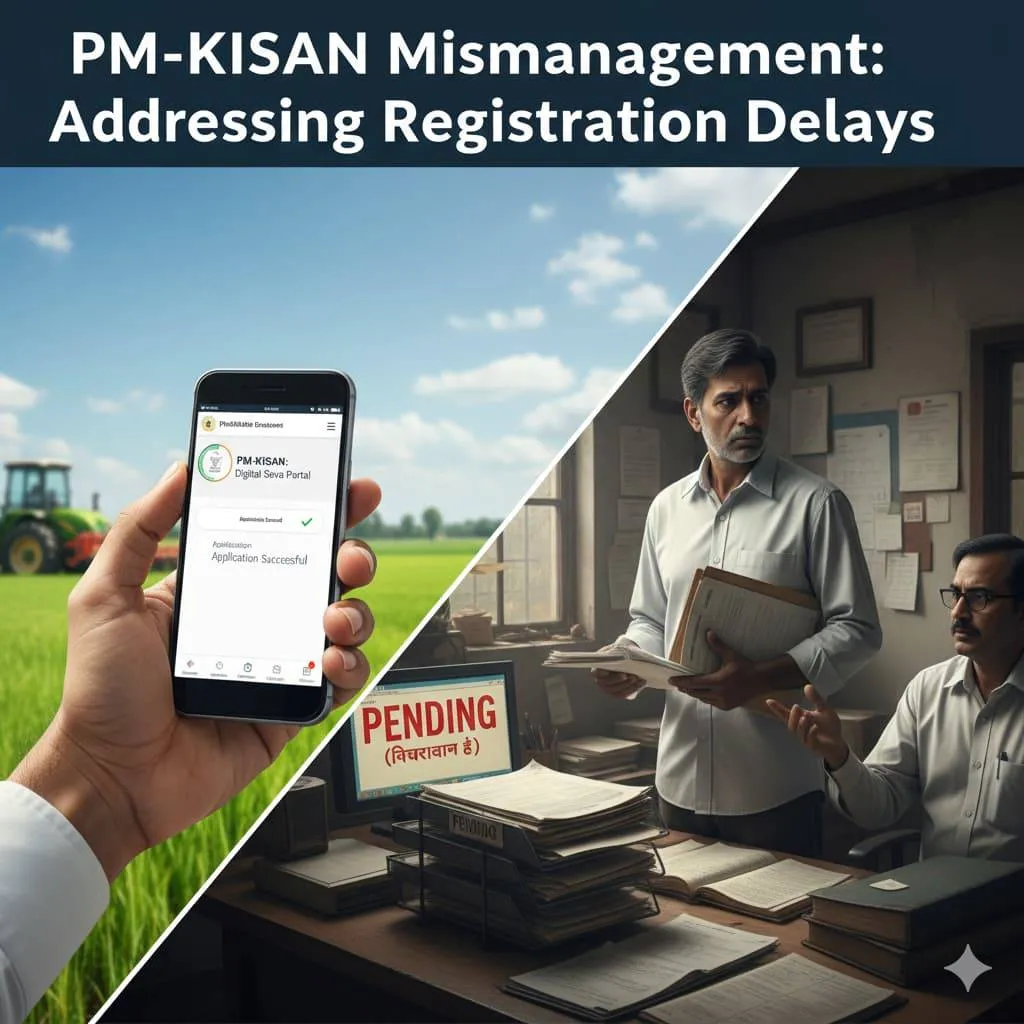
This is a serious matter. It points to systemic issues in the implementation of the PM-KISAN scheme at the ground level. PM-KISAN Mismanagement is becoming an increasing concern. This occurs despite clear objectives for timely and transparent delivery.
These inadequacies undermine the effectiveness of the scheme. They also erode the trust of the farmers who depend on this vital support for their livelihoods.
Key Takeaways (PM-KISAN Mismanagement)
- The PM-KISAN Mismanagement scheme faces systemic issues, undermining farmer trust and support.
- Delays in application processing expose gaps between digital intentions and bureaucratic reality.
- Key issues include the opaque ‘Under Consideration’ status, a lack of accountability, and digitisation without proper integration.
- Immediate reforms are essential to improve transparency, expedite verification, and strengthen oversight mechanisms.
- The case of Keshav Pratap Singh highlights the urgent need for systemic action to address mismanagement.
Furthermore, the execution gaps show the need for thorough oversight. Accountability measures are essential to ensure that the intended benefits reach those who need them most.
As stakeholders examine these challenges, they must engage in meaningful dialogue. This will address the obstacles. Solutions need to be developed to improve service delivery. The aim is to achieve better outcomes for all beneficiaries involved.
🛑 Bureaucratic Bottlenecks vs. Digital Dreams: The PM-KISAN Mismanagement Saga
PM-KISAN Mismanagement: Why Farmers Wait for Approved Registrations
The Pradhan Mantri Kisan Samman Nidhi (PM-KISAN) scheme aims to set a benchmark for Direct Benefit Transfer (DBT). It delivers financial aid to farmers promptly. This ensures transparency. However, in districts like Mirzapur, Uttar Pradesh, applicants often reveal a significant gap. This is between the digital vision and the bureaucratic reality. (PM-KISAN Mismanagement)
As highlighted in the CPGRAMS registration (No. DOAAC/E/2025/0045542), a critical issue has stalled the application of Keshav Pratap Singh. He is the son of Late Rajendra Pratap Singh. The farmer’s mandatory registration remains “Under Consideration” (विचाराधीन है) at the Deputy Director of Agriculture (DDA) office. This persistent delay, often termed procrastination by the applicant, represents a breakdown in administrative accountability.
🚧 Three Pillars of Mismanagement in the Agriculture Department (PM-KISAN Mismanagement)
The failure to process the registration, especially when other family members (Yogendra M.P. Singh, Mahesh Pratap Singh, and Aruna Pratap Singh) are already verified beneficiaries, points to three distinct areas of systemic mismanagement:
1. The Opaque “Under Consideration” Status
The central problem is the lack of transparency behind the “Pending for Approval by State Government” status. The scheme mandates verification within a stipulated timeline (often 30 days). Yet, applicants are left in the dark about what specific error or which document is causing the hold-up.
- Impact: This ambiguity forces the farmer into costly visits to the local office. These visits take a lot of time. They undermine the entire concept of a digitally streamlined process.
- The Case of Keshav Pratap Singh: With the registration number confirmed (e.g., 20250119192467), the DDA office holds the key—either the final approval or the specific, written reason for rejection. The failure to provide this reason constitutes administrative opacity and apathy.
2. Lack of Accountability in the Chain of Command (PM-KISAN Mismanagement)
The management of grievances, as evidenced by the case, often reveals a systemic failure of accountability from the top down:
- Central Forwarding: Grievances filed with the Ministry of Agriculture. Shri Ravi Ranjan Singh, Director, is the current officer-in-charge. Local residents frequently forward their grievances to the DDA office in Mirzapur. Although this practice follows procedure, it often delays resolution. Authorities push responsibility down without effectively intervening at the state level.
- Local Gatekeepers: Manual verification, even after a successful online application, persists. This reliance empowers local officials (at the Block/Tehsil level) to become “gatekeepers.” This control over the final approval creates an environment ripe for bureaucratic bottlenecks. It also leads to potentially unethical practices. Farmers are pressured to overcome deliberate delays.
3. Digitization Without Integration
The PM-KISAN scheme leverages Aadhaar and online portals, but the implementation fails due to a lack of true integration with core government databases (especially land records): (PM-KISAN Mismanagement)
- Land Record Mismatches: Delays often stem from discrepancies in land area records (Khatauni). The Agriculture Department often lacks a seamlessly updated database of farmers. This issue forces local officials to demand physical revenue records. This occurs despite the digital submission.
- Procedural Complexity: The registration process should be the simplest step. Instead, it becomes the biggest hurdle. This contradicts the scheme’s goal of supporting small and marginal farmers who rely on this timely income support.
📢 A Call for Immediate Action and Systemic Reform
The case of Keshav Pratap Singh involves a deserving applicant who is stalled. Meanwhile, his family members receive aid. His case serves as a stark reminder of the human cost of administrative mismanagement. (PM-KISAN Mismanagement)
The following immediate steps are imperative to resolve this and similar cases:
- Mandatory Written Reason: The Ministry of Agriculture and Farmers Welfare (MoAFW) must enforce a rule. It should mandate that local DDA offices provide a written, specific reason for any application pending beyond 15 days. This eliminates the ambiguous “Under Consideration” status.
- Expedited DDA Verification: The DDA Mirzapur must immediately process the three pending reference numbers. They should grant final approval for Keshav Pratap Singh. This is important due to the urgency of the situation and the successful enrollment of his close relatives.
- Strengthening Oversight: The oversight mechanism involving the state-level Directorate and the District Monitoring Committees needs reinforcement. It must hold local officials accountable for unexplained delays. Such procrastination undermines the farmer welfare mandate. (PM-KISAN Mismanagement)
The digital infrastructure for schemes like PM-KISAN is strong. However, administrative failures at the last mile are crippling its effectiveness. Governance must embrace transparency and accountability. If not, the digital dreams of farmer welfare will stay bogged down in bureaucratic mud. (PM-KISAN Mismanagement)
The official web link (URL) for the PG Portal (Centralized Public Grievance Redress and Monitoring System – CPGRAMS) is:
🌐 Official Web Link (PG Portal) (PM-KISAN Mismanagement)
- CPGRAMS Home Page: https://pgportal.gov.in/
The Department of Administrative Reforms and Public Grievances (DARPG) manages this online platform. Here, citizens can lodge grievances against Ministries, Departments, and State Governments of India.
You can use the following specific links on the portal for related actions:
- User Login/Register: https://pgportal.gov.in/signin
- View Status: https://pgportal.gov.in/status (You can track your grievance number DOAAC/E/2025/0045542 here).


Facing a similar challenge? Share the details in the box below, and our team of experts will do their best to help.