
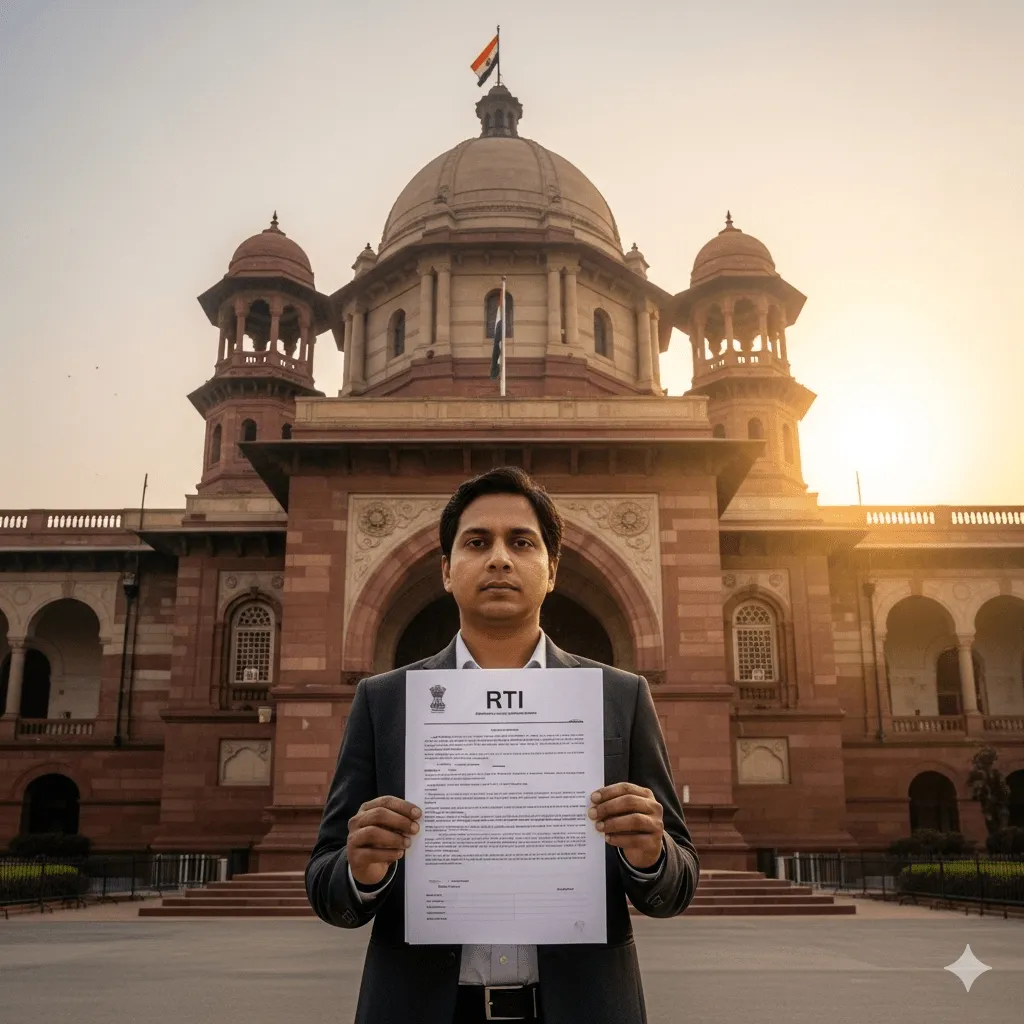
In Bhadohi, the District Public Relations Officer (DPRO) overlooked the Right to Information (RTI) inquiry submitted by Mr. Devi Prasad Gupta, a concerned citizen seeking transparency.
This oversight not only undermines the principles of accountability and responsibility that the RTI Act was designed to uphold but also reflects a significant violation of section 7(1) of the RTI Act 2005, which mandates timely responses to such inquiries.
The failure to address Mr. Gupta’s request not only raises questions about the efficacy of public institutions in Bhadohi but also highlights the need for greater adherence to the regulations intended to promote openness in government operations.
Seeking Transparency: A First Appeal Under the RTI Act
Transparency and accountability are cornerstones of good governance, ensuring that citizens have the tools they need to hold their government accountable. The Right to Information (RTI) Act, 2005, empowers citizens to demand information from public authorities, thereby fostering an environment where openness and clarity prevail.
However, the efficacy of this powerful tool often comes into question when information is not provided in a timely manner. What recourse is available to citizens when they encounter silence in response to their inquiries?
This post delves into a real-life scenario in Bhadohi, where an applicant, Mr. Devi Prasad Gupta, has filed a First Appeal due to the non-response to his RTI application, prompting a critical examination of the challenges faced by individuals seeking to exercise their rights under this legislation. The case illustrates not just a personal struggle but also highlights broader implications for citizen engagement and the functioning of democratic institutions.
The Initial Request: What Was Sought?
On July 30, 2025, Mr. Devi Prasad Gupta submitted an RTI application, marking a significant step toward transparency and accountability in local governance.
The registration number is DIRPR/R/2025/61913, which serves as a unique identifier for tracking the application throughout the process.
He submitted it with the Public Information Officer (PIO) of Bhadohi (Sant Ravidas Nagar)-DPRO, who is responsible for addressing such requests.
This action underscores Mr. Gupta’s commitment to ensuring that the public has access to vital information regarding government activities and decisions that affect their lives.
By filing this RTI, he aims to not only seek answers for himself but also to foster a culture of openness that encourages other citizens to engage in similar practices.
The relevance of such inquiries in today’s world cannot be overstated, as they play a crucial role in strengthening democracy and promoting good governance.
The information requested was specific and crucial for local oversight:
- Status, location, and funds spent on wall paintings
- Verification reports for various developmental schemes
These requests pertained to Village Panchayat – Dhanwatiya, Post-Barwa, Development block-Bhadohi, District-Bhadohi, Uttar Pradesh. They cover the last four years and the current year.
The Silence: Why a First Appeal Was Necessary
Section 7(1) of the RTI Act states that a PIO must respond to an RTI application within 30 days, ensuring that citizens have timely access to information and transparency in governance.
This timeframe begins from the receipt of the application, allowing the Public Information Officer to gather the necessary information from relevant sources and formulate a comprehensive response.
It is crucial for the integrity of the RTI system that this deadline is adhered to, as delays can hinder an applicant’s pursuit of information.
In this particular case, the deadline for a response was August 29, 2025, highlighting the importance of accountability and the obligation of the PIO to respect the stipulated time limits to uphold the rights of citizens seeking information under the RTI framework.
Mr. Gupta, however, received no communication or information. This lack of response is not just an inconvenience. It constitutes a “deemed refusal” under the Act. This makes it a valid ground for an appeal, especially in a place like Bhadohi where transparency is crucial.
Grounds for Appeal: Violations of the RTI Act
Mr. Gupta’s appeal highlights several key violations of the RTI Act, 2005:
- Violation of Section 7(1): The most direct violation is the failure to respond within the mandatory 30-day period.
- Deemed Refusal: The Act treats non-response within the stipulated time as if the information has been actively refused.
- Denial of Right to Information: The PIO’s inaction directly denies Mr. Gupta his fundamental right to information, which is essential for promoting transparency.
- Dereliction of Duty: The PIO has a legal obligation to provide the information. Alternatively, they must reject the application. They need to provide valid reasons within the timeframe. Complete silence is a clear dereliction of this duty in Bhadohi.
The Appeal’s Objective: Seeking Justice and Information
Mr. Gupta’s First Appeal was filed on September 14, 2025, reflecting his persistent efforts to seek redress and transparency.
The Registration Number assigned to this appeal is DIRPR/A/2025/61796, a unique identifier that will facilitate tracking its progress within the system.
This appeal is formally addressed to the First Appellate Authority, Panchayati Raj Directorate, which plays a critical role in overseeing local governance issues.
The appeal concerns matters pertinent to the District of Bhadohi (Sant Ravidas Nagar), Uttar Pradesh, a region known for its rich cultural heritage but also facing challenges related to governance and accountability.
Mr. Gupta hopes that his appeal will shed light on these issues and contribute to the integrity of local administrative practices.
He is seeking the following relief:
- Immediate Furnishing of Information: A directive to the concerned PIO to provide the requested information without further delay. Crucially, as per Section 7(6) of the RTI Act, this information should be provided free of cost. This is due to the PIO’s failure to respond on time.
- Disciplinary Action: Initiation of appropriate disciplinary action against the PIO for non-compliance.
- Preventive Measures: Issuing necessary instructions is essential to prevent such violations in the future. This action upholds the spirit of the RTI Act in Bhadohi.
The First Appellate Authority in this case is the Mirzapur-Deputy Director. Contact details are provided as Mobile: 9412445037 and Email: ddprmi-up@nic.in. The Nodal Officer for this department is accessible via Mobile: 9795140577 and Email: up.panchayatiraj@gmail.com.
The Bigger Picture: Upholding Democratic Principles
This case underscores the importance of the RTI Act in fostering an informed citizenry and ensuring government accountability.
When public officials do not adhere to the Act’s provisions, mechanisms like the First Appeal are vital as they empower citizens to question and challenge arbitrary decisions made by authorities.
These avenues for redress are not just bureaucratic formalities; they represent the fundamental rights of individuals to seek justice and information from their government.
Citizens can demand the transparency that is fundamental to a functioning democracy, ensuring that no decision is made in the shadows of ignorance.
As we await the outcome of Mr. Gupta’s appeal, we are hopeful for a resolution that upholds the spirit of the RTI Act, which is crucial for maintaining a robust dialogue between the government and its constituents, fostering a culture of transparency and accountability that can lead to meaningful change in society.
Enquiry officer may provide the information concerned with enquiry


Facing a similar challenge? Share the details in the box below, and our team of experts will do their best to help.