
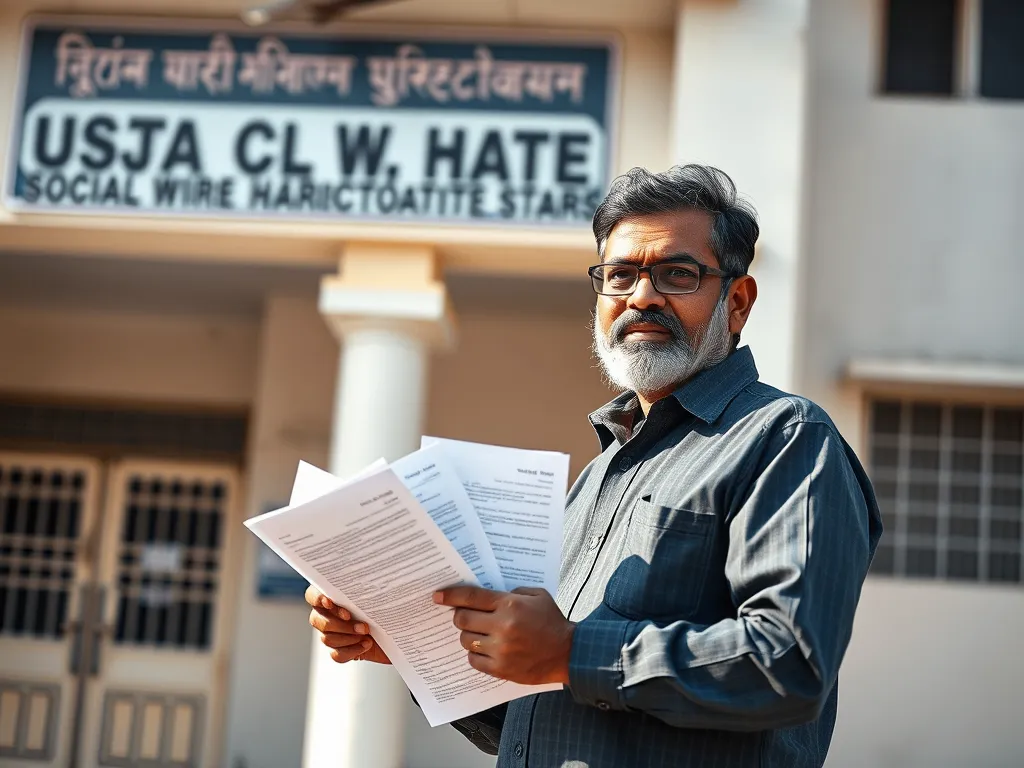
The Transparency Paradox: RTI, Transfer Policies, and the Battle for Accountability in Uttar Pradesh
The Right to Information (RTI) Act of 2005 was envisioned as the “sunlight” that would disinfect the corridors of power, curbing the “jungle fire” of corruption through transparency and accountability. However, in the heart of Uttar Pradesh’s administrative machinery, a significant shadow persists. The case of Yogi M. P. Singh vs. The Social Welfare Directorate serves as a potent case study on how procedural delays, legal technicalities, and administrative inertia continue to undermine the spirit of the law.
The Core Conflict: Personal Privacy vs. Public Accountability
At the center of the dispute is the tension between Section 8(1)(j) of the RTI Act and the public’s right to know how government policies are implemented. Public Information Officers (PIOs) across Uttar Pradesh frequently deny requests regarding the transfer and posting of officials, labeling such data as “personal information.
This defensive stance is often bolstered by Supreme Court precedents, notably the Girish Ramchandra Deshpande and CS Shyam cases. These rulings suggested that service records, including transfers and promotions, are matters between the employee and the employer, lacking any inherent “public interest.”
However, this interpretation is not absolute. The Karnataka High Court, in the AS Mallikarjunaswamy case, provided a crucial counter-narrative: when information is sought to address grievances related to seniority, promotions, or the fair application of state policy, the “personal privacy” shield must yield to the necessity of justice and administrative fairness.
The Case Study: A Mockery of Statutory Timelines
The grievance of Shri Yogi M. P. Singh (Registration No: DIRSW/R/2024/60156) highlights a systemic failure in the Social Welfare Department of Mirzapur. The timeline of his application reveals a blatant disregard for Section 7(1) of the RTI Act, which mandates a response within 30 days:
- November 21, 2024: The original RTI request was filed online.
- January 9, 2025: Over 45 days later, the applicant had received no response, forcing him to file a First Appeal (DIRSW/A/2025/60007).
- February 14, 2025: The appeal was finally disposed of, but the “reply” provided was a vague departmental redirection rather than the substantive information requested.
The appellant’s prayer is clear: the delay is not merely a clerical error but a “mockery of the provisions” of the Act. When a PIO remains silent for nearly 50 days, it raises a legitimate suspicion: What is being hidden behind the silence?
The 2025-26 Transfer Policy: Paper vs. Practice
The urgency of this RTI request is tied to the Uttar Pradesh Government’s 2025–26 Transfer Policy. This policy was designed to dismantle “transfer mafias” and deep-rooted corruption by enforcing strict term limits:
- Group A and B Officers: Mandatory transfer after three years in a district or seven years in a division.
- Merit-Based System: A shift toward online, merit-based transfers to minimize human bias and political interference.
Shri Singh’s inquiry sought to verify if the Social Welfare Officer in Mirzapur was complying with these mandates. By refusing to disclose who has been moved and who has stayed beyond their term, the public authority effectively prevents the public from auditing whether the policy is being applied uniformly or if “special favors” are being granted to those stuck in the same post for decades.
The Role of the First Appellate Authority (FAA)
In this instance, the First Appellate Authority, Mr. Rajesh Kr Singh (DD Vindhyachal), acknowledged the lapse. On January 15, 2025, he issued a directive (Letter No. /U.N./S.K./Jan Suvidha-RTI /2024-25) to the District Social Welfare Officer, Mirzapur, demanding that the information be provided within three days.
Despite this “top-down” order, the eventual disposal of the appeal on February 14, 2025, resulted in a response that many would call “evasive.” The reply stated that the matters “come under departmental/government work,” essentially circular logic that avoids providing the specific data on officer tenures and transfer compliance.
The Impact of Arbitrary Denials
When PIOs and departments use technicalities to block access to transfer details, they do more than just hide a few names; they erode the foundation of Good Governance.
- Encouraging Stagnation: Officers who remain in one location for too long often develop “vested interests,” which is exactly what the 2025-26 policy aims to prevent.
- Demoralizing the Citizenry: When an activist like Yogi M. P. Singh follows every legal step only to be met with delays and vague replies, it discourages others from participating in the democratic process.
- Judicial and Commission Penalties: The Central Information Commission (CIC) has, in past cases, awarded compensation to appellants and penalized PIOs for such “arbitrary” actions. The Mirzapur case appears to be a prime candidate for such intervention.
Conclusion: Restoring the Spirit of the RTI
The situation in the Social Welfare Directorate of Uttar Pradesh serves as a warning. Transparency should not be a “request” that the government can choose to ignore; it is a statutory right.
The Uttar Pradesh government must move beyond simply drafting sophisticated transfer policies on paper. They must ensure that the implementation of these policies is open to public scrutiny. If an officer has stayed in a district for over three years in violation of the 2025-26 policy, the public has a right to know why.
To restore faith in the system, the State Information Commission must take a stern view of PIOs who violate Section 7(1) timelines. Only through accountability and the consistent application of the law can the “jungle fire” of corruption truly be extinguished.
Based on your RTI application and the hierarchy of the Social Welfare Department in Uttar Pradesh, here are the structured contact details and web resources for the public authorities concerned.
1. Public Authority: Social Welfare Directorate, Uttar Pradesh
This is the state-level nodal body responsible for overseeing the implementation of the RTI Act and departmental policies like the 2025-26 Transfer Policy.
- Official Website: samajkalyan.up.gov.in / dirsamajkalyan.in
- Head Office Address: Kalyan Bhawan, 3 Prag Narain Road, Butler Colony, Lucknow, UP – 226001.
- Central Helpline: 0522-353 8700 / 14568 (Samaj Kalyan Command Center)
| Designation | Name | Mobile/CUG No. | Email Address |
| Director | – | 9151935101 | director.sw@dirsamajkalyan.in |
| Joint Director (RTI) | – | 9151935102 | jd1.sw@dirsamajkalyan.in |
| Nodal Officer | Reeta | – | director.sw@dirsamajkalyan.in |
| Commissioner | – | – | commissioner.sw@dirsamajkalyan.in |
2. Appellate Authority: Vindhyachal Division (Mirzachal)
As per your appeal record, this office acts as the First Appellate Authority (FAA) for grievances originating from the Mirzapur district office.
- Office Address: Office of the Deputy Director, Social Welfare, Vindhyachal Division, Mirzapur, UP.
| Designation | Name | Mobile/CUG No. | Email Address |
| FAA / Deputy Director | Mr. Rajesh Kr Singh | 9473629156 | ddswmirzapur@dirsamajkalyan.in |
| Alternate Email | – | – | ddvindhyachal-up-@nic.com |
| Division CUG No. | – | 9151935139 | – |
3. Public Information Officer (PIO): District Mirzapur
The PIO at the district level is the primary responder to RTI requests. The non-responsiveness of this officer (PIO DSWO Mirzapur) is the core of your grievance.
- Office Address: District Social Welfare Office, Vikas Bhawan, Mirzapur, UP – 231001.
| Designation | Name | Mobile/CUG No. | Email Address |
| PIO / DSWO Mirzapur | – | 9151935261 | dswmirzapur@dirsamajkalyan.in |
| Alt District Email | – | – | dbcwomirzapur@gmail.com |
| District Magistrate | – | 9454417567 | dmmir@nic.in |
4. Digital Portals for Escalation
Since your appeal was disposed of with a vague reply, you may need to escalate to the state commission or monitor the status through these official links:
- UP RTI Online Portal: rtionline.up.gov.in (For filing second appeals or checking status).
- UP Jan Sunwai (IGRS): jansunwai.up.nic.in (If RTI fails, this is a direct grievance portal for the CM’s office).
- Kalyan Saathi Bot/Portal: ccrc.samajkalyanup.in (For departmental complaints).
Summary of Application IDs
- RTI Request Registration No:
DIRSW/R/2024/60156(Filed 21/11/2024) - First Appeal Registration No:
DIRSW/A/2025/60007(Disposed on 14/02/2025)
Would you like me to draft a Second Appeal to the State Information Commission (SIC) specifically citing the “vague and evasive” nature of the FAA’s final disposal?


Facing a similar challenge? Share the details in the box below, and our team of experts will do their best to help.