
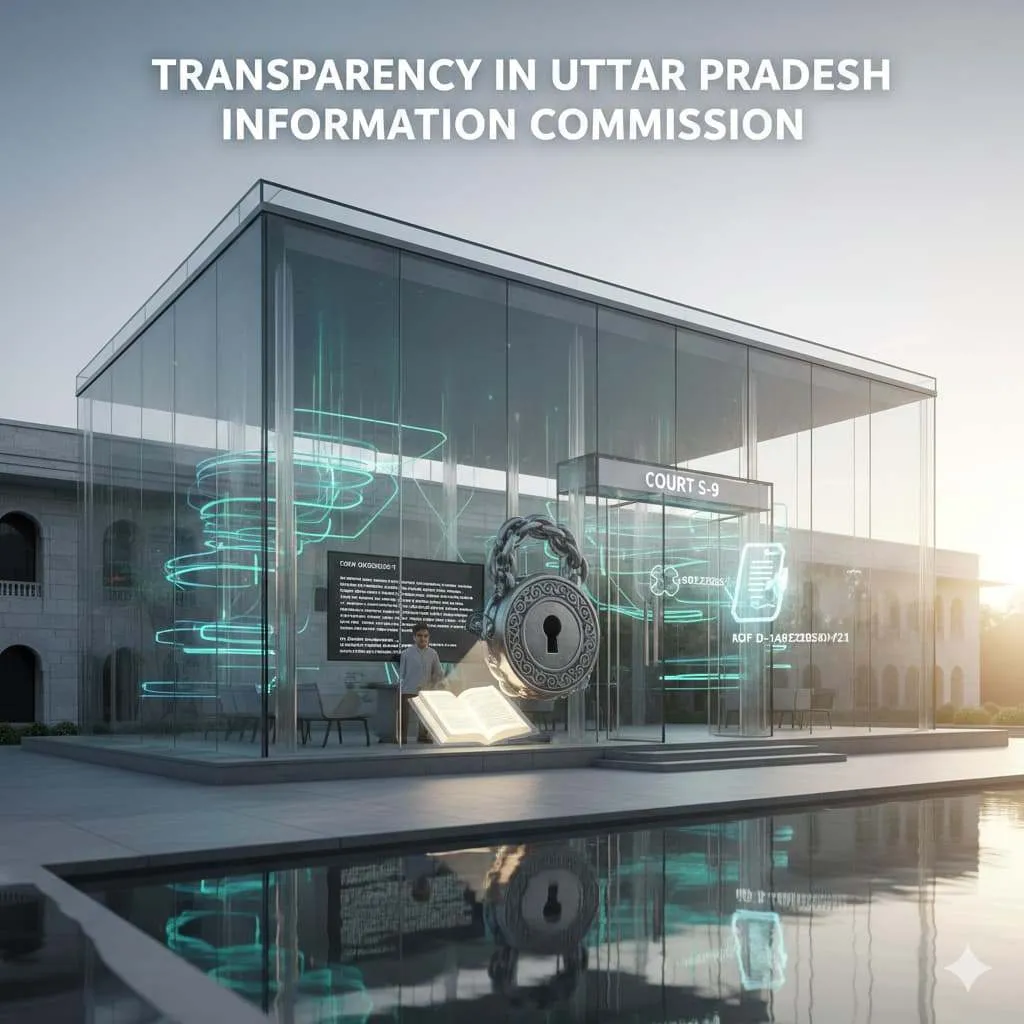
Recently, transparency has become a pivotal aspect of governance within the Uttar Pradesh Information Commission. The Commission plays a crucial role in promoting accountability. It ensures that citizens have access to vital information regarding government functioning. By streamlining the process of filing requests under the Right to Information Act, it empowers individuals to seek clarity on various issues. The Commission has made strides in addressing grievances related to non-compliance by public authorities. Additionally, it has implemented initiatives aimed at raising public awareness of its rights. These efforts promote the mechanisms available for obtaining information. Overall, this initiative fosters a culture of openness and trust.
🏛️ A Call for Transparency: The Uttar Pradesh State Information Commission Must Set a Precedent
The Right to Information (RTI) Act, 2005, serves as a cornerstone of democracy. It fosters transparency and accountability in governance. We achieve these objectives by empowering citizens to seek information from public authorities and ensuring their right to know. As the final appellate authority for RTI matters in the state, the Uttar Pradesh State Information Commission (UPSIC) should act as a role model for all public authorities.
It should set standards for efficiency and responsiveness in handling information requests. However, recent observations suggest a concerning lack of clarity in its internal processes. This issue is evidenced by the disposal of an appeal (Appeal No. S 9/A/2193/2024). This has raised alarms among stakeholders, who are concerned, who are concerned about the Commission’s commitment to upholding the principles of transparency. The delays and ambiguities surrounding such cases undermine public trust. They highlight the urgent need for reform in the operational frameworks of the UPSIC. This is essential to ensure it effectively serves as a beacon of accountability in governance.
The Issue of Cryptic Functioning and Accountability (Transparency in Uttar Pradesh Information Commission)
The core issue highlighted is the UPSIC’s failure to provide clear, actionable information regarding its internal management process for handling documents related to running cases (KOF). This lack of clarity confuses stakeholders. It hinders effective communication and collaboration. As a result, it leads to delays in case management and resolution. Furthermore, this situation directly undermines the principles of transparency that the Commission must uphold. It raises concerns about accountability and fairness in the processes involved. Ultimately, without a robust and transparent documentation process, observers may question the integrity of the Commission’s operations. This impacts public trust and undermines confidence in its ability to serve justice effectively.
1. Tracking a Critical Document (KOF)
The RTI application specifically sought details about the movement of a document, KOF Diary No. D-140220250421, submitted on February 14, 2025: (Transparency in Uttar Pradesh Information Commission)
- Request: Provide the date and time the document reached Court S-9.
- PIO’s Response: “The mentioned KOF is available on file, and the said letter is also mentioned in the order dated 20.03.2025…
- Analysis: This is an evasive and non-responsive reply. The PIO did not provide the specific date and time of document movement, which is a matter of record in the Commission’s diary or filing section. This refusal to track the file movement raises questions about the efficiency and auditability of the internal file management system.
2. Identifying Accountable Staff (Transparency in Uttar Pradesh Information Commission)
The RTI sought the name and designation of the staff who processed the diary entry.
- Request: Provide the name and designation of the staff who processed Diary No. D-140220250421.
- PIO’s Response (and for Points 3, 4, 5): “According to point number 1”
- Analysis: The PIO’s wholesale use of “According to point number 1” for all subsequent queries is a clear violation of the RTI Act. Point 1 does not contain the names/designations of staff, the mechanism for processing, or the timeline for uploading orders. Identifying the staff responsible for processing a key document is fundamental to fixing accountability.
3. Order-Copy, Mechanism, and Upload Time (Transparency in Uttar Pradesh Information Commission)
The remaining points sought essential procedural information:
- Copy of the order (available on the website, but a direct link/copy should be provided).
- Mechanism to process KOF documents received via the portal.
- Duration of time for final order upload (as the order was not available at the time of the RTI).
The failure to describe the document processing mechanism (Point 4) means the system remains a “black box” to the public. This lack of clarity is antithetical to transparency. Similarly, failing to specify the Service Level Agreement (SLA) for uploading orders (Point 5) shows a lack of commitment to timely public disclosure. (Transparency in Uttar Pradesh Information Commission)
The Obligation to Grant an Opportunity for Objection (Transparency in Uttar Pradesh Information Commission)
A significant procedural lapse is evident in the Order dated March 20, 2025, passed by the Hon’ble State Information Commissioner, Court S-9.
The order notes:
- The appellant submitted an objection via e-book on February 14, 2025.
- The opposing party (PIO) sent revised information to the appellant on March 20, 2025 (the day of the hearing).
- The appeal was disposed of on March 20, 2025, noting the appellant’s absence and that information had been provided.
- The Flaw: When the Public Information Officer submitted the final, revised information on March 19, 2025, and sent it to the appellant on March 20, 2025, the Commissioner had the obligatory duty to provide a reasonable opportunity for the appellant to submit an objection against this latest set of information. The Commission disposed of the case on the very day it dispatched the information. They did so without confirming if the appellant was satisfied. They also did not verify whether the appellant received the document in time. This decision seems to rush to close the file without ensuring substantive justice. (Transparency in Uttar Pradesh Information Commission)
💡 Conclusion: UPSIC Must Lead By Example
The Uttar Pradesh Information Commission must prioritise a complete overhaul of its internal transparency mechanisms.
- Direct Answers: PIOs must provide point-wise, specific answers to RTI queries related to internal management.
- Procedural Clarity: Clearly define and publish the mechanism and timelines for document processing and order uploading on the official website. (Transparency in Uttar Pradesh Information Commission)
- Adherence to Natural Justice: The Commission must ensure that appellants receive a fair and reasonable opportunity to challenge the information provided by the PIO, especially when the revised information is furnished immediately before or during the scheduled hearing.
The UPSIC’s failure to provide a model of transparency in its own functioning severely compromises its moral authority to enforce the RTI Act on other departments. It is imperative that the concerned and accountable staff take these management issues seriously to restore public confidence. label by the circle officer.


Facing a similar challenge? Share the details in the box below, and our team of experts will do their best to help.