
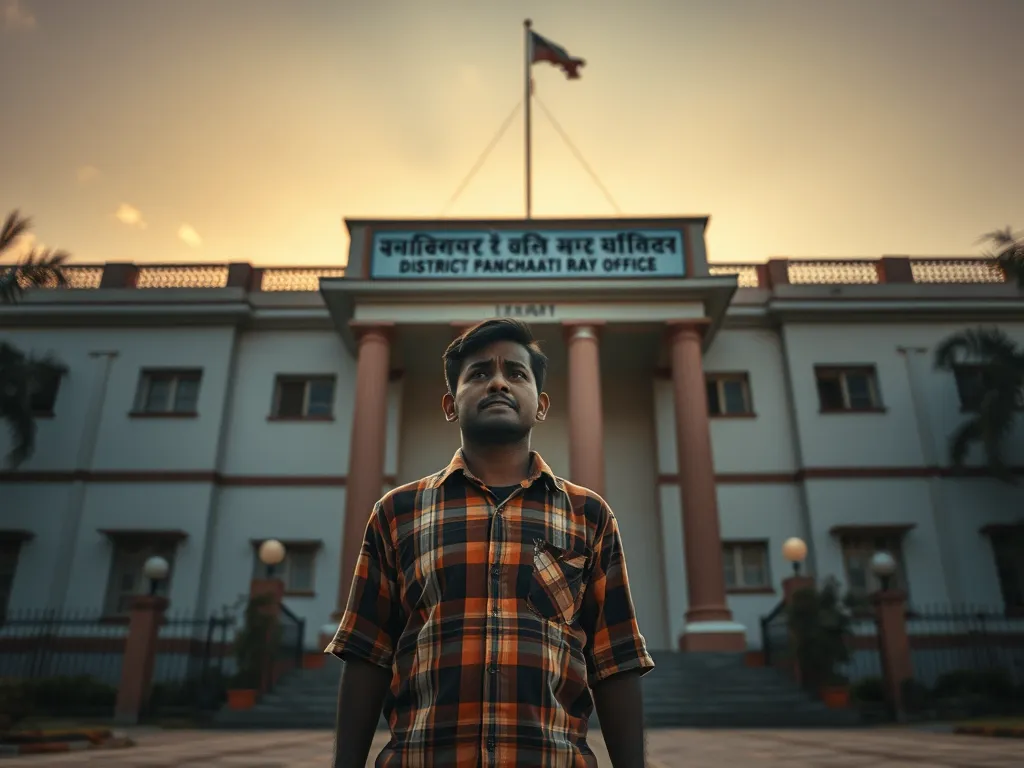
Addressing biased commission practices in RTI appeals requires a multifaceted approach to ensure transparency and fairness. Therefore, we must implement rigorous training programs for commission members, emphasizing impartiality and ethical standards. Furthermore, clear guidelines for decision-making and review processes can help mitigate biases that lead to unfair outcomes. In addition, we should incorporate an independent review mechanism to correct potential injustices. Moreover, engaging stakeholders in regular dialogues helps us identify systemic issues and fosters a culture of accountability. Ultimately, strengthening the integrity of the RTI process not only enhances public trust but also ensures that we respect and uphold citizens’ rights to information.
Based on the blog post, here are the key takeaways regarding the RTI dispute in Mirzapur:
1. The “Default” Victory for Corrupt Officials (Addressing Biased Commission Practices)
The most significant takeaway is that administrative silence allows the PIO to win. By not showing up to hearings and ignoring the Commission’s notices, the District Panchayat Raj Officer (DPRO) effectively waited for the case to close due to non-attendance, successfully avoiding the disclosure of financial records.
2. Procedural Dismissal vs. Merit-Based Justice
The State Information Commission prioritized procedural attendance over the merit of the case. Even though the PIO was in clear violation of the RTI Act (by failing to provide information for over a year), the Commissioner chose to close the file because the appellant was absent, rather than penalizing the officer for non-compliance.
3. Vulnerability of Rural Development Funds
The specific nature of the information sought—estimates, work booklets, and wall painting expenditures in Nibi Gaharwar—notably highlights that, consequently, local village development funds remain a high-risk area for lack of transparency, thereby increasing the potential for “Jungle Raj” (lawlessness) in public spending.
4. The Breakdown of the “Safety Net” (Addressing Biased Commission Practices)
The RTI Act provides a three-tier system (PIO → First Appeal → Second Appeal). This case shows a systemic failure where the final tier (the Commission) failed to act as a watchdog, instead becoming a facilitator of delays by repeatedly issuing notices that carried no real threat of penalty.
5. Legal Recourse Still Exists (Addressing Biased Commission Practices)
While the Second Appeal is closed, the situation is not final. The appellant maintains the legal right to:
- File a Recall Application to reopen the case.
- Approach the High Court via a Writ Petition.
- File a Section 18 Complaint to trigger a penalty investigation against the DPRO.
Addressing Biased Commission Practices: When “Process” Dismisses Transparency
The Right to Information (RTI) Act, 2005, empowers citizens as the “common man’s weapon” against corruption, thereby enabling them to demand accountability from public authorities. However, the case of Yogi M.P. Singh vs. DPRO Mirzapur (Appeal No. S 09/A/1103/2024) reveals a troubling reality; specifically, individuals sometimes exploit the very mechanism designed to protect transparency in order to undermine it.
When a State Information Commission closes a second appeal solely because the appellant is absent—without examining whether the PIO provided the information to the information seeker or not—it doesn’t just close a case; it effectively shuts the door on justice.
The Core Issue: Information vs. Attendance (Addressing Biased Commission Practices)
The primary grievance in this matter is not just the silence of the District Panchayat Raj Officer (DPRO) of Mirzapur, but the “arbitrary” disposal of the appeal by the Uttar Pradesh State Information Commission.
The appellant sought five specific points of information regarding developmental schemes, funds, and “wall painting” expenditures in the Nibi Gaharwar village panchayat. Despite five scheduled hearings between October 2024 and March 2025, the case was dismissed because neither party appeared.
1. The Duty of the Commissioner (Addressing Biased Commission Practices)
Under the RTI Act, the Information Commissioner is a quasi-judicial authority. While attendance is encouraged, the Act places the onus of proof on the Public Information Officer (PIO) to justify why information was not provided. By closing the matter simply due to “non-attendance,” the Commission overlooked its primary duty: to ensure the PIO complied with Section 7(1) of the Act.
2. The Loophole of “Natural Justice” (Addressing Biased Commission Practices)
In the orders provided, the Commission repeatedly issued notices to the PIO to “dispose of the application.” However, the PIO ignored these notices. When the Commission eventually closed the case, it rewarded the PIO’s silence. This creates a dangerous precedent where a corrupt or negligent officer can simply wait out the appeal process, knowing that if the appellant misses a hearing, the case will vanish.
The Information Sought: A Matter of Local Governance
The five points raised by the appellant are critical for grassroots accountability: (Addressing Biased Commission Practices)
- Estimates and Fund Distribution: In particular, how much money was allocated for village development?
- Work Booklets: Specifically, what projects were undertaken in this endeavor?
- Wall Paintings: A common area for financial leakage in rural development schemes; consequently, it often undermines the overall effectiveness of these initiatives.
By not providing this information, the DPRO Mirzapur is effectively shielding the financial records of the Chhanbey development block from public scrutiny.
Legal Recourse: What Happens When the Commission Fails?
When the Second Appeal is closed arbitrarily, the appellant is not without options. The RTI Act and Indian Law provide further steps to challenge such “Mockery of the Act”: (Addressing Biased Commission Practices)
- Order Recall/Review (Rule 12): Under the Uttar Pradesh RTI Rules, 2015, an appellant can move an application to “Recall” the order if there was a valid reason for non-attendance or if the order contains a procedural defect.
- Section 18 Complaint: If the PIO has acted with malafide intent or refused to accept the application, a direct complaint under Section 18 can be filed. Unlike an appeal, a complaint can lead to a penalty of ₹250 per day (up to ₹25,000) on the officer.
- Writ Petition in High Court: The decisions of the State Information Commission are subject to the “Writ Jurisdiction” of the High Court under Article 226. If the Commission has failed to exercise its jurisdiction or has passed a perverse order, the High Court can quash the dismissal and direct a fresh hearing.
Conclusion: Safeguarding the RTI (Addressing Biased Commission Practices)
The situation in Mirzapur reflects a “Jungle Raj” in administrative transparency where the PIO remains fearless and the Commission remains passive. For the RTI Act to survive, the Commission must prioritize the merit of the information over the presence of the appellant.
Yogi M.P. Singh’s struggle serves as a reminder that we must defend our right to transparency against a nexus of corruption and bureaucratic apathy.
To assist with your legal follow-up regarding the closed appeal (Appeal No. S 09/A/1103/2024), here are the verified contact details and web links for the relevant public authorities.
1. Uttar Pradesh State Information Commission (UPSIC) (Addressing Biased Commission Practices)
This is the body that closed your appeal. You will need to contact them if you wish to file an Order Recall (Rule 12) application.
- Website: upsic.up.gov.in
- Email: webmaster-upic@up.gov.in (Official) or webmaster.upic@gmail.com
- Phone (Office): 0522-2724930
- Address: 7/7A, RTI Bhawan, Vibhuti Khand, Gomti Nagar, Lucknow, Uttar Pradesh – 226010.
- Key Link: Online Status/Case Tracking (CATS)
2. District Panchayat Raj Officer (DPRO), Mirzapur
This is the Public Information Officer (PIO) who failed to provide the information. (Addressing Biased Commission Practices)
- Official Department Website: panchayatiraj.up.nic.in
- District Mirzapur Website: mirzapur.nic.in
- Direct Email (Likely): amaprmir-up@nic.in (Standard format for UP DPROs) or dmmir@nic.in (District Magistrate’s office for escalation).
- CUG Mobile (General DPRO Contact): You may reach the DPRO office via the District Magistrate’s helpline at 9454417567.
- Address: Office of the District Panchayat Raj Officer, Collectorate Compound, Mirzapur, UP – 231001.
3. RTI Online Portals (For Fresh Filings/Complaints)
If you intend to file a fresh complaint under Section 18 for the non-compliance: (Addressing Biased Commission Practices)
- UP RTI Online: rtionline.up.gov.in
- Helpline Email: onlinertihelpline.up@gov.in
- UP Government Jan-Sunwai (IGRS): jansunwai.up.nic.in (Use this to report the “mockery of the act” directly to the Chief Minister’s office).
Summary of Identifiers for your Case: (Addressing Biased Commission Practices)
- Registration Number: DIRPR/R/2024/80151
- Appeal Number: S 09/A/1103/2024
- Presiding Officer: Shakuntala Gautam, Hon’ble State Information Commissioner
- Hearing Room: S-9
Would you like me to draft a “Rule 12 Recall Application” addressed to the State Information Commissioner to reopen this specific file?


Facing a similar challenge? Share the details in the box below, and our team of experts will do their best to help.