
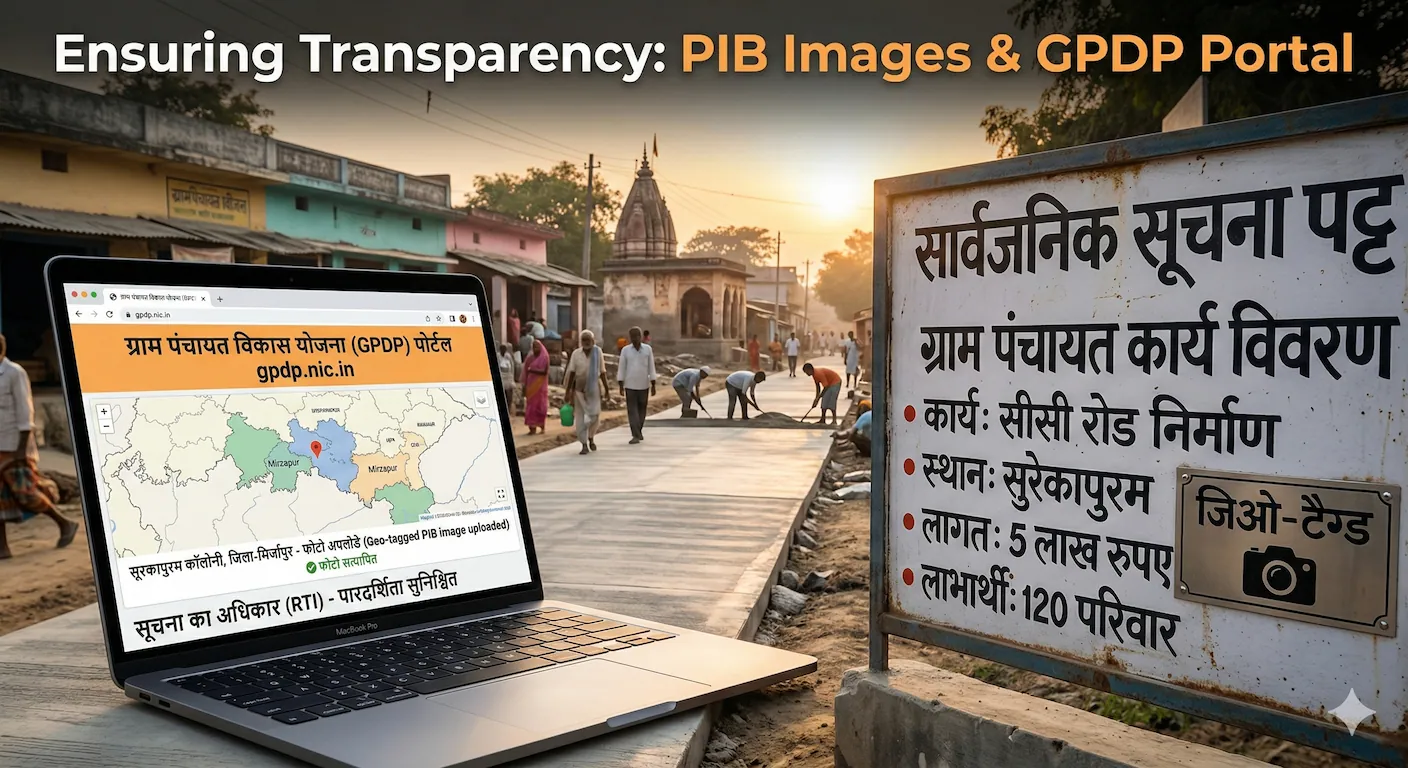
The blog post highlights a significant legal struggle for transparency in rural governance. It specifically focuses on the accountability of the PIB Images & GPDP Portal in Mirzapur.
Key Takeaways
- Mandatory Digital Transparency: The central dispute involves geo-tagged photographs of Public Information Boards (PIB). These photographs must be uploaded to the national GPDP portal.
- Administrative Resistance: The Public Information Officer (PIO) of Mirzapur has claimed that these digital uploads are not mandatory. The appellant challenges this claim as a “gross misrepresentation” of national policy.
- Accountability Gaps: There is a documented failure of 85 Gram Panchayats in the region to upload required images. This has led to a breakdown in the reporting chain. It could mask unauthorized fund disbursements.
- Allegations of Misleading Conduct: The appellant alleges that the PIO has intentionally obstructed the RTI process. The obstruction occurred by providing irrelevant data belonging to other individuals. Additionally, inquiries were incorrectly redirected to the e-GramSwaraj portal instead of the GPDP monitoring platform.
- Final Opportunity for Adjudication: After several missed hearings by both parties, the State Information Commission has set a final opportunity. This hearing is scheduled for March 18, 2026.
- Demand for Penalties: The appellant has formally requested the Commission to impose penalties. These penalties would be under Section 20 of the RTI Act. The request targets officials for professional negligence and providing false information.
PIB Images & GPDP Portal: The Case of Digital Transparency in Mirzapur’s Panchayats
In the era of Digital India, transparency is not merely a policy goal. It is also a statutory requirement under the Right to Information (RTI) Act, 2005. However, the transition from physical records to digital accountability often faces resistance. This includes adoption of PIB Images & GPDP Portal. Administrative bodies frequently resist these changes. A prominent example of this struggle is currently unfolding in the Uttar Pradesh Information Commission (Appeal No: S-09/A/0002/2025).
The case of Yogi M.P. Singh vs. PIO / District Panchayat Raj Officer (DPRO), Mirzapur highlights a critical gap. This gap exists between national transparency mandates and grassroots implementation. This specifically concerns PIB Images & GPDP Portal compliance..
The Core Dispute: Mandatory vs. Optional Transparency
The legal battle focuses on the Gram Panchayat Development Plan (GPDP). It also involves the national “Sabki Yojana Sabka Vikas” (People’s Plan Campaign).
The Appellant’s Argument on PIB Images & GPDP Portal
The appellant, Yogi M.P. Singh, contends that the Ministry of Panchayati Raj (MoPR) has specific guidelines. These guidelines explicitly mandate the upload of geo-tagged photographs. This includes photographs of Public Information Boards (PIB) and Gram Sabha meetings.
- Mandatory Uploads: The guidelines require these uploads to be made to the national GPDP Portal at gpdp.nic.in.
- Verification: These PIB Images are crucial. They allow rural citizens to see work details. They also enable verification of beneficiaries at the village level before funds are released.
- National Metrics: The national portal tracks these as a verified count of transparency, with over 89,000 images uploaded nationwide.
The Respondent’s Defense
Conversely, the Public Information Officer (PIO) of the DPRO Mirzapur has argued. They claimed that such digital uploads of PIB Images & GPDP Portal data are not mandatory. This defense has been labeled by the appellant as a “gross misrepresentation” of national MoPR guidelines.
Chronology of Legal Proceedings
The case has seen several hearings in Room S-09 before State Information Commissioner Shakuntala Gautam.
- November 28, 2025: The PIO’s representative claimed revised information was sent via WhatsApp and email. The appellant was absent, leaving the adequacy of the PIB Images and data unverified.
- January 27, 2026: Both parties were absent. The Commission granted a “final opportunity” for the appellant to respond to the PIO’s provided information.
- March 18, 2026: This is the scheduled date for the next crucial hearing. The appellant is directed to appear personally to present his side regarding PIB Images & GPDP Portal compliance.
Identified Failures in Administrative Accountability
The appellant’s recent written submissions (KOFs) have identified three major concerns regarding the PIB Images & GPDP Portal reporting chain:
1. The 85 Non-Compliant Panchayats
The appellant has specifically requested a list of 85 Gram Panchayats that failed to comply with the digital upload requirements. To date, this specific list has not been provided, representing a significant accountability gap in the district.
2. Misleading and Irrelevant Data
A recurring issue is the provision of irrelevant data. The appellant alleges the PIO previously provided documents belonging to a different individual (Shri Ashok Kumar Singh) and a different RTI application (No. 60644). This is viewed as a deliberate attempt to obstruct the right to information.
3. Redirection to the Wrong Portals
The PIO suggested information is available on e-GramSwaraj. The appellant clarifies that while e-GramSwaraj is for accounting, the GPDP Portal is the monitoring platform for the planning process. Administrative records regarding “negligent officials” are internal records not available on public accounting portals.
The Path Forward: Seeking Adjudication on Merit
To avoid further delays, the appellant has formally requested the Commission to decide the case on merits based on the extensive paper trail of four written objections (KOFs):
- D-020920250010
- D-281120250001
- D-311220250036
- D-260120260012
The Prayer for Relief
The appellant’s prayer regarding PIB Images & GPDP Portal transparency is:
- Reject the PIO’s claim that digital uploads are optional.
- Direct the PIO to name the Secretaries and Facilitators responsible for the monitoring failure.
- Impose Penalties under Section 20 of the RTI Act for the persistent provision of misleading information.
Conclusion
The outcome of the March 18, 2026, hearing will have significant implications for local governance in Mirzapur. If the Commission rules in favour of the appellant, it will reinforce the mandatory nature of PIB Images. Additionally, it will strengthen the transparency of the GPDP Portal. The ruling will strengthen the requirement for transparency. This decision will emphasise its mandatory nature. It will also hold officials accountable for lapses in the reporting chain.
Based on the official records and portal screenshots provided, here are the specific Application IDs, tracking numbers, and contact details associated with your case:
Case & Application Identification Numbers (PIB Images & GPDP Portal)
- Appeal Registration Number: A-20241200030
- Court Appeal Number: S09/A/0002/2025 (also listed as 509/A/0002/2025)
- Notice Number: 202602509N300932
- UPIC Welcome/User ID: UPICR20240000149
- Latest Submission Diary Number: D-020320260046 (Filed on 02/03/2026)
- Historical Objection Diary Numbers (KOF):
- D-020920250010
- D-281120250001
- D-311220250036
- D-260120260012 (PIB Images & GPDP Portal)
Concerned Public Authority Contact Details (PIB Images & GPDP Portal)
| Authority / Party | Name / Office | Mobile / Email |
| Respondent (PIO) | Santosh Kumar, DPRO Mirzapur | 9415375150 / dpromi-up@nic.in |
| Additional Respondent | ADO (P) Chhanvey, Mirzapur | adochhanveymzp@gmail.com |
| Supervisory Authority | Deputy Director (Panchayat) | ddprmi-up@nic.in |
| Hearing Officer | Shakuntala Gautam, State Info. Commissioner | hearingcourts9.upic@up.gov.in |
| Appellant | Yogi M.P. Singh | 7379105911 / yogimpsingh@gmail.com |
Web Link Details (PIB Images & GPDP Portal)
- Official UPSIC Portal: https://upsic.up.gov.in/
- Appeal Status Tracking: www.upsic.mp.gov.in
- National GPDP Portal: gpdp.nic.in
- Internal Case Tracker: CATS (Complaint and Appeal Tracking System)
Would you like me to help you draft a formal request to the DPRO Mirzapur (9415375150)? This will ensure they bring the specific list of 85 non-compliant Panchayats to the March 18 hearing.


Facing a similar challenge? Share the details in the box below, and our team of experts will do their best to help.