
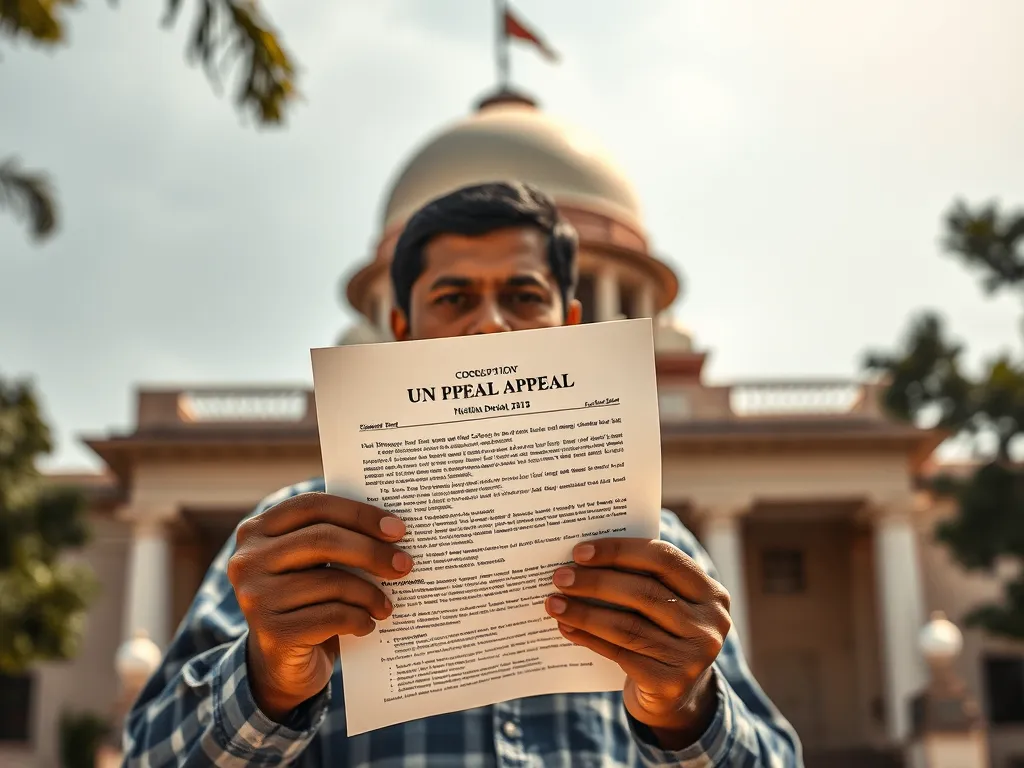
The RTI Standoff: Accountability vs. Apathy in Uttar Pradesh’s Medical Department
The Right to Information (RTI) Act of 2005 was envisioned as the “sunlight” that would disinfect the corridors of power, bringing transparency to governance and empowering the common citizen. However, the case of Yogi M. P. Singh vs. The Directorate of Medical and Health Services, UP, serves as a sobering reminder of how administrative inertia and a lack of accountability can stifle the spirit of this landmark legislation.
At its core, this is not just a dispute over a delayed response; it is a narrative of systemic resistance against public scrutiny, specifically regarding allegations of corruption and medical negligence within the District of Prayagraj.
The Anatomy of the Delay: A Timeline of Frustration
The grievance began on June 24, 2024, when the appellant filed an RTI application (DIRMH/R/2024/61103) seeking details regarding a sensitive matter involving the private practice of a government doctor and the alleged mistreatment of a vulnerable woman.
Despite the statutory mandate under Section 7(1) of the RTI Act—which requires a Public Information Officer (PIO) to provide information within 30 days—the request sat in a state of “Forwarded to PIO” for months. By the time the First Appeal was filed on August 8, 2024, the mandatory deadline had long since expired. This delay is not merely a procedural lapse; it is a direct violation of the law by high-ranking officials, including the Joint Director (Personnel) of the Directorate of Medical and Health.
The Core Issue: Shielding Corruption and Private Practice
The appellant’s prayer for relief highlights a “deep-rooted corruption” within the office of the Chief Medical Officer (CMO) of Prayagraj. The specific case involves Dr. Pradeep Kumar Yadav, a physician at Maharaja Chet Singh District Hospital.
Preliminary findings suggest that Dr. Yadav was found prima facie guilty of engaging in private practice—a direct violation of government service rules—at a private facility in Baraut, Prayagraj. Furthermore, the information sought pertains to the human rights violation of a woman who suffered under the supervision of this government doctor.
When a department withholds information regarding such misconduct, it raises a critical question: Is the Directorate of Medical and Health serving the public, or is it shielding its own personnel?
The Role of the State Information Commission (SIC)
In this case, the wheels of justice only began to turn when the Uttar Pradesh State Information Commission intervened. Following a notice from the Commission dated October 14, 2024, the department finally issued a communication on October 23, 2024.
However, even this response was a “transfer of responsibility.” The Joint Director (Personnel) transferred the application to the CMO of Prayagraj under Section 6(3) of the RTI Act, nearly four months after the initial filing. This “ping-pong” strategy—where departments bounce requests back and forth—is a common tactic used to exhaust the patience of the information seeker.
Administrative Mockery: The Lack of Compliance
The appellant rightly points out that the RTI Act is 19 years old. It is alarming that a Joint Director-level officer appears to disregard the 30-day statutory limit. The case highlights three major failures in the administrative machinery:
- Indifference to Deadlines: The 30-day window is treated as a suggestion rather than a mandate.
- Lack of Proactive Disclosure: If an inquiry (led by the Additional Director, Mirzapur Division) is already underway, that status should have been communicated transparently and promptly.
- Absence of Internal Penalties: Until PIOs are personally held liable for delays and “disinterest,” the culture of withholding information will persist.
Impact on the Vulnerable: Beyond Paperwork
This case is not just about a file number; it is about a “vulnerable lady who was mistreated.” When medical transparency is compromised, the human cost is high. Public health departments deal with life and death. If the department is reluctant to disclose information about a doctor’s illegal private practice or medical negligence, it erodes public trust in the entire healthcare system.
Transparency serves as a deterrent. If doctors know that their actions are subject to public scrutiny via RTI, the likelihood of malpractice and “private practice” during government hours decreases. By withholding information, the CMO’s office is effectively undermining the quality of healthcare provided to the citizens of Prayagraj.
The Path Forward: A Call for Strict Action
The appellant, Yogi M. P. Singh, has called for “strict action to uphold the law.” For the RTI Act to remain a potent tool for democracy, the following steps are essential:
- Invoking Section 20: The State Information Commission should impose the maximum penalty of ₹250 per day on the defaulting PIO for the unexplained delay between June and October.
- Time-Bound Inquiry: The investigation being conducted by the Additional Director, Mirzapur Division, must be completed within a fixed timeframe, and the report must be made public.
- Digital Accountability: The Directorate should adopt a more robust online tracking system where the failure to respond within 30 days automatically triggers a red flag to the Head of the Department.
Conclusion: Upholding the Spirit of Transparency
The case of RTI DIRMH/A/2024/60564 is a microcosm of the challenges facing the Right to Information in India today. It reveals a department that is reactive rather than proactive, and an administrative culture that views information seekers as adversaries rather than stakeholders.
The Directorate of Medical and Health Services must realize that transparency is not a threat to the department, but a tool for its improvement. Only by weeding out corrupt practices and ensuring that officers are held accountable to the law can the department truly fulfill its mission of serving the people.
The struggle of citizens like Mr. Singh is a testament to the fact that while the law is on the books, the fight for its implementation is an ongoing battle. It is time for the Uttar Pradesh government to ensure that the “disinterest” of a few officers does not derail the rights of millions.
To assist with your follow-up and ensure you have the correct channels for your appeal and compliance tracking, here are the specific identification details, contact numbers, and web links for the public authorities involved in your case.
1. Primary RTI Identification Details
These numbers are critical for all future correspondence with the State Information Commission (SIC) and the Directorate.
- RTI Registration Number:
DIRMH/R/2024/61103(Filed: 24/06/2024) - First Appeal Registration Number:
DIRMH/A/2024/60564(Filed: 08/08/2024) - SIC Notice Number:
202410502N100260(Dated: 14/10/2024) - Departmental Letter Reference:
2/137/2001/2083(Dated: 23/10/2024)
2. Concerned Public Authorities & Contact Details
| Authority / Office | Role | Contact Number | Email / Web Link |
| Directorate of Medical & Health (UP) | Nodal Authority | 9415121887 | dgmhsrti@gmail.com |
| DGMH (Karmik/Personnel) Section | PIO / First Appellate Authority | 9839112777 | adcampkarmik@gmail.com |
| CMO Office, Prayagraj | Information Custodian | 9454455138 | cmo-prayagraj@nic.in |
| Additional Director, Health (Prayagraj) | Supervisory Officer | 9454455421 | adhealthprayagraj@gmail.com |
| UP State Information Commission | Second Appeal Authority | 0522-2305530 | upsic.up.gov.in |
3. Essential Web Links for Tracking
You can use these links to monitor the status of your application and any second appeals you may choose to file.
- UP RTI Online Portal (Status Tracking): https://rtionline.up.gov.in/viewstatus.php(Requires your Registration Number and Email ID)
- UP State Information Commission (Online Appeal/Complaint): https://upsic.up.gov.in/(Use this to check the ‘Cause List’ for hearing dates using your SIC Notice Number)
- Prayagraj District Health Directory: https://prayagraj.nic.in/health/(To verify contact details of the CMO and hospital administrators)
4. Key Officials Mentioned in the Inquiry
- Inquiry Officer: Additional Director, Mirzapur Division (Nominated for the Dr. Pradeep Kumar Yadav case).
- Subject of Inquiry: Dr. Pradeep Kumar Yadav (Physician, Maharaja Chet Singh District Hospital, Bhadohi).
Strategic Next Step
The PIO’s reply on 18/02/2025 claims that information was sent via a letter dated 23/10/2024. If you have not received this physical letter or if the content is incomplete, the “Disposal” is technically invalid.
Would you like me to help you draft a “Non-Compliance Complaint” to the State Information Commission citing the PIO’s failure to provide the actual inquiry report?


Facing a similar challenge? Share the details in the box below, and our team of experts will do their best to help.