
The government inaction to take action against the cyber criminals is causing the steep hike in the cases of cyber crimes in India.
This alarming trend has left countless individuals, businesses, and institutions vulnerable to various forms of online threats, including identity theft, financial fraud, and data breaches.
As the digital landscape continues to evolve, the absence of robust legislative measures and proactive law enforcement strategies only exacerbates the situation, creating an environment where cyber criminals feel emboldened to exploit loopholes and target unsuspecting victims.
Furthermore, the lack of awareness and education around cyber safety among the general public contributes significantly to the rising number of incidents, emphasizing the urgent need for comprehensive cyber security initiatives and effective government intervention to safeguard citizens against these escalating threats.
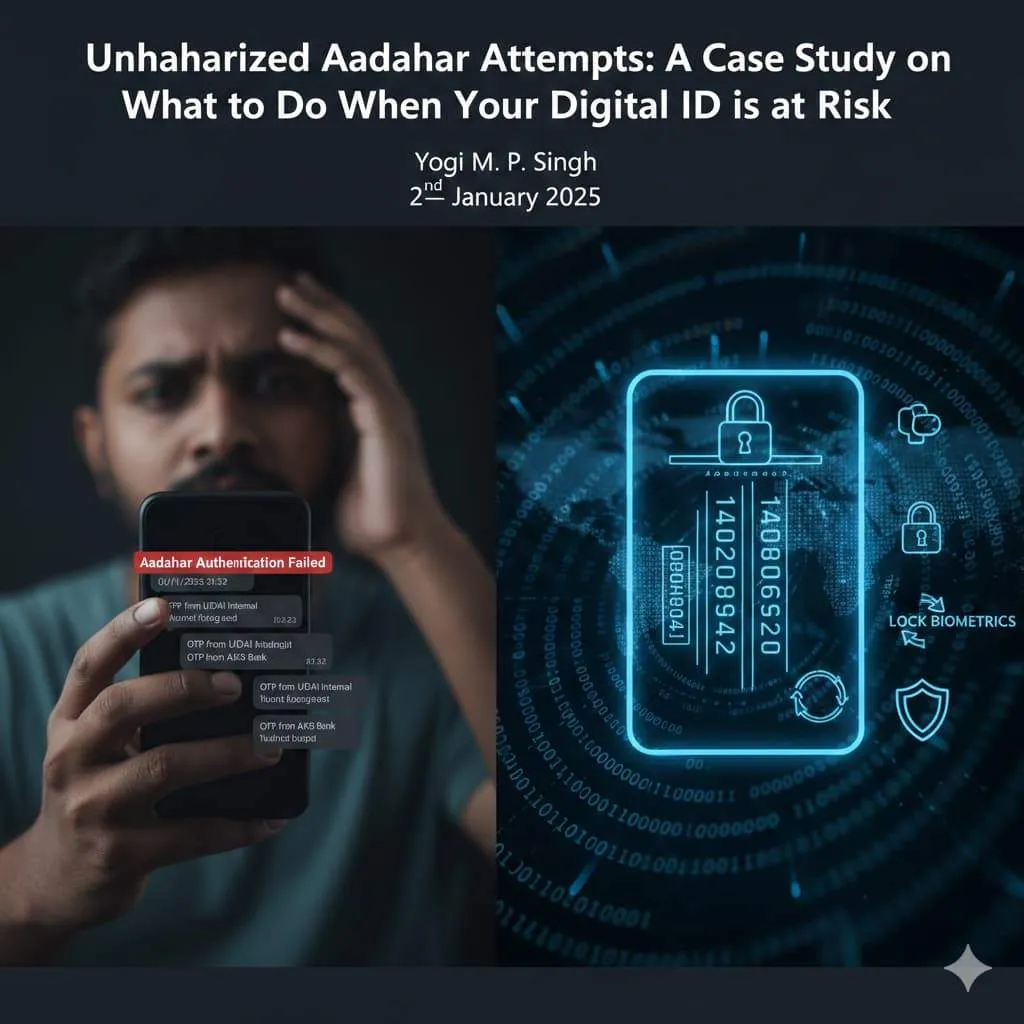
Title: Unauthorized Aadhaar Attempts: A Case Study on What to Do When Your Digital ID is at Risk
In today’s digital world, your Aadhaar number is more than just a card; it acts as a key to your identity, unlocking access to a myriad of services and benefits. It is intricately linked to everything from your bank accounts to your mobile number, making it an integral part of your everyday life.
However, with this convenience comes significant risk, as the potential for misuse lurks around every corner. But what happens when someone tries to misuse it? We are examining a real-life grievance filed with the Unique Identification Authority of India (UIDAI), which highlights the vulnerabilities many face.
The goal is not only to understand this pressing threat but also to educate the public about the risks involved. In this context, we will outline the exact steps you should take to protect yourself from identity theft and unauthorized access, ensuring that your digital identity remains secure and your personal information is safeguarded against malicious intent.
By staying informed and vigilant, you can navigate this complex landscape with confidence.
The Complaint: Multiple Unauthorized Authentication Attempts
On January 2, 2025, Mr. Yogi M. P. Singh filed a formal grievance after noticing alarming activity related to his Aadhaar number. Here’s a breakdown of the case (Grievance No: UIDAI/E/2025/0000070).
- The Incident: Over two days, a total of seven unauthorized Aadhaar authentication attempts were made. Six attempts occurred on January 1, 2025, and another followed on January 2, 2025.
- The Evidence: Mr. Singh received a barrage of SMS and email notifications. These included a specific “Aadhaar Authentication Failed” alert. This alert was for a try made at 9:32 PM on New Year’s Day. He also received multiple One-Time Passwords (OTPs) from both “UIDAI Internal” and “AXIS Bank” that he never requested.
- Prior History: Troublingly, Mr. Singh noted that a First Information Report (FIR) had already been registered with the police back in November 2023. This was about the misuse of his PAN and Aadhaar. He indicated this is an ongoing issue.
The grievance was promptly registered. It is now under process by the CRM Division of UIDAI. Deputy Director Sunil Kumar is assigned to the case.
Understanding the Threat: What Does This Mean?
The series of OTPs and the failed authentication alert reveal a critical situation:
- Your Aadhaar Number is Exposed: The fraudulent person clearly has Mr. Singh’s 12-digit Aadhaar number.
- They Are Trying to Access Services: They are actively using the number on various platforms. These platforms include UIDAI’s online services and AXIS Bank. They are trying to authenticate his identity.
- The Security System is Working (For Now): The attempts failed. The perpetrator does not have access to the OTPs being sent to Mr. Singh’s registered mobile number and email.
While the immediate transactions failed, this is a major red flag. The perpetrator is persistent and can try to exploit other potential vulnerabilities.
Your Action Plan: 4 Steps to Secure Your Aadhaar Quickly
If you find yourself in a similar situation, do not panic. Take these concrete steps right away to lock down your identity.
1. Lock Your Aadhaar & Biometrics
This is your most powerful first line of defense. Locking your Aadhaar prevents anyone from using it for authentication.
- How to do it: Use the mAadhaar app or visit the MyAadhaar portal (
myaadhaar.uidai.gov.in). - What it does: Once locked, no one can use your Aadhaar number for authentication. Not even you can do this until you unlock it. You can unlock it temporarily whenever you need to use it. Locking your biometrics (fingerprint and iris scan) is also a crucial step.
2. Review Your Authentication History
You have the right to know exactly when and where your Aadhaar number was used.
- How to do it: Visit the MyAadhaar portal and go to the “Aadhaar Authentication History” section.
- What it shows: You can see up to 50 past authentication records. These include the date, time, and the name of the organization that made the ask. This can give you vital clues about who is trying to misuse your data.
3. Formally Report the Incident to UIDAI
Create an official record of the fraudulent activity.
- Call the Helpline: Dial the toll-free number 1947.
- Send an Email: Pass all suspicious emails and a description of the incident to help@uidai.gov.in.
4. File a Police Complaint
Unauthorized attempts to use your Aadhaar are a cybercrime.
- File an FIR: Visit your nearest police station or the cybercrime cell to file a First Information Report (FIR). This is a critical legal step for any future investigation and provides an official record of the crime.
Conclusion: Be Proactive, Not Reactive
Mr. Singh’s case is a stark reminder that we must be vigilant about our digital identity, especially in an era where data breaches are alarmingly common and cyber threats loom large.
As we increasingly rely on digital platforms for communication, banking, and various services, the importance of protecting our personal information has never been more critical.
Regularly checking your Aadhaar authentication history and keeping your mobile number updated are simple but effective habits that everyone should adopt to minimize risks.
Additionally, practicing good password hygiene, enabling two-factor authentication, and being cautious about the information shared online can further safeguard our identities.
By taking these proactive measures, we can create a more secure digital environment for ourselves and reduce the likelihood of falling victim to identity theft or fraud.
Website of UIDAI is only show off nothing is resolved by this dilapidated website
Mismanagement in working of the unique identification authority of India


Facing a similar challenge? Share the details in the box below, and our team of experts will do their best to help.