
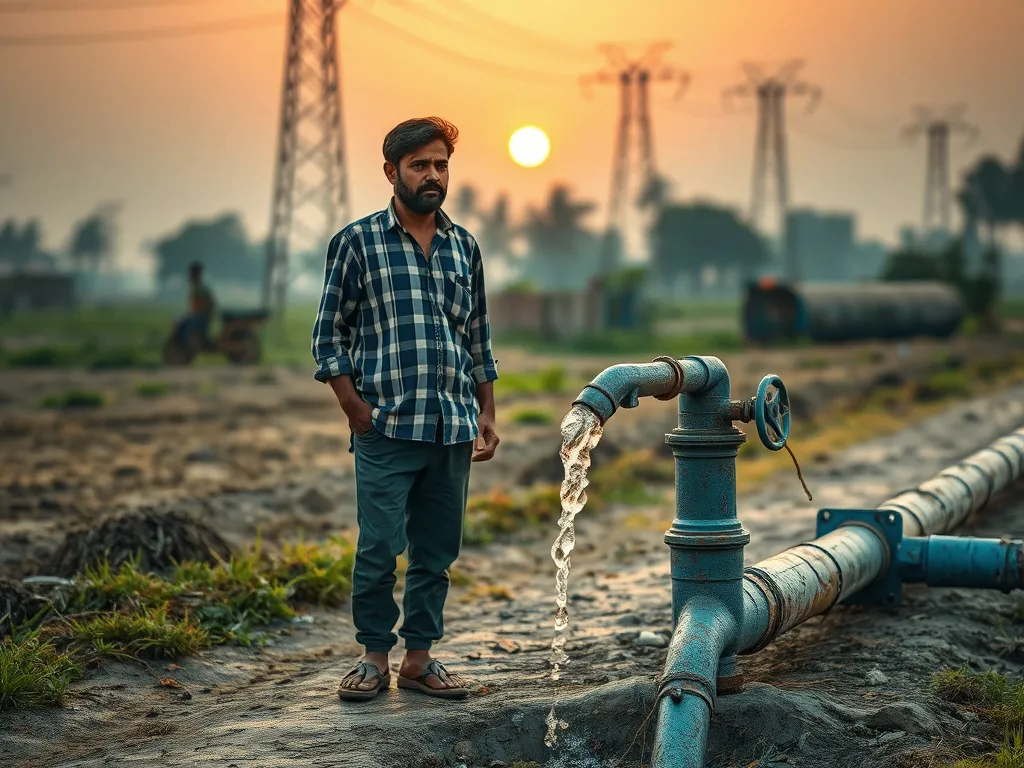
When the Taps Run Dry in Lohandi Kalan: More Than Just a Broken Pipe
In Mirzapur, we base the rhythm of our daily lives on one simple thing: water in our taps. Our water supply is something we only truly notice when it disappears, and its sudden absence can turn our daily routines into a chaotic struggle.
Last December, the residents of Lohandi Kalan, near Bhujuwa ki Chowki, faced not just an inconvenience but a two-week ordeal that highlights a larger story about our city’s infrastructure and the power of a citizen’s voice.
During those weeks, households were challenged to adapt, often resorting to creative methods to secure water—sometimes trekking long distances to fetch it from far-off sources or relying on the goodwill of neighbors.
This incident underscores the critical importance of ensuring a reliable water supply, as it is not just a matter of convenience but a fundamental necessity for health, hygiene, and overall well-being in our community.
As the fine threads of daily life began to fray, the collective determination of the residents emerged, shedding light on the disconnect between civic needs and governmental responses, ultimately reminding us all of our shared responsibility to advocate for better infrastructure.
Families in the area faced significant challenges for about two weeks. A recent grievance report filed by local resident Yogi M. P. Singh reveals that a classic case of one hand not knowing what the other was doing caused this situation, rather than a simple mechanical failure, resulting in a disruption of the water supply.
A Tale of Two Departments
The root of the problem was frustratingly simple: the Electricity Department, while installing new poles to enhance the electrical grid and improve power supply to the local community, had accidentally damaged the crucial water pipeline of the Jal Nigam (Gramin) in five different places.
This unforeseen incident occurred amidst a larger push for development in the area, which aimed to modernize infrastructure and boost overall economic growth.
However, this progress inadvertently led to significant disruption in the water supply for the residents, affecting not only their daily routines but also agricultural activities dependent on steady access to water.
Consequently, the community found itself grappling with an essential resource shortage, revealing the interconnectedness of infrastructure projects and the pressing need for better coordination between departments to prevent such issues in the future.
This is where the real test of a system begins. When things go wrong, how quickly and effectively do our public authorities respond to restore the water supply?
The report indicates that someone contacted the local Assistant Engineer of the Jal Nigam. Initially, they shifted the responsibility. They assured a resolution by the next day, but days passed and the taps remained dry. For the people of Lohandi Kalan, this wasn’t just a technical delay; it was a breakdown in trust. The feeling of being unheard often stings more than the problem itself, especially when it involves a basic necessity like the water supply.
Resolution on Paper vs. Reality on the Ground
Eventually, officials repaired the pipeline after persistent follow-ups through official grievance channels, which involved countless calls, emails, and in-person trips to the relevant departments.
The water started flowing again, bringing much-needed relief to the residents who had been facing a severe shortage for weeks.
Families could finally resume their daily routines, no longer worrying about the availability of this essential resource.
In light of these developments, the government marked the case as “Closed” on the portal, reflecting their commitment to resolving community issues efficiently.
This resolution primarily revolved around the restoration of the water supply, but it also highlighted the importance of accountability and responsiveness from local authorities in addressing the needs of their constituents.
A success story? Not quite.
The complainant rated the resolution as “Poor.” This is the most important part of the story.
While they eventually fixed the problem, they flawed the process. The delay caused immense hardship.
The requirement for a citizen to repeatedly file complaints and follow up just to restore a basic necessity like water supply highlights a gap in service delivery.
Good governance isn’t just about eventually solving a problem; it’s about solving it efficiently, transparently, and with respect for the citizens you serve.
What This Means for Us
This incident in Lohandi Kalan is a microcosm of a challenge we all face. It’s a reminder that as our city grows, coordination between departments like the Jal Nigam, the Electricity Department, and Public Works is not just important—it’s essential for maintaining an uninterrupted water supply. One department’s project plan must account for the infrastructure of another.
It is also a powerful example of active citizenship. By using the official IGRS portal and demanding accountability, Mr. Singh didn’t just fight for his neighbourhood; he created a public record of the water supply problem. This record holds a mirror up to the system, showing where it works and where it fails.
While it’s easy to feel frustrated, the lesson here is to persist and not give up. We must stay vigilant, understand our rights, and utilize the tools available to us. For every broken pipe, we should maintain a persistent voice demanding that someone fix it, ensuring the restoration of the water supply. The more we speak up, the harder others find it to ignore our concerns.
The water is back on in Lohandi Kalan, but the conversation shouldn’t stop. Let’s keep talking about how we can build a more responsive and accountable Mirzapur for everyone.
Grievance on Water Supply Disruption in Lohandi Kalan
Why the name of complainant changed in the report has been asked from executive engineer Jal Nigam as cryptic approach to procrastinate


Facing a similar challenge? Share the details in the box below, and our team of experts will do their best to help.