
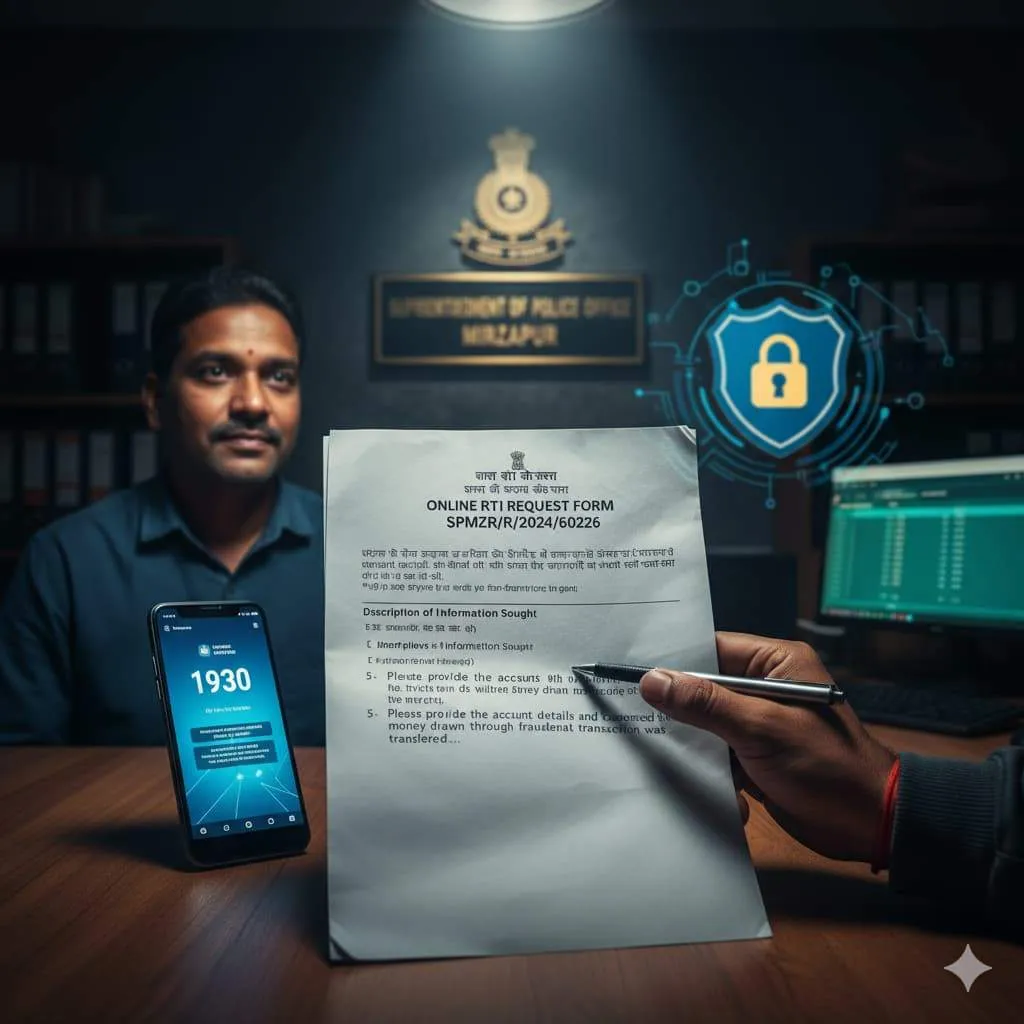
An RTI Request That Demands Answers: A Citizen’s Quest for Transparency in a Cyber Crime Investigation
This blog post explores the details of a Right to Information (RTI) request filed regarding a significant issue—the closure of a cyber crime investigation in Mirzapur, Uttar Pradesh.
The applicant, Yogi M P Singh, is seeking crucial details about the police’s final report, which is vital for understanding the thoroughness of the investigation.
Not only does he want to know the decision to close the case, but he is also particularly interested in the rationale behind this closure, especially given the alarming rise of cyber crimes in recent years.
Singh is pressing for transparency regarding the actions taken to trace the fraudulent transactions that have reportedly swindled numerous victims, as this information is crucial for holding the responsible parties accountable.
By delving into cyber crime investigation procedures, this request could shed light on the effectiveness and limitations of current law enforcement practices in handling such complex cases.
Furthermore, it underscores the importance of public oversight and the role of citizens in demanding accountability from government institutions.
Key Details of the RTI Application about Cyber Crime Investigation
The applicant filed the RTI application, bearing Registration Number SPMZR/R/2024/60226, on December 7, 2024, with the Superintendent of Police Office Mirzapur. This action is a pivotal step in ensuring transparency in cyber crime investigations.
| Field | Detail |
| Applicant Name | Yogi M P Singh |
| Date of Filing | 07/12/2024 |
| Public Authority | SUPERINTENDENT OF POLICE OFFICE MIRZAPUR |
| Current Status | RTI REQUEST RECEIVED as on 07/12/2024 |
| PIO Name | OM PRAKASH SINGH, ASP OPERATION |
Export to Sheets
The Core of the Matter: Case Details
The RTI is centered on a specific FIR (First Information Report): a document that plays a crucial role in the criminal justice system by formally recording the information provided by the complainant about the alleged commission of an offense.
It serves as the foundation for the police investigation and outlines the essential details such as the nature of the crime, the time and place of the incident, and the identities of those involved.
The FIR not only initiates the investigative process but also ensures that the grievances of the victim are acknowledged and acted upon, making it an integral part of upholding justice and accountability in the legal framework.
- FIR/Case No.: Mu0A0Sa0-226/2023
- Sections Applied: IPC Section 420 (Cheating) and IT Act Sections 66C / 66D (Identity Theft and Cheating by Personation by using Computer Resource)
- Police Station: Kotwali Katra, Mirzapur
- Case Status: The investigating officer, Inspector Arvind Kumar Yadav, closed the case. A Final Report (Antim Report) was issued. This was due to the inability to trace the accused. This occurred despite 19 entries (parcha kita) in the case diary, highlighting the challenges in cyber crime investigation processes.
Five Critical Questions Demanding Police Transparency
The applicant has formally asked the Public Information Officer (PIO) to provide detailed and point-wise information on five critical aspects of the case’s closure, which are vital for a comprehensive understanding of the situation at hand.
These aspects include the specific reasons behind the decision to close the case, any relevant evidence that was considered during the closure process, the roles of different stakeholders involved, the timeline of events leading to the closure, and finally, the policies or guidelines that influenced this outcome.
Gaining insight into these elements is essential for the applicant to assess the closure’s appropriateness and to determine if further action or appeal might be warranted.
- The investigation report: A request for the complete investigation report, as the investigation has concluded with a final report submission. Indeed, the completeness of cyber crime investigations often hinges on such transparency.
- Acceptance of Final Report: The final report was accepted by the competent officer. This included the name and designation of the officer. This action effectively closed the case.
- Competent Officer’s Notings: A demand for the notes and comments made by the competent officer. These notes must justify the decision to close the case. The case closed without a breakthrough in the cyber crime investigation.
- Assistance from Cyber Helpline (1930): This includes details on whether the investigating officer received any assistance. It is based on the victim’s call to the National Cyber Crime Reporting Helpline (1930) right after the incident.
- Fraudulent Account Details and Bank Action:
- The investigation team analyzes the account details to find out where the fraudulently obtained money has transferred. The concerned KYC (Know Your Customer) information underscores the need for thorough cyber crime investigation efforts.
- If the authorities find those accounts to be bogus, they must provide details of any action taken by the police. They should specify any action against the concerned bank staff. If they take no action, the police must provide the reason for non-action. This upholds the right to reason principle in administrative decisions.
Why This RTI Matters
This RTI application emphasizes a citizen’s right to accountability, especially in cases of financial fraud and cyber crime. The questions posed probe the depth of the investigation, focusing on tracing digital trails. Investigators should hold institutions, like banks, accountable before they shelve a case. Therefore, they must recognize that cyber crime investigations are pivotal for justice.
The applicant is leveraging the Right to Information Act, 2005. They are demanding the information within the statutory 30-day period prescribed under Section 7(1).
Readers will be keen to see the response to this request. This response will reveal the level of transparency and diligence maintained by the Mirzapur Police. It will show how they handle complex cyber crime investigations.
Chief minister Yogi Adityanath was unable to curb cheating activities. Yogi and Modi government failed to curb cyber-crime looting innocent and gullible people


Facing a similar challenge? Share the details in the box below, and our team of experts will do their best to help.