
Key Takeaways
- A complaint on the Jansunwai portal highlights the systemic failures in Mirzapur’s SDM office about a citizen’s quest for justice.
- Sadhana Tiwari raises concerns over document denial and vague responses from local officials in her inheritance case.
- The complainant alleges corruption and obstruction from officials, fueling her pursuit of a fair resolution.
- The applicant posed five critical questions to the authorities under Article 51 A of the Constitution, seeking transparency and accountability.
- The case exemplifies the struggle for accountability in local administration and the importance of citizens’ rights to seek justice.
The Citizen’s Quest for Justice: Navigating Bureaucratic Hurdles in Mirzapur
Sadhana Tiwari filed a recent grievance on the Uttar Pradesh government’s Jansunwai portal, bringing sharp focus to the alleged irregularities and systemic failures within the Sub Divisional Magistrate’s (SDM) office in Tehsil Lalganj, Mirzapur district.
This situation highlights a Citizen’s Quest for Justice, as Sadhana’s case represents not just her personal struggle but also the broader issues facing many citizens who seek to navigate the complex web of local governance.
The grievance raises serious questions about the integrity and transparency of the administrative process that is supposed to safeguard citizens’ rights, particularly in matters as sensitive as inheritance disputes.
It calls into question the effectiveness and accountability of local officials who have a duty to serve the public diligently and impartially.
Through this grievance, Sadhana seeks not only a resolution to her specific case but also demands systemic change to ensure that others do not suffer the same fate of bureaucratic negligence and corruption that she has encountered.
The Core of the Complaint is Citizen’s Quest for Justice: Denial of Documents and Vague Reports
The matter hinges on two registered grievances that are emblematic of broader systemic issues faced by citizens seeking justice.
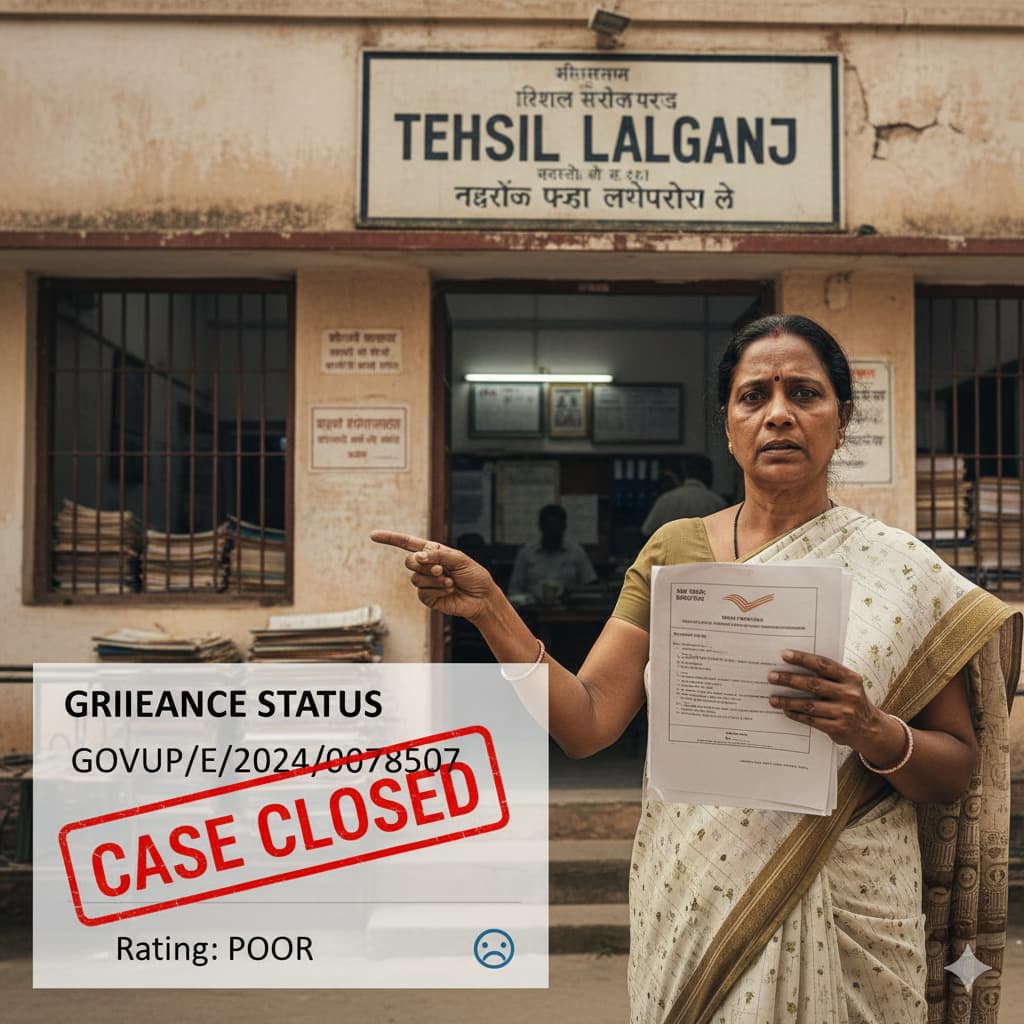
The latter, GOVUP/E/2024/0078507 (Date of Receipt: 01/11/2024), seeks an inquiry into the handling of an earlier complaint, which registration is GOVUP/E/2024/0060192 (Date of Receipt: 05/09/2024).
These cases not only represent a challenging part of the citizen’s ongoing quest for justice through official channels, but they also highlight the frustrating complexities often encountered in navigating bureaucratic processes.
The drawn-out nature of these grievances underscores the daunting obstacles that individuals must confront in their pursuit of fairness and accountability within the system, illustrating the relentless struggle of the citizen to secure justice in a landscape that may sometimes feel indifferent to their plight.
- The Inheritance Standoff: The applicant stated that the concerned Lekhpal (a village-level official) allegedly created a hindrance in pursuing the process of inheritance by demanding documents. The applicant claims to have provided these documents both online (via the portal) and physically to the Tehsil office.
- The ‘Template’ Reply: The applicant criticized the closing of the case on 14/11/2024. A generic and dismissive remark, closed it: “महोदय जांच आख्या संलग्न है प्रकरण में सम्बंधित से आख्या प्राप्त कर निस्तारण हेतु प्रेषित है आख्या संलग्न है” (Sir, the inquiry report is, attached to the matter has been, sent for disposal after receiving the report from the concerned, the report is, attached). This situation contributes to the citizen’s enduring quest in seeking justice for their concerns.
- Allegations of Corruption: The complainant explicitly states this is a “matter of corruption” where their entire property has been allegedly cheated by opponents. The opponents have allegedly colluded with the staff of the Tashel Lalganj. Yet no proper action is being taken. This incident significantly fuels their appeal for a fair and just resolution.
Inquiry Under the Constitution: Five Direct Questions to the Administration
Leveraging the spirit of Article 51 A of the Constitution of India, the applicant has posed five pointed questions to the authorities via the Jansunwai portal, emphasizing their keen engagement with civic responsibilities and the democratic process.
These questions are crucial in their pursuit of justice, as they not only seek clarity and accountability from the government but also highlight the importance of transparency in governance.
By firmly grounding themselves in the citizen’s quest for a just outcome, the applicant embodies the values enshrined in the Constitution.
Article 51 A outlines the Fundamental Duties of a citizen, including developing a scientific temper and the spirit of inquiry, which serve as guiding principles for individuals striving to contribute positively to society.
Such proactive involvement demonstrates a commitment to not only personal rights but also collective welfare, reinforcing the essence of participatory democracy in India.
Through these inquiries, the applicant aspires to promote a more informed and engaged citizenry, ultimately fostering an environment where dialogue and accountability flourish.
- Notings on Representation: Give the notes made on the applicant’s official representation and affidavit about the Tehsildar’s report.
- Action Taken Report: Give the official action taken report on this representation.
- Status of Registered Post: The applicant sent a second set of documents via a Registered Post (RU012593155IN), and the delivery service confirmed that they successfully delivered the documents on 10/09/2024. The applicant demands the notings and action taken report on this specific, traceable correspondence.
- Staff Accountability: Give the name and designation of the Tehsil Lalganj staff responsible for receiving public representations.
- Lack of Receiving: Give the reason for not providing a receiving (acknowledgment) for representations submitted by applicants at Tehsil Lalganj.
A Call for Credibility and Transparency
The complainant submits detailed India Post tracking details and specific queries, which clearly illustrate the situation at hand. This underscores a citizen’s unwavering commitment to due process versus a frustrated perception of “prevailing anarchy” in the Tehsil’s operation, highlighting the growing concerns that have been resonating within the community.
As these issues unfold, they reflect broader systemic challenges that many residents face, raising questions about the efficacy of local governance and the support provided to ordinary citizens navigating bureaucratic obstacles. There is an urgent need for clarity and accountability in the actions of local authorities, as ambiguity only fuels mistrust and dissatisfaction among the populace.
We now expect the public response of Joint Secretary, Shri Arvind Mohan, on this matter, as it is critical to restoring faith in governance and demonstrating that officials are responsive to the needs and grievances of the citizens they serve.
It concerns the citizen’s quest for justice and alleged malfeasance at the grassroots level of district administration, emphasizing the paramount importance of transparency and the rule of law in fostering an environment where every citizen feels heard and valued.
Only through robust dialogue and constructive engagement can we hope to address these pressing issues and build a more accountable system that not only recognizes but actively supports the voices of its constituents.
This situation questions accountability in local administration. Would you like me to find information on the official duties and accountability of a Lekhpal or Tehsildar in an inheritance case? A citizen’s ongoing quest for true justice often demands such transparency and accountability.
Sub divisional magistrate Lalganj is not ordering inquiry in matter of corruption
Usurping of the ancestral land of Sadhana Tiwari by brothers of deceased father


Facing a similar challenge? Share the details in the box below, and our team of experts will do their best to help.