
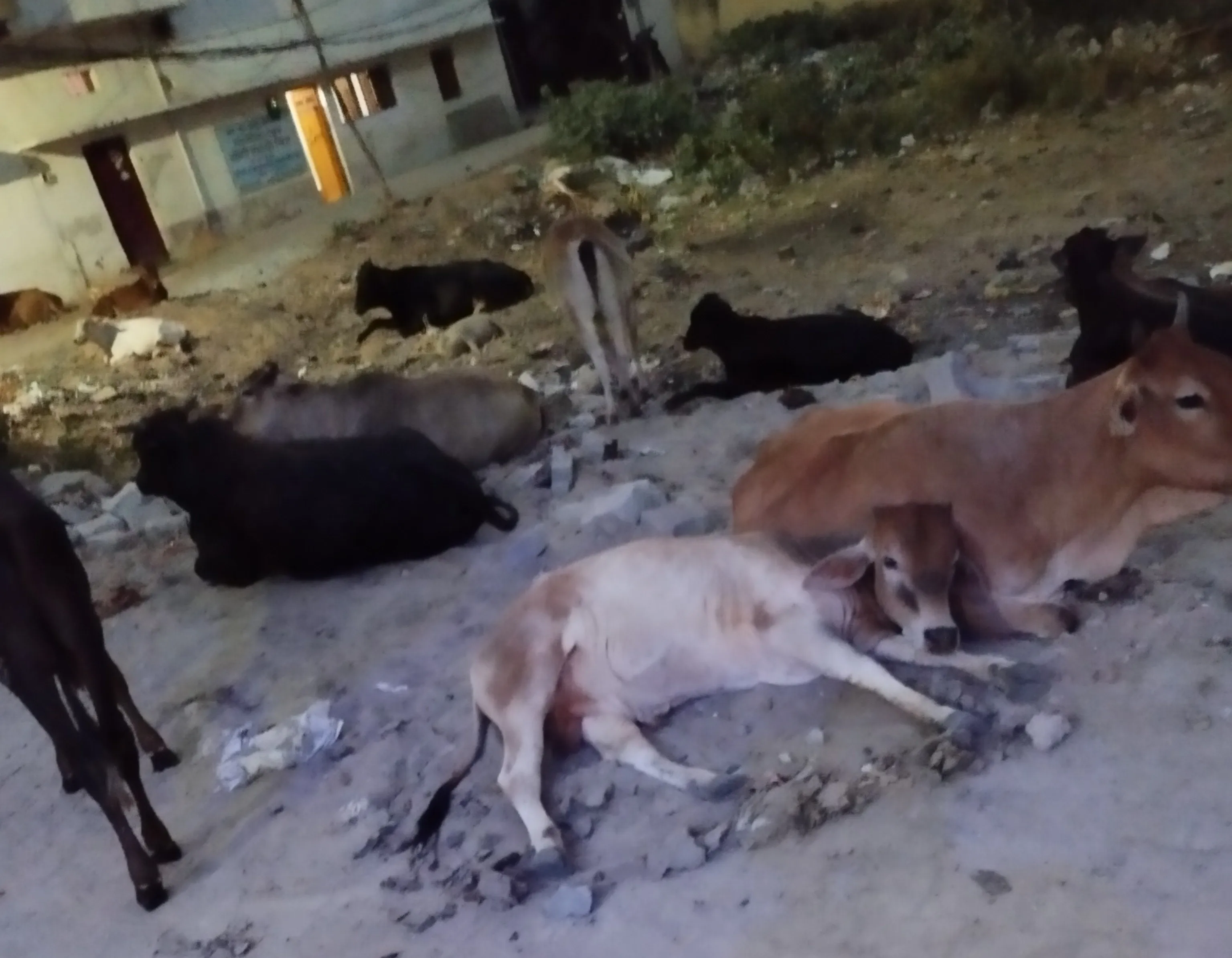
Addressing Stray Animal Concerns in Mirzapur is a pressing issue that requires immediate attention and community involvement. Stray animals not only pose health risks but also create safety hazards on the roads. To tackle this problem, local authorities can implement sterilization programs and awareness campaigns to educate residents on responsible pet ownership. Additionally, fostering partnerships with animal welfare organizations can facilitate rescue and adoption initiatives. Creating designated feeding and shelter zones for stray animals will also help manage their population humanely while ensuring their basic needs are met. It is essential for the community to come together and find sustainable solutions.
Key takeaways from the blog post
Here are the essential points from the blog post regarding the grievance against Mirzapur Municipality:
The main conflict arises from the “incredible reports” submitted by the Executive Officer of Mirzapur. While official documents claim city-wide management and progress, the complainant’s photographs clearly show stray cattle still loitering at residential gates and roaming in public parks. This contradiction reveals the gap between reported achievements and reality.
2. Misuse of Public Funds
The state has allocated a massive budget for cattle welfare. It includes over ₹600 crore for shelters and maintenance. Despite spending freely, the grievance questions why cowsheds remain empty and why animals continue to suffer without proper care. This raises doubts about the effectiveness of the welfare initiative.
3. Ineffective Problem Solving
The complainant alleges that municipal staff play a “shell game.” They catch animals in one area, then release them in another. This tactic fails to solve the root problem. It causes persistent traffic jams and ongoing safety hazards.
4. Criticism of the Jansunwai Portal
Once seen as a revolutionary tool for transparency, the portal is now criticised as a platform for “media management.” Officials are accused of giving rote, “parrot-like” responses. They often dismiss specific local issues with vague statements.
5. Failure of “Good Governance”
The situation is a breakdown of the “Good Governance” model. The complainant says true governance is impossible if the administration ignores grassroots issues. This leads to public injuries and the neglect of urban sites, such as local parks.
Addressing Stray Animal Concerns in Mirzapur: Public Funds vs Ground Reality
The city of Mirzapur is at the centre of a growing administrative controversy. Addressing concerns about stray animals has become a pressing issue. Local complaints now serve as a scathing critique of municipal accountability and the “Good Governance” model. Yogi M. P. Singh, a public-spirited citizen, has filed several grievances. He argues that while the state spends generously on animal welfare, Mirzapur’s streets are still clogged with wandering cattle. This harms both animals and the public.
The Core Grievance: A Tale of Two Reports
The dispute centres on two specific registration numbers: GOVUP/E/2025/0053086 and the subsequent appeal, GOVUP/E/2025/0063703. The complainant’s primary frustration stems from the disconnect between official reports and the photographic evidence of the city’s streets, a theme consistently echoed in the broader debate about municipality responsiveness.
The Executive Officer claims the administration works diligently across the city, not only in Surekapuram Colony. The complainant argues this broad approach creates a smokescreen. They say the municipality turns a specific, evidence-backed complaint into a general issue, sidestepping the immediate failure to clear stray bulls and calves from residential gates and parks.
The Mirage of Public Funding
A major question is how state funds are allocated. Uttar Pradesh has earmarked large amounts for animal welfare: Rs 612 crore for stray cattle and shelter construction.
- Rs 247.60 crore specifically for maintenance.
- Rs 40 crore for the ‘Kanha Gaushala Evam Beshara Pashu Ashraya Yojna’.
Despite these large figures, Mirzapur’s reality is different. The complainant asks: If the budget exists and shelters are built, why do animals still shiver outside? Why are cowsheds empty? Clearly, the allocation of funds does not match the situation on the ground.
The allegation is clear: officials use funds on paper, but nothing changes at the grassroots. The persistence of stray animals in Mohallas and on main roads points to systemic failure in managing these resources.
“Parrot-Like” Responses and Administrative Insensitivity
A key grievance is frustration with the Jansunwai Portal. It once aimed to connect the public and government, but is now used for media management. The answers were given “like a parrot.” Instead of investigating neglected areas, municipal staff submit “incredible” reports. These reports do not match photographic evidence from citizens. This gap further undermines public trust.
“Public staff solve the problems of the people only on the print and electronic media, not at the grassroots level.”
This sentiment shows deep disillusionment with bureaucracy. Officials catch stray animals at one location, then release them elsewhere. The problem never gets solved—it’s just moved. This “shell game” creates the problem that never gets solved—it’s just moved. It costs the taxpayers money.
Impact on Daily Life: Safety and Traffic
Stray animal concerns in Mirzapur go beyond appearance or animal rights. They pose a major public safety hazard for residents. In Mirzapur, the issue is clear:
- Traffic Congestion: Bulls and buffalo frequently block main arteries, leading to daily gridlock.
- Public Injury: Citizens are reportedly being injured by stray animals that have become aggressive due to hunger or maltreatment.
- Infrastructure Decay: Local parks, intended for community beautification and recreation, are being used as makeshift, unauthorised cowsheds.
The complainant mentions a park in front of his house. Official records say beautification is “pending.” Yet stray cattle overrun the space. This dual failure—to finish development and to manage livestock—shows the administrative paralysis being protested.
The Question of Accountability: Who is Responsible?
Officials have sent the grievances to high-ranking authorities, including Shri Arvind Mohan (Joint Secretary) at the Chief Minister’s Secretariat in Lucknow. The complainant rated the case closure as “Dissatisfied” due to “Harassment by an official,” since the provided “detailed reports” were irrelevant. The complaint remains unresolved and highlights ongoing accountability issues.
The District Magistrate and Executive Officer are the focus of the call to action. Citizens demand a real report—one that acknowledges the five cows photographed at a citizen’s gate, not just vague statements of city-wide progress. In conclusion: Is this “Good Governance”?
The situation in Mirzapur challenges the state’s governance model. When the Jansunwai portal produces “incredible reports” and rote excuses, it erodes trust between citizens and the state. We urgently need transparency in both addressing stray animal concerns and in the use of funds. Animals continue to suffer on the streets. Until solutions emerge, residents like Yogi M. P. Singh will spotlight the gap between official claims and daily life in Uttar Pradesh.
To ensure that authorities follow up on your grievance, here are the contact points for the public authorities in Uttar Pradesh and Mirzapur cited in your complaint.
1. Key Administrative Contacts (Lucknow) (Addressing Stray Animal Concerns in Mirzapur)
If you find the response from the portal unsatisfactory, you can directly escalate your grievance to the Chief Minister’s Secretariat.
| Chief Secretary (UP) | Shri Shashi Prakash Goyal | 0522-2238212 | cs-up@nic.in | Lok Bhawan, UP Secretariat, Lucknow |
| Joint Secretary (CMO) | Shri Arvind Mohan | 0522-2226350 | arvind.12574@gov.in | Room No. 321, U.P. Secretariat, Lucknow |
| CM Helpline | Chief Minister Office | 1076 | cmup@nic.in | Lok Bhawan, Lucknow |
2. Mirzapur Local Authorities (Addressing Stray Animal Concerns in Mirzapur)
These are the officials responsible for the ground-level execution of cow shelter management and park beautification in Mirzapur.
- Executive Officer (Municipality Mirzapur City):
- Email: mnpmirzapur@gmail.com
- Address: Nagar Palika Parishad, Laldiggi, Mirzapur, UP.
- Phone: 05442-252801 (City Magistrate Office)
- District Magistrate (Mirzapur):
- Mobile: 9454417567
- Office Phone: 05442-257400
- Email: dmmi@nic.in
3. Web Links & Application Portals (Addressing Stray Animal Concerns in Mirzapur)
You should use these links to track your existing applications or file a “Dissatisfaction Appeal” against the closed grievance GOVUP/E/2025/0053086.
- Official Grievance Portal (Jansunwai-Samadhan): jansunwai.up.nic.in
- Track Grievance Status: Check Status Here
- Mirzapur Nagar Palika Official Site: nppmirzapur.com
Summary of Your Active Registration Numbers (Addressing Stray Animal Concerns in Mirzapur)
- Active Appeal: GOVUP/E/2025/0063703 (Date: 11/06/2025)
- Closed Case (Unsatisfied): GOVUP/E/2025/0053086 (Date: 20/05/2025)
When emailing Shri Arvind Mohan, attach the same photographs from your grievance. Reference the Executive Officer’s failure to address “Surekapuram Colony” instead of giving a general city report.
Would you like me to help you draft a formal email to the Joint Secretary using these details? formal email to the Joint Secretary using these details?


Facing a similar challenge? Share the details in the box below, and our team of experts will do their best to help.