
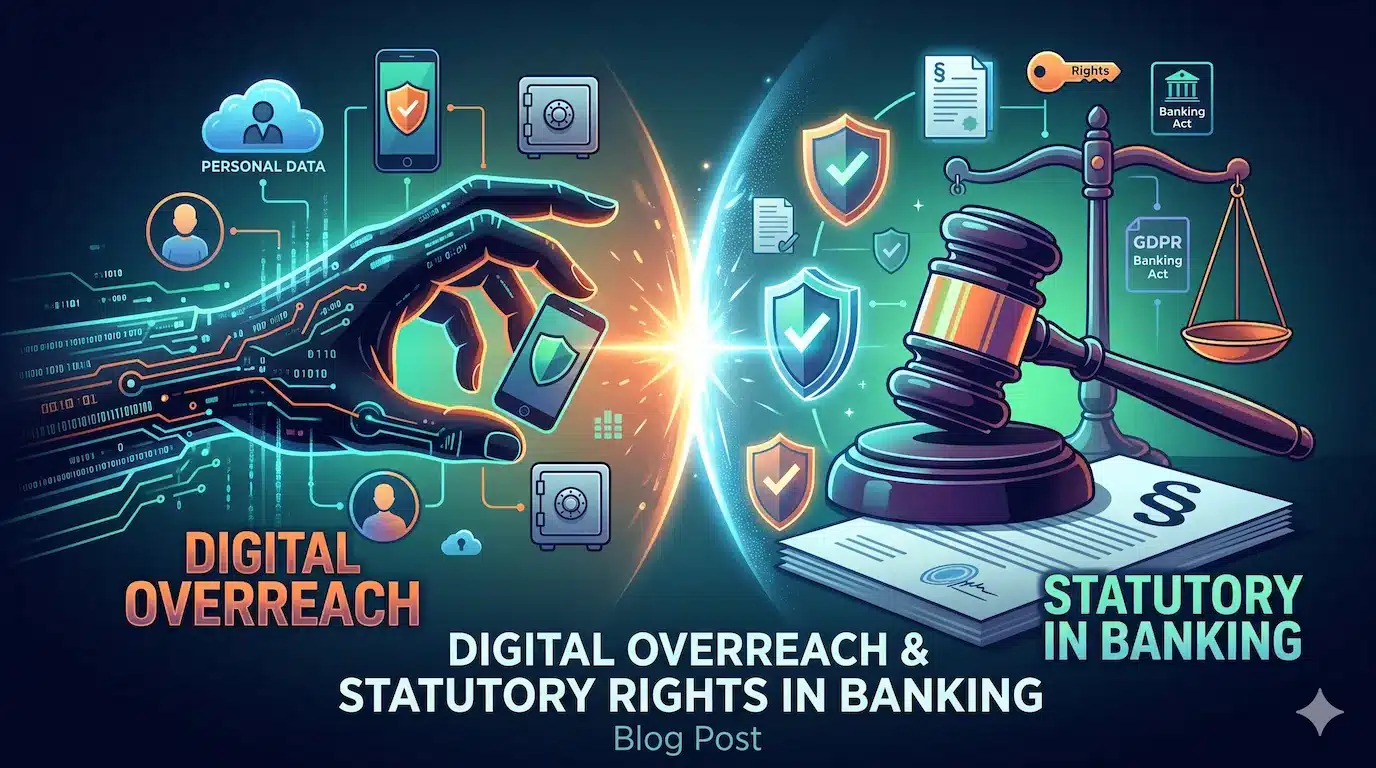
Digital Overreach & Statutory Rights is an important issue in today’s society. Digital overreach refers to the excessive use of technology and surveillance by governments and corporations, often encroaching on individual privacy and rights. In contrast, statutory rights are the legal entitlements granted to individuals, designed to protect them from such overreach. The tension between these two concepts has become increasingly prominent in today’s digital age, where personal data is constantly collected and analysed. Protecting statutory rights is essential to ensure that individuals retain control over their information and are safeguarded against invasive practices. Balancing digital advancements with the preservation of fundamental rights is crucial for a just society.
Key Takeaways
- Digital Overreach vs. Statutory Rights highlights the conflict between excessive technology use and individual legal protections.
- Recent trends show banks favouring digital formats over statutory documents, creating barriers for families settling accounts.
- Fear of audits leads bank managers to prioritize digital documentation, undermining individuals’ statutory rights.
- Citizens can assert their rights through the Banking Ombudsman, RTI Act, and the Principle of Precedent.
- Regulatory bodies must enforce that digital options are not mandatory, ensuring respect for statutory rights.
Digital Overreach & Statutory Rights: The Crisis of Deceased Claim Settlements
The push for “Digital India” brings undeniable convenience to millions. However, a bureaucratic nightmare exists for those at the margins. Specifically, families of older citizens (people older than 70) face significant hurdles while settling accounts in rural branches. There is a growing debate about Digital Overreach vs. Statutory Rights as a disturbing trend shows bank officials prioritising digital convenience instead of respecting statutory rights, clearly a case of digital overreach. This practice creates unnecessary administrative harassment.
The Core Issue: Format over Legality
The primary friction point involves government-issued documents. Bank managers in Regional Rural Banks (RRBs) now frequently reject traditional, hand-filled Death Certificates (Form-6). They demand digitally generated versions instead. This approach highlights the ongoing conflict between statutory rights and digital overreach. This practice lacks a legal basis and contradicts statutory frameworks.
- Legal Fact: The Registration of Births and Deaths Act, 1969 validates certificates issued by competent local authorities.
- Official Authority: A Form-6 with an official seal and signature is a legal document.
- No Digital Mandate: The law does not require computer-generated certificates for authenticity.
A Case of Bureaucratic Dissonance
A recent case at the Uttar Pradesh Gramin Bank (UPGB) illustrates this failure. A legal heir tried to transfer a Fixed Deposit (FD) after both parents passed away. Although the bank already paid a family pension based on a manual certificate, the manager rejected the same document for the FD transfer. The official claimed the document was “invalid” because it was not printed. This scenario truly reflects the ongoing Digital Overreach versus Statutory Rights debate in the banking sector.
This creates a logical paradox. The bank accepts a document to pay a monthly pension from government funds. Yet, it deems that same document “unauthentic” for moving funds between its own branches. This violation of the principle of estoppel shows a bank accepting a fact in one department while denying it in another. Digital Overreach vs. Statutory Rights is a theme that runs through these inconsistencies.
Audit Fear and Loss of Discretion
Why do bank managers behave this way? Much stems from a fear of internal audits. In our tracked era, managers worry that a manual document will trigger a “deficiency” flag. To protect their records, they shift the burden of digitisation onto grieving families. They demand that people older than 70 return to government offices to convert valid records into digital formats. Clearly, this fear fuels digital overreach where statutory rights should prevail.
Ignoring the Regulatory Mandate
This “play it safe” attitude violates Reserve Bank of India (RBI) instructions. The RBI mandates simplified procedures for deceased claims to avoid hardship. By creating non-existent digital hurdles, branches fail their primary duty of customer service. Statutory Rights are undermined in favour of Digital Overreach at the cost of real people.
Fixing Accountability: The Path Forward
Citizens must shift from requesting to asserting their rights. Three powerful tools exist for every bank customer:
- The Banking Ombudsman: A complaint to the RBI Consumer Education and Protection Dept (CEPD) bypasses local politics. The Ombudsman can penalise banks for service deficiencies.
- The Right to Information (RTI) Act: Filing an RTI forces the bank to provide the specific “rule” used to reject a document. If no rule exists, the manager becomes personally liable for the delay. This empowers customers in the ongoing conflict of Statutory Rights versus Digital Overreach.
- The Principle of Precedent: Verification by a parent bank (like Bank of India) or another branch binds the current branch.
Administrative Obstruction and Internal Transfers
Administrative obstruction is a common tactic. One branch may be ready to settle a claim but needs a fund transfer from another. The losing branch often procrastinates to keep the deposit on its balance sheet. In this case, the Raipuri branch ignored a written transfer request from the Mandi Samiti branch, stalling the settlement for weeks. This type of digital overreach is particularly detrimental in situations where statutory rights are clear yet bureaucracy prevails.
Conclusion: Rights in the Digital Age
Technology should empower people, not exclude them. When a manager claims a government-stamped document is invalid because it is handwritten, they undermine government sovereignty. Regulatory bodies like the RBI must issue stern directives: Digital is an option; Statutory is the law. In short, digital overreach vs statutory rights must be addressed.
No grieving family should fight for their own money against a system that forgets its own rules. Transparency and legal common sense are the only cures for this digital overreach versus statutory rights dilemma.
Based on your submitted documents, here are the identification and contact details for the public authorities currently handling your grievance and RTI request:
1. Reserve Bank of India (RBI) – Grievance Redressal (Digital Overreach & Statutory Rights)
This authority is currently processing your official complaint regarding the delay in service.
- Grievance Registration Number: DEABD/E/2026/0057596.
- Concerned Officer: Nodal Officer CEPD RBI (Deputy General Manager).
- Organization: Consumer Education and Protection Dept. (CEPD), Mumbai.
- Email Address: pgrs.cepd@rbi.org.in.
- Contact Number: 022-22604106.
- Web Link for Status: https://pgportal.gov.in/Status/PrintDetail/….
2. Uttar Pradesh Gramin Bank (UPGB) – RTI Request (Digital Overreach & Statutory Rights)
This is the public authority from which you have requested specific information and accountability.
- RTI Registration Number: UPGMB/R/E/26/00242.
- Concerned Officer: Nodal Officer / Public Information Officer (PIO).
- Email ID: legal.ho@upgb.bank.in.
- Telephone Number: 0522-4522666.
- Head Office Address: 2nd & 3rd Floor, NBCC Commercial Complex, Vardan Khand, Gomti Nagar Extension, Lucknow – 226010.
3. Specific Bank Branch Details (Digital Overreach & Statutory Rights)
- Raipuri Branch (Subject of Complaint): This branch is holding the FD account and is being cited for “administrative obstruction.
- Concerned Account: 611800300009010.
- Mandi Samiti Branch (Requesting Branch): This branch sent the official transfer request for the FD on April 17, 2026.
- Email: ho@baroda.orro.co.in (General HO Email).
- Phone: 0522-2937902.
4. Bank of India (Parent/Sponsor Bank) (Digital Overreach & Statutory Rights)
This bank previously processed your father’s death claim using the same certificate.
- Branch: Wellesley Ganj, Mirzapur.
- Contact Number: 05442-252746 / 6402.
- Email: Mirzapur.Varanasi@bankofindia.co.in.


Facing a similar challenge? Share the details in the box below, and our team of experts will do their best to help.