
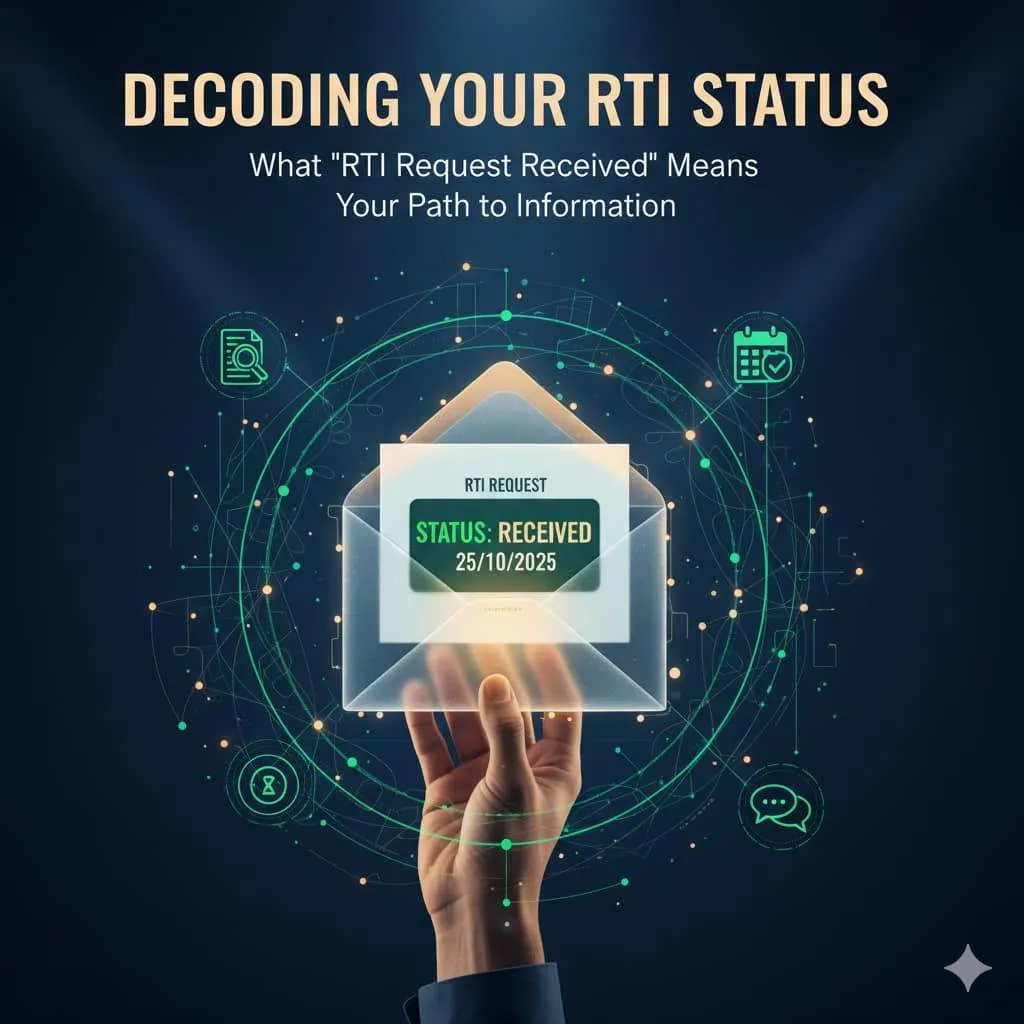
Decoding Your RTI Status helps citizens in India track their Right to Information applications more effectively. Specifically, it is helpful in processing an RTI application by providing essential updates and insights into the status of their requests.
Furthermore, with a clear understanding of how to interpret the status, citizens can identify any delays or issues that may arise during the processing of their application. This not only empowers individuals to follow up more confidently but also significantly enhances transparency within governmental processes.
Moreover, accessing and decoding this information can lead to more informed and active participation in governance. Consequently, this ensures that citizens can exercise their rights strategically and effectively. Ultimately, this promotes accountability within public institutions and fosters a culture of openness.
Key Takeaways
- Decoding Your RTI Status helps citizens in India track their Right to Information applications more effectively.
- The status ‘RTI Request Received’ confirms that your application is acknowledged and will be processed.
- Understanding timelines and key contacts, like the Public Information Officer (PIO), is crucial for managing your RTI request.
- The RTI Act mandates a 30-day response time, but exceptions apply based on the nature of the request.
- Effective follow-up, using your registration number and filing appeals when necessary, can enhance your transparency efforts.
Decoding Your RTI Status: What “RTI Request Received” Means
You’ve filed a Right to Information (RTI) application, a powerful tool for civic engagement in India that empowers citizens to seek information from public authorities.
Moreover, this process becomes significantly easier when you’re adept at decoding your RTI status. Not only does this help you understand whether your application is being processed, but it also effectively guides you on your next steps.
Moreover, you might be curious about when you can expect a response, as timelines can vary significantly based on the nature of the request and the responsiveness of the concerned department.
Staying informed about these aspects not only enhances your understanding of the RTI system but also prepares you for any follow-up actions that may be required, ensuring that your pursuit of information remains proactive and productive.
Here is a breakdown of your RTI application details and what the status means for you as you work on decoding your RTI status effectively. Furthermore, when decoding your RTI status, it is essential to pay attention to the timelines and responses expected.
Your RTI Application Snapshot (Decoding Your RTI Status)
Based on the information you provided, here are the key details of your submission. Different aspects of decoding your RTI submission are highlighted below:
Firstly, we will delve into the specific components that make up your request, aiming to clarify each element for better understanding.
Moreover, we will explore the potential implications of your RTI submission in relation to transparency and accountability, and how it may influence the information you seek.
Through this process, we aim to ensure that you have a comprehensive grasp of not only the content but also the significance of your submission in the larger context of information access.
| Detail | Value |
| Registration Number | DIRMH/R/2025/66710 |
| Name | Mahima Maurya |
| Date of Filing | 25/10/2025 |
| Current Status | RTI REQUEST RECEIVED as on 25/10/2025 |
The Good News Decoding Your RTI Status: Confirmation of Submission
The status “RTI REQUEST RECEIVED” is a positive initial sign. It simply confirms that: your application has been successfully submitted and acknowledged by the relevant authorities.
This confirmation indicates that your request will now be processed, allowing you to access the information you seek.
Furthermore, receiving this status is essential because it provides reassurance that the due process is being followed and that your rights as a citizen to seek information are being upheld.
It also signifies the beginning of the timeframe within which a response is expected, helping you stay informed and engaged in the process.
- Your application has been successfully submitted through the portal (or accepted by the office).
- The application has been formally logged into the system under the given registration number.
- The clock has started on the official response time, crucial to decoding your RTI timeline.
Crucially, this status means your request is now with the relevant Public Information Officer (PIO). Successfully decoding your RTI status includes tracking this stage closely.
Who is Handling Your Request? The Key Contacts
The health department in Mirzapur is handling your RTI, thus decoding your RTI status involves understanding which officers are your points of contact. This understanding not only forms a major part of successfully decoding your RTI status, but also allows you to navigate the bureaucratic landscape with greater ease.
Moreover, knowing the specific officers responsible for your request enables you to follow up effectively, ensuring that you receive timely responses and clarifications.
Furthermore, establishing a rapport with these officials can significantly enhance your chances of getting the information you seek and may even expedite the process.
Therefore, it is essential to identify and communicate with these key personnel, as their cooperation is crucial in managing any potential complications that may arise during the RTI process.
Ultimately, by focusing on these aspects, you can enhance your overall experience and increase the likelihood of a successful outcome.
1. The Public Information Officer (PIO)
The PIO is the first point of contact. The officer is legally responsible for processing your demand. The officer also provides the information.
- Name & Designation: CMO Mirzapur
- Email:
cmomzp[at]gmail[dot]com - Role: The PIO will review your request. They will either provide the information or deny it with a valid reason. If it concerns a different public authority, they will forward it to another PIO. Understanding this helps in decoding the process.
2. The Nodal Officer (Appellate Authority)
The Nodal Officer is often the First Appellate Authority (FAA), serving a crucial role in the Right to Information (RTI) framework. This officer is the person you would appeal to if you are unsatisfied with the PIO’s response or lack thereof, ensuring that your voice is heard and your concerns are addressed. (Decoding Your RTI Status)
The process of appealing to the FAA is designed to provide an additional layer of scrutiny and transparency in case the initial response does not meet the applicant’s expectations. In addition to reviewing the PIO’s decision, the Nodal Officer can help clarify the status of your RTI application, guide you on the necessary steps to take, and explain what further actions may be pursued, ensuring that your right to information is protected and upheld throughout the process.
Understanding your RTI status and the implications of your appeal is vital for effective engagement with public authorities.
- Name & Designation: Director Health
- Email:
dgmhsrti[at]gmail[dot]com - Role: This officer reviews appeals against the PIO’s decision. You don’t need to contact them yet. However, understanding their role is part of successfully decoding your RTI process.
What Happens Next? The Timeline You Need to Know
The RTI Act mandates a specific time limit for the PIO to respond to your request, marking a crucial step in decoding your RTI timeline for taking next steps.
The 30-Day Rule
Under Section 7(1) of the RTI Act, the PIO is required to furnish the information or reject the request within 30 days of receiving it. Since your request was received on 25/10/2025, you should expect a response by 24/11/2025. Adhering to this timeline is essential for decoding your RTI status efficiently.
Exceptions to the Rule
- Life or Liberty: If your request concerns the life or liberty of a person, a quicker response is needed. The response time is reduced to 48 hours.
- Third-Party Consultation: If the PIO needs to consult with a third party, the response time can be extended. The PIO must inform you of this within 40 days. Understanding these exceptions helps in efficiently decoding changes to your RTI status.
Tips for Following Up for Decoding Your RTI Status
- Wait Patiently: Give the PIO the full 30 days to process the request.
- Use Your Registration Number: If you need to inquire about the delay after the 30-day window, always reference your Registration Number. Use DIRMH/R/2025/66710 for all inquiries. This number is key for decoding any issues that arise in your RTI status.
- Prepare for Appeal: If you do not receive a satisfactory response within the deadline, you have the right to take the next step. You can file a First Appeal with the Nodal Officer/FAA (Director Health). This must be done within 30 days after the deadline has expired. This appeals process is the last step in effectively decoding your RTI status.
In summary, your application is on track! Keep your registration number safe and mark your calendar for the 30-day deadline, and you’ll be adept at decoding your RTI status.
Have you ever filed an RTI before? What are your biggest concerns about the process? Share your experience in the comments below!
SHO Vindhyachal did not register FIR of Mahima Maurya
Mahima Maurya sought information from PIO in office of S.P. Mirzapur



Facing a similar challenge? Share the details in the box below, and our team of experts will do their best to help.