
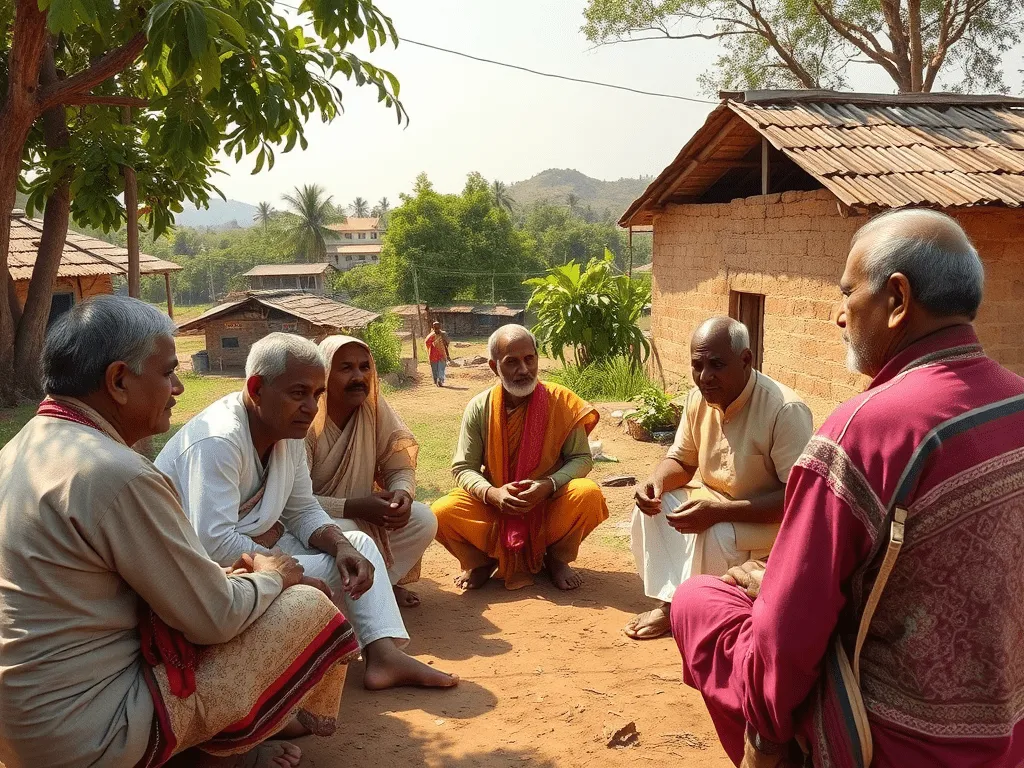
The 73rd Constitutional Amendment Act of 1992 was a landmark reform that significantly transformed the political landscape of rural governance in India. It gave constitutional status to Panchayati Raj Institutions (PRIs), thereby empowering local self-governments and enhancing grassroots participation in the democratic process.
This amendment laid the foundation for decentralized governance in rural India, allowing for more efficient resource management and decision-making tailored to local needs.
Understanding the 73rd Constitutional Amendment is crucial to comprehend this framework, as it established a clear mandate for state governments to create a three-tiered structure of governance, consisting of the Gram Panchayat at the village level, the Panchayat Samiti at the block level, and the Zilla Parishad at the district level.
Each tier plays a vital role in ensuring that the voices of rural citizens are heard and that their issues are addressed, fostering a sense of ownership and accountability in local administration.
Here’s a breakdown of the three-tier structure it introduced:
Three-Tier Panchayati Raj System
Under Article 243B, the Act mandates the creation of Panchayats at:
1-Village Level: Gram Panchayat, 2-Intermediate Level: Panchayat Samiti (Block level) and 3-District Level: Zila Parishad
A Fight for Transparency: One Man’s RTI Journey for Gram Sabha Records
The Right to Information (RTI) Act of 2005 was a revolutionary step towards a more transparent and accountable India, heralding a new era in governance where citizens could seek information about the functions and workings of government bodies.
The 73rd Constitutional Amendment complements this by empowering Panchayati Raj Institutions, which serve as the grassroots framework for democratic governance in rural areas. This ensures that governance is not an opaque process but a shared responsibility between the officials and the citizens they serve, fostering a culture of accountability.
We recently saw a perfect example of this in the online RTI appeal filed by Devi Prasad Gupta, which highlighted the importance of citizens taking an active role in questioning and seeking transparency from their government. Gupta’s appeal not only addressed specific concerns about public utility services but also served as an inspiration for others to utilize their rights effectively, illustrating how the RTI can be a powerful tool for social change and empowerment in India.
The Heart of the Matter: The Gram Sabha and 73rd Constitutional Amendment
At the very core of India’s decentralized governance is the Gram Sabha, a vital institution that empowers local communities. The 73rd Constitutional Amendment Act established it as the village-level body, crucial for fostering grassroots democracy. Here, members of the community gather to discuss local development, planning, and welfare initiatives that directly affect their lives.
The success of this body can be directly attributed to the 73rd Constitutional Amendment, which has reinforced its importance in enabling villagers to take part in governance. For a Gram Sabha to be effective, local leaders must hold its meetings regularly, encouraging active participation from all members of the community.
They should also guarantee that its proceedings stay transparent, ensuring that decisions are made democratically and that all voices are heard, thus enhancing accountability and trust among the villagers.
Furthermore, it is essential for the Gram Sabha to not only address immediate concerns but also to engage in strategic planning for the long-term development of the village, fostering a sense of ownership and responsibility among the residents.
This is precisely what Mr. Gupta sought to confirm. His RTI application focused on the Dhanwatiya Village Panchayat in Bhadohi, Uttar Pradesh. He wanted more than just a single piece of information. He requested a detailed record of the Gram Sabha’s activities over the last four financial years (2021-22 to 2024-25).
Why the RTI Was Necessary (73rd Constitutional Amendment Act only on paper )
Mr. Gupta’s inquiry was straightforward and precise. He wanted:
- Dates and times of all Gram Sabha meetings held.
- Copies of the proposals passed during these meetings.
- Signatures of the ward members to verify attendance and approval.
- The number of meetings uploaded on the Panchayat NIRNAY portal, a government initiative for real-time monitoring.
This information is crucial for public scrutiny. It allows citizens to see if their local body is meeting expectations. They can learn about the decisions made and check whether these decisions align with the community’s needs.
The absence of this information can signal a breakdown in the framework. Meetings do not occur. Authorities fail to properly document and make public the proceedings.
In such cases, the principles enshrined in the 73rd Constitutional Amendment are not upheld.
The Appeal: A Call to Action
The District Panchayat Raj Officer (DPRO) in Bhadohi failed to respond to his RTI application within the mandated 30-day period, which left Mr. Gupta feeling frustrated and disillusioned with the bureaucratic process designed to ensure transparency and accountability in governance.
Despite this setback, Mr. Gupta didn’t give up hope. Instead, he escalated the matter by filing a First Appeal with the First Appellate Authority, showcasing his determination to pursue his right to information and hold the public officials accountable for their inaction.
By taking this step, he not only sought answers for himself but also aimed to highlight the importance of adhering to the timelines set forth by the Right to Information Act, ultimately advocating for the rights of other citizens who may face similar challenges.
His appeal, registered as DIRPR/A/2025/61900, is a powerful reminder of a citizen’s right to information. In it, he clearly states the grounds for his appeal. He mentions non-response from the PIO. This forms a “deemed refusal” under the RTI Act. He also highlighted that the issue concerns “wide public interest,” urging the authority to emphasize the matter.
Mr. Gupta’s appeal not only seeks the requested information but also asks for a penalty against the PIO. This essential action holds public officials accountable for their inaction. It ensures that the RTI Act functions as a tool for information. The Act also acts as a deterrent against bureaucratic indifference.
The Bigger Picture
This is more than a single RTI application; it’s a testament to the power of a vigilant citizenry. It highlights the importance of the RTI Act in holding public authorities accountable and ensuring transparency in governance. In a world where information is often obscured, this act serves as a beacon for citizens who seek to illuminate the dark corners of bureaucratic processes.
This is particularly crucial at the grassroots level, where local governance directly impacts people’s lives in tangible ways, affecting crucial aspects such as health, education, and infrastructure. Mr. Gupta’s persistence demonstrates that a citizen’s voice is powerful, resonating beyond individual concerns to foster a collective ethos of responsibility and awareness among the populace.
When supported by legal provisions like the RTI Act, it can drive the change needed to rectify injustices and demand accountability from those in power. This change is essential not only to strengthen India’s democratic foundation but also to nurture a culture where citizens feel empowered to question and engage with their government.
This foundation was envisioned by the 73rd Constitutional Amendment, which aimed to decentralize power and encourage active participation in the democratic process at every level.
It will be interesting to see how the First Appellate Authority responds. We hope this step will finally bring the transparency the people of Dhanwatiya village deserve.
Enquiry officer may provide the information concerned with enquiry
Enquiry officer may provide the information concerned with enquiry
CMO Prayagraj promoted anarchy by not taking action on recomendation of CMO Bhadohi


Facing a similar challenge? Share the details in the box below, and our team of experts will do their best to help.