
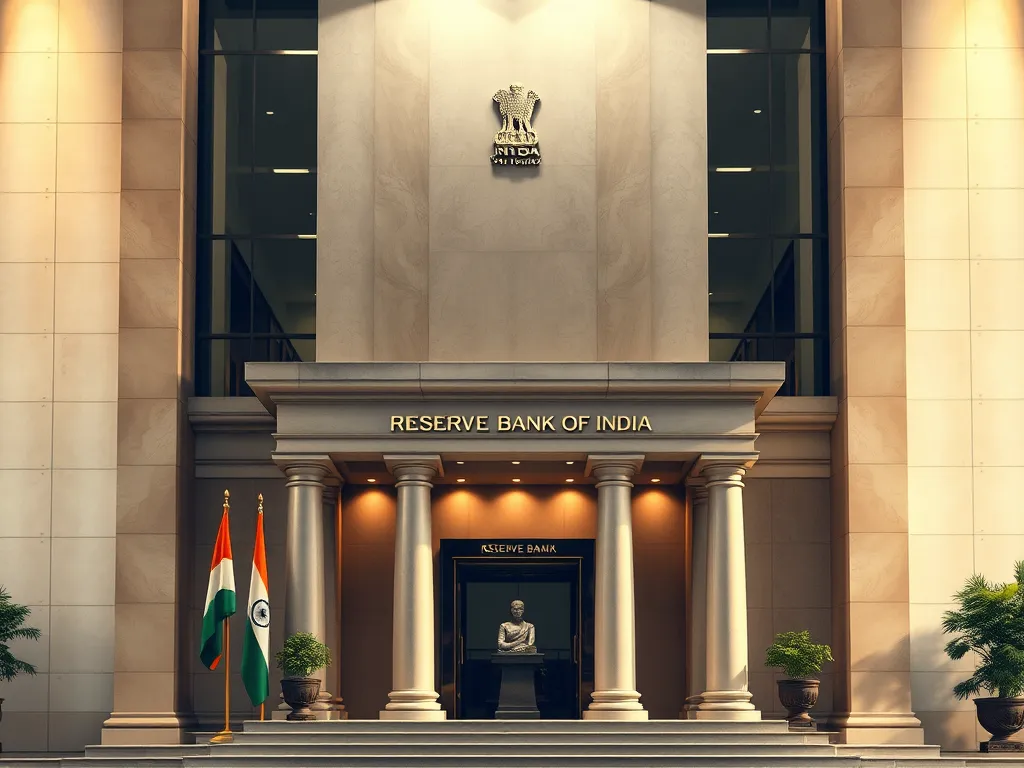
The case of Yogi M.P. Singh vs. Reserve Bank of India offers several critical lessons for citizens navigating the intersection of the RTI Act and the Indian banking system.
Here are the key takeaways:
1. Information Access vs. Grievance Redressal
The most significant lesson is that the RTI Act is not a substitute for a consumer court or an ombudsman. * The Goal of RTI: To see existing records, file notings, and correspondence held by a public authority.
- What RTI Cannot Do: It cannot compel the RBI to “take action,” “punish a bank,” or “decide who is right” in a fraud case. If you are looking for a refund or a legal judgment, you must use the Banking Ombudsman or Consumer Protection Act channels.
2. The “Ambit” of Public Authorities
The RBI is a regulator, but it does not have physical custody of every transaction record in a private bank.
- In this case, because the fraud involved an India Post Payments Bank account, the RBI redirected the grievance to the Postal Authority.
- Takeaway: Before filing an RTI or grievance, identify which specific department actually “holds” the records or has jurisdiction over the transaction.
3. The Finality of “No Information”
Under the RTI Act, if a public authority (like the RBI) states that they do not possess a specific record (such as the current safety status of a private bank account), the Information Commission cannot force them to create or investigate that information. The law only covers information that is already held in material form.
4. Procedural vs. Substantive Disputes
The CIC highlighted that it will not adjudicate on the correctness of an answer. If the CPIO provides a response, the Commission’s role is to ensure the response was given within the law, not to debate whether the RBI’s decision to return the grievance was “fair” or “lackluster.
5. Identifying the Correct Redressal Path
For victims of banking fraud involving private banks (like Federal Bank), the blog identifies the correct hierarchy for action:
- Bank’s Internal Grievance Cell: First point of contact.
- RBI Integrated Ombudsman: If the bank doesn’t resolve the issue in 30 days.
- National Cyber Crime Reporting Portal: For immediate freezing of fraudulent transactions.
- Consumer Court: For seeking compensation for “deficiency of service.”
Transparency vs. Redressal: Understanding the Boundaries of the RTI Act through the Yogi M.P. Singh Case
In the landscape of Indian governance, the Right to Information (RTI) Act, 2005 stands as a beacon for accountability.1 However, a common point of friction arises when citizens mistake the RTI mechanism for a grievance redressal platform. A recent decision by the Central Information Commission (CIC) in the case of Yogi M.P. Singh vs. Reserve Bank of India (File No. CIC/RBIND/A/2024/602288) serves as a critical case study in defining where “the right to know” ends and “the right to remedy” begins.
The Core Issue: Banking Fraud and Regulatory Silence
The appellant, Shri Yogi M.P. Singh, raised a series of grave allegations regarding the proliferation of banking fraud in India. His primary contention was directed at the Reserve Bank of India (RBI), which he accused of a “lackluster performance” in regulating private banks.
The grievance was personal and systemic:
- The Incident: A bogus bank account was allegedly opened in the name of the appellant’s brother, Keshav Pratap Singh, at Federal Bank—a private entity.2
- The Fraud: Funds were reportedly siphoned from an India Post Payments Bank account into this forged account.3
- The Allegation: The appellant claimed that the RBI, instead of curbing such corrupt activities, remains a silent spectator, effectively providing patronage to fraudulent agents by failing to enforce strict KYC (Know Your Customer) compliance.
Seeking accountability, the appellant filed an RTI seeking detailed information on the action taken on his previously registered CPGRAMS grievance (PMOPG/E/2023/0174605).4
The RTI Query: What Information was Sought?
The RTI application filed on September 1, 2023, was specific.5 The appellant demanded:
- Action Taken Reports: Details of actions by the General Manager of RBI.
- Internal Notings: File notes and endorsements made by competent authorities regarding his grievance.
- Status of Funds: Whether the money in the forged account was safe and the current status of that account.
- Correspondence: Feedback from Federal Bank and the time taken by RBI to communicate the forgery to the concerned institutions.
The RBI’s Defense: Jurisdictional Boundaries
The Central Public Information Officer (CPIO) of the RBI provided a response that highlighted the fragmented nature of grievance monitoring. The RBI stated that the grievance was received from the Department of Financial Services (DFS) but was returned to them because:
“The grievance does not fall under the ambit of RBI… it may be taken up with the POSTAL AUTHORITY.”9
Regarding the safety of the funds and details of the Federal Bank account, the RBI maintained that it held “no information,” as these were internal matters of the specific commercial bank and the initial source of the fraud involved the postal banking system.
The CIC’s Verdict: Adjudication vs. Information
When the matter reached the Central Information Commission, the Hon’ble Commissioner Anandi Ramalingam upheld the RBI’s position. The decision, uploaded on April 14, 2025, underscored three vital legal principles that every RTI applicant must understand:
1. RTI is Not a Grievance Redressal Forum
The Commission observed that the appellant was not just seeking information but was “challenging the merits of the action taken.”10 The RTI Act is designed to provide access to records as they exist. It cannot be used to force a public authority to adjudicate a dispute or change its administrative decisions.
2. Correctness of Information Cannot be Litigated under RTI11
Relying on the Delhi High Court precedent in Hansi Rawat vs. PNB, the Commission noted that RTI proceedings cannot be converted into an inquiry into whether the information provided is “correct” or “satisfactory” in the eyes of the complainant. If the authority says “no such record exists,” the Commission cannot create one.
3. The “Confines of the Act”
The CIC is a statutory body, not a court of general equity.12 As held in Govt. of NCT of Delhi vs. Rajender Prasad, the Commission lacks the jurisdiction to examine controversies outside the scope of “possession of information.”13
The Broader Implications for Banking Consumers
This case highlights a frustrating “loophole” for victims of cyber-fraud. While the RBI is the regulator, it often acts as a conduit, forwarding grievances to individual banks.14 If a bank provides a “flimsy” response, the RTI Act cannot be used to compel the RBI to “take action” or “investigate deeper”—it can only be used to see the record of that communication.
Key Takeaways for Citizens:
- Know the Nodal Agency: If the fraud originates in a Postal Bank, the Department of Posts is the primary public authority, not the RBI.15
- The Ombudsman Path: For disputes regarding “deficiency of service” by private banks, the Reserve Bank – Integrated Ombudsman Scheme (2021) is the correct legal route, not the RTI Act.16
- KYC Accountability: While RTI may not provide a remedy, it can be used to seek the RBI’s Master Circulars on KYC compliance to build a stronger legal case in a Consumer Court.
Conclusion
The dismissal of Yogi M.P. Singh’s appeal is a reminder that transparency is a tool, not a cure-all. While the appellant’s frustration with banking fraud is a reflection of a growing national concern, the legal reality remains: the RTI Act is a “sunshine law” meant to illuminate the files of the government, not a “hammer” to strike down administrative inaction. For victims of fraud, the path to justice lies in the Consumer Courts and the Integrated Ombudsman, while the RTI remains the primary tool to ensure those offices are at least keeping their records straight.
To ensure you can follow up with the correct authorities, here are the structured contact details, including application IDs for tracking and direct links for the relevant public offices.
1. Reserve Bank of India (RBI)
The RBI handles regulatory queries and banking ombudsman services. For complaints regarding “deficiency in service” by any regulated bank, use the CMS Portal.
| Detail | Contact Information |
| Grievance Portal | cms.rbi.org.in |
| Email for Complaints | crpc@rbi.org.in |
| Toll-Free Number | 14448 (8:00 AM to 10:00 PM) |
| RTI Online Portal | rtionline.gov.in (Select “Reserve Bank of India”) |
| Physical Address | Centralised Receipt and Processing Centre (CRPC), RBI, Central Vista, Sector 17, Chandigarh – 160017 |
2. India Post Payments Bank (IPPB)
Since the fraud involved funds siphoned from an India Post account, the Postal Authority is a primary party for recovery and investigation.
| Detail | Contact Information |
| Customer Care | 155299 or 033-22029000 |
| Reporting Fraud | 1800 8899 860 (Toll-Free for unauthorized transactions) |
| Email ID | contact@ippbonline.in |
| Nodal Officer Email | pno@ippbonline.in (Principal Nodal Officer) |
| Website | www.ippbonline.com |
3. Federal Bank (Private Bank Involved)
If you are dissatisfied with the branch’s response regarding the “bogus account,” you must escalate to their Nodal Officer before the RBI Ombudsman will accept the case.
| Detail | Contact Information |
| Nodal Officer | Shri Sunil John (Senior Vice President) |
| Email ID | support@federalbank.co.in |
| Escalation Email | grievanceescalations@federalbank.co.in |
| Phone Number | 0484-2201619 or 1800-425-1199 |
4. Department of Financial Services (DFS) & CPGRAMS
This is the ministry-level body that monitors the public grievance portal where your original grievance was filed.
| Detail | Contact Information |
| Original Grievance ID | PMOPG/E/2023/0174605 |
| Portal Link | pgportal.gov.in |
| Technical Support | cpgrams-darpg@nic.in |
| DFS Phone | 011-23742207 / 011-23360250 |
Summary of Action Steps
- Track on CPGRAMS: Log in to pgportal.gov.in with your registration number PMOPG/E/2023/0174605 to see the final “Action Taken Report” (ATR) uploaded by the DFS.
- File with IPPB: Ensure a formal complaint is registered with the Principal Nodal Officer of IPPB (pno@ippbonline.in) specifically regarding the unauthorized transfer.
- RBI Ombudsman: If Federal Bank or IPPB does not resolve the issue within 30 days, file a fresh complaint on the RBI CMS Portal using the “deficiency in service” category.
Would you like me to help you draft the specific text for a formal letter to the IPPB Principal Nodal Officer?


Facing a similar challenge? Share the details in the box below, and our team of experts will do their best to help.