
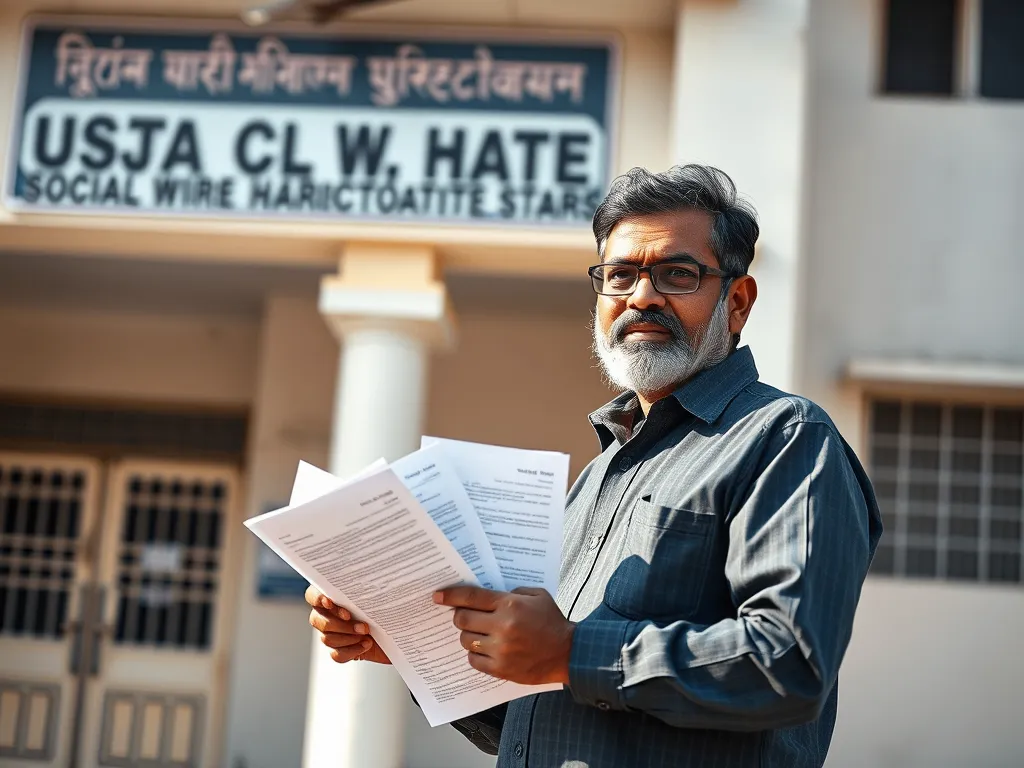
Misuse of Section 8(1)(j) of RTI Explained through a single Mirzapur case study: when a citizen files a simple request, the system unfortunately stalls for months. The Right to Information Act of 2005 promised sunlight over government files; however, Public Information Officers across Uttar Pradesh routinely invoke Section 8(1)(j) — the clause meant to protect genuine personal privacy — to withhold basic transfer and posting records. This pattern is not merely an isolated technicality; rather, it is a recurring tactic that effectively blocks citizens from verifying whether officials comply with the state’s own transfer policy. For instance, in the case of Yogi M. P. Singh versus the Social Welfare Directorate, a 45-day delay, a vague appeal disposal, and a circular “departmental work” excuse together illustrate precisely how this exemption is stretched far beyond its intended scope.
Key Takeaways
- The misuse of Section 8(1)(j) of RTI obstructs transparency in Uttar Pradesh’s transfer policies, hindering public accountability.
- Officials often misapply the provision to deny access to basic records, despite court rulings addressing grievances related to this misuse.
- The case study of Yogi M. P. Singh illustrates procedural delays and ineffective appeals in accessing information, undermining statutory timelines.
- The Uttar Pradesh government’s new transfer policy faces challenges due to this misuse, as it prevents public checks on compliance and accountability.
- To restore trust, there must be accountability for PIOs misusing Section 8(1)(j) and ignoring response deadlines under Section 7(1).
Misuse of Section 8(1)(j) of RTI: Transfer Policies and the Battle for Accountability in Uttar Pradesh
The Right to Information (RTI) Act of 2005 was meant to bring “sunlight” into the corridors of power. Specifically, it was designed to curb the “jungle fire” of corruption through transparency and accountability. However, in Uttar Pradesh, the misuse of Section 8(1)(j) of RTI has unfortunately become a significant shadow over that promise. For instance, the case of Yogi M. P. Singh vs. The Social Welfare Directorate illustrates this clearly. In this case, officials stretch this exemption clause to shield transfer and posting records from public view. Furthermore, procedural delays and administrative inertia only compound the problem.
Misuse of Section 8(1)(j) of RTI: Personal Privacy vs. Public Accountability
At the center of the dispute sits a simple tension. Section 8(1)(j) of the RTI Act protects personal privacy. But the public also has a right to know how the government implements its policies. Across Uttar Pradesh, Public Information Officers (PIOs) frequently deny requests about the transfer and posting of officials. They label such data as “personal information.” Many activists now describe this pattern outright as misuse of Section 8(1)(j) of RTI. After all, the clause was never meant to cover routine administrative postings.
Officials often bolster this stance with Supreme Court precedents. Two cases come up often: Girish Ramchandra Deshpande and CS Shyam. These rulings suggested that service records, including transfers and promotions, remain matters between the employee and the employer. They found no inherent “public interest” in such records. In practice, however, PIOs lean on these precedents well beyond their intended scope. They turn a narrow privacy exemption into a blanket refusal tool.
This interpretation isn’t absolute, though. The Karnataka High Court offered a crucial counter-narrative in the AS Mallikarjunaswamy case. When citizens seek information to address grievances about seniority, promotions, or the fair application of state policy, the shield of “personal privacy” must yield. Justice and administrative fairness take priority. This ruling remains one of the strongest judicial checks against the misuse of Section 8(1)(j) of RTI seen across Indian state departments today.
The Case Study: A Mockery of Statutory Timelines
The grievance of Shri Yogi M. P. Singh (Registration No: DIRSW/R/2024/60156) highlights a systemic failure. It exposes cracks in the Social Welfare Department of Mirzapur. The timeline of his application reveals a blatant disregard for Section 7(1) of the RTI Act. That section mandates a response within 30 days:
- November 21, 2024: Singh filed the original RTI request online.
- January 9, 2025: More than 45 days later, he still hadn’t received a response. So, he filed a First Appeal (DIRSW/A/2025/60007).
- February 14, 2025: The department finally disposed of the appeal. Its “reply,” though, amounted to a vague departmental redirection rather than the substantive information he requested.
The appellant’s prayer is clear as a result. The delay isn’t merely a clerical error; it’s a “mockery of the provisions” of the Act. When a PIO stays silent for nearly 50 days, it raises a legitimate suspicion. What is being hidden behind the silence?
The 2025-26 Transfer Policy: Paper vs. Practice
This RTI request gains urgency from the Uttar Pradesh Government’s 2025–26 Transfer Policy. The government designed this policy to dismantle “transfer mafias” and deep-rooted corruption. It does so by enforcing strict term limits:
- Group A and B Officers: Officials must transfer them after three years in a district, or seven years in a division.
- Merit-Based System: The policy shifts toward online, merit-based transfers. This minimizes human bias and political interference.
Shri Singh’s inquiry sought to verify one thing: was the Social Welfare Officer in Mirzapur complying with these mandates? By refusing to disclose who has moved and who has stayed beyond their term, though, the public authority blocks a basic audit. Citizens can’t check whether the policy applies uniformly, or whether “special favors” protect those stuck in the same post for decades.
The Role of the First Appellate Authority (FAA)
The First Appellate Authority, Mr. Rajesh Kr Singh (DD Vindhyachal), acknowledged the lapse in this instance. Consequently, on January 15, 2025, he issued a directive (Letter No. /U.N./S.K./Jan Suvidha-RTI /2024-25). It ordered the District Social Welfare Officer, Mirzapur, to provide the information within three days.
Despite this “top-down” order, the eventual disposal of the appeal on February 14, 2025, produced a response many would call “evasive.” The reply stated that the matters “come under departmental/government work.” This circular logic, again, functions as a quiet misuse of Section 8(1)(j) of RTI rather than a genuine application of the exemption.
The Impact of the Misuse of Section 8(1)(j) of RTI
When PIOs and departments lean on this clause as a blanket shield, the damage runs deep. They don’t just block a few names. They erode the foundation of Good Governance.
- Encouraging Stagnation: Officers who remain in one location too long often develop “vested interests.” Preventing exactly this was the whole point of the 2025-26 policy.
- Demoralizing the Citizenry: An activist like Yogi M. P. Singh follows every legal step, only to meet delays and vague replies. This experience discourages others from participating in the democratic process.
- Judicial and Commission Penalties: In past cases, the Central Information Commission (CIC) has awarded compensation to appellants. It has also penalized PIOs for such “arbitrary” actions. The Mirzapur case appears to be a prime candidate for similar intervention.
Conclusion: Ending the Misuse of Section 8(1)(j) of RTI
The situation in the Social Welfare Directorate of Uttar Pradesh serves as a warning. Transparency shouldn’t be a “request” that the government can choose to ignore. It remains a statutory right. The misuse of Section 8(1)(j) of RTI cannot keep substituting for a genuine response.
The Uttar Pradesh government, therefore, must move beyond drafting sophisticated transfer policies on paper. It must open the implementation of these policies to public scrutiny too. If an officer has stayed in a district for over three years in violation of the 2025-26 policy, the public deserves to know why.
To restore faith in the system, the State Information Commission must take a stern view of two things. First, PIOs who invoke Section 8(1)(j) improperly. Second, PIOs who violate Section 7(1) timelines. Only accountability, and closing the loopholes that enable the misuse of Section 8(1)(j) of RTI, can fully extinguish the “jungle fire” of corruption.se of Section 8(1)(j) of RTI, can the “jungle fire” of corruption be fully extinguished.se of Section 8(1)(j) of RTI, can the “jungle fire” of corruption be fully extinguished. Commission (SIC) specifically citing the “vague and evasive” nature of the FAA’s final disposal?


Facing a similar challenge? Share the details in the box below, and our team of experts will do their best to help.