
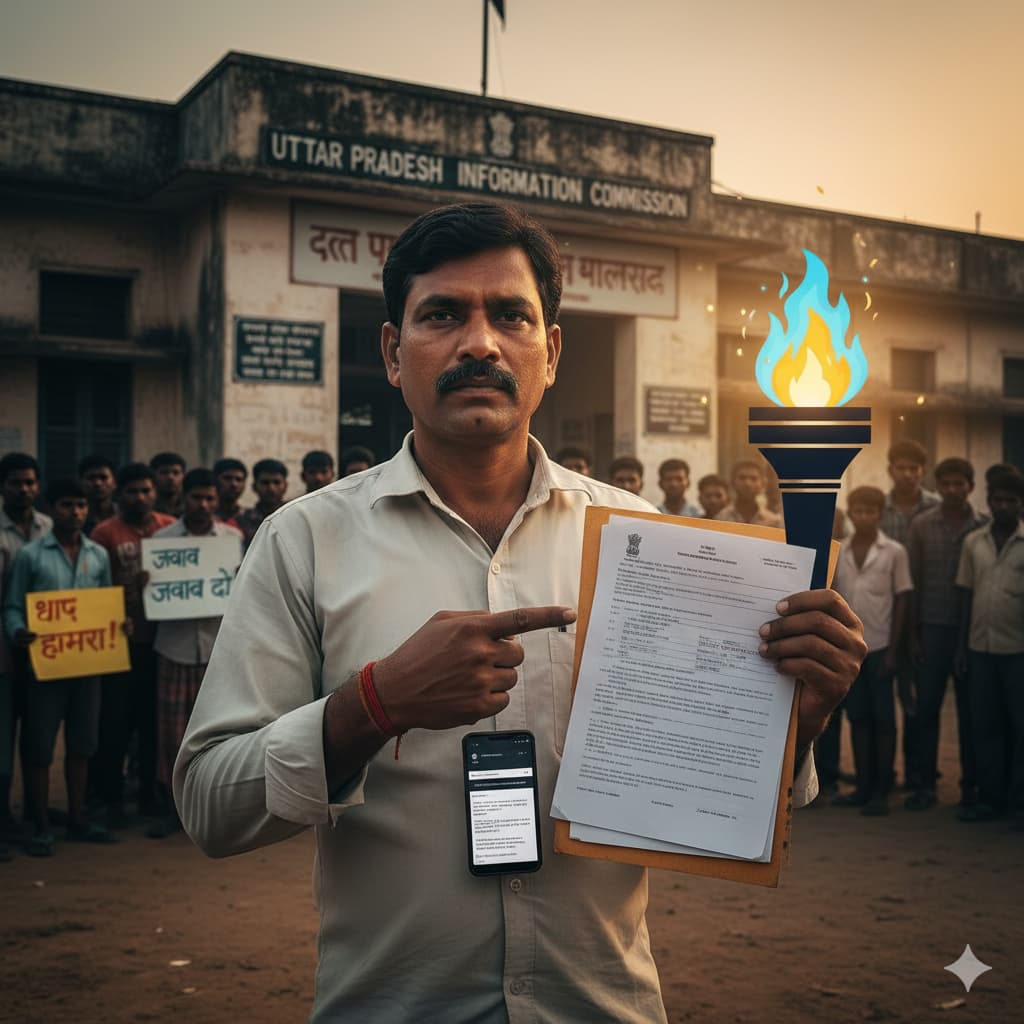
A Citizen’s Crusade for Transparency: Second Appeal in RTI Case Against Mirzapur Officials
The journey for transparency under the Right to Information (RTI) Act, 2005 is often fraught with obstacles, creating significant challenges for citizens seeking to hold authorities accountable.
This is particularly true for Ashok Kumar Maurya of Mirzapur, Uttar Pradesh, who has encountered numerous hurdles in his pursuit of information.
His second appeal to the Uttar Pradesh Information Commission (UPIC) highlights not only the alleged failures by the Public Information Officer (PIO) to provide critical data but also indicates systemic issues within the framework governing these requests.
Furthermore, it puts a spotlight on the First Appellate Authority (FAA), which is mandated to ensure that information is accessible but appears to have faltered in delivering essential development information, compounding the frustrations faced by citizens.
His case, registered as UPICR20240009954, serves as a stark example of a citizen’s relentless fight against bureaucratic indifference and alleged misinformation, underscoring the urgent need for reforms in the RTI system.
This situation illustrates the importance of movements like the Citizen’s Crusade for achieving transparency and empowering citizens to demand accountability, thereby fostering a more open and responsive governance structure that upholds the principles of democracy and public trust.
Key Details of the RTI Demand and Appeals
Ashok Kumar Maurya’s original RTI application was dated July 10, 2024. It sought comprehensive details regarding developmental schemes in his village, Bihasra Khurd, including their objectives, expenditures, and the impact these initiatives had on the local community.
These details covered the last three years and were aimed at understanding how effectively the funds allocated for these schemes were utilized.
The information requested is crucial for ensuring accountability in public spending, as it can reveal both successes and shortcomings in the implementation of these projects.
By shedding light on the allocation and usage of resources, Mr. Maurya hopes to foster a more transparent and participatory governance model that can better address the needs and aspirations of the residents in his village.
Information Sought by the Appellant in the matter titled as Citizen’s Crusade for Transparency
The appellant requested the following specific documents and details:
- Estimates of developmental schemes.
- Distribution of government funds in these schemes.
- Work booklets of the schemes.
- Description of the release of government funds.
- Wall painting details and the government fund spent on them.
PIO’s Response: Information Denied and Misleading?
The response from the PIO, Santosh Kumar, DPRO, Mirzapur, dated August 02, 2024, was deemed “incomplete/unsatisfactory/false/misleading” by the appellant, who expressed significant concern regarding the lack of clarity and detail in the information provided.
The Village Development Officer’s attached reply, which was rather terse, simply directed the appellant to the departmental website egramswaraj for the “relevant information,” a gesture that the appellant found to be dismissive and unhelpful.
This response raised further questions as it did not address the specific queries posed by the appellant, leaving them frustrated and searching for answers that should have been readily available.
The reliance on a website link, rather than a comprehensive and detailed reply, accentuated a disconnect between the appellant’s needs and the bureaucratic response they received.
The Core of the Dispute
The PIO essentially passed the buck, stating the information was “available online”. Nonetheless, the appellant, in his submission, makes a specific assertion. He states that key documents like the estimates, fund distribution details, work booklets, and wall painting details are missing online. The secretary of the village panchayat has not uploaded them.
This discrepancy forms the foundation of the appellant’s complaint. Is the information truly available and simply being pointed out? Or is the PIO using the online availability as an excuse to avoid providing the specific, missing records for the Citizen’s Crusade, which aims for transparency?
Failure at the First Appellate Level in the matter titled as Citizen’s Crusade for Transparency
The appellant was dissatisfied with the PIO response, which they found to be insufficient and uninformative, failing to address critical aspects of their inquiry.
As a result, they filed a First Appeal with the FAA, seeking a more comprehensive review of the matter.
This appeal was meticulously prepared and addressed to Divisional Deputy Director Panchayat Ram Jiyawan on September 12, 2024, outlining the specific concerns and requesting clarification on the points that had not been adequately answered in the initial response.
The appellant hoped that the FAA would recognize the importance of the issues raised and provide a resolution that would uphold transparency and accountability.
The Alleged Inaction
The record shows “There is no answer” from the FAA, and the “Date of Order” is blank. This alleged failure to entertain the appeal or to pass an order on time is a significant procedural lapse. It occurs under the RTI Act. It compels the citizen to approach the Second Appeal stage.
Relief Sought in the Second Appeal titled as Citizen’s Crusade for Transparency
In his second appeal to the UP Information Commission, Ashok Kumar Maurya presents a pointed prayer that articulates his growing frustration with the lack of transparency surrounding the information he seeks.
It goes beyond merely seeking the original information; rather, it underscores the urgent need for accountability and the right to access essential data that impacts the public and various stakeholders.
His appeal highlights the importance of upholding the principles of transparency and openness in governance, emphasizing that such access is not just a privilege but a fundamental right for every citizen engaged in civic matters.
As he elaborates on his concerns, it becomes clear that his pursuit is part of a larger call for reform and adherence to the principles of democratic access to information, aiming to foster trust and integrity within public institutions.
The Appellant’s Prayer
The appellant requests the UPIC to:
- Take action against the Public Information Officer (PIO) under Section 20 of the RTI Act for providing misleading information.
- Initiate disciplinary action against the First Appellate Authority (FAA) for failing to entertain the appeal.
The appellant’s submission strongly expresses the sentiment. It states that “Immediate action is necessary to take harsh steps against the wrongdoer. This will win the confidence of the citizenry.” These actions will also strengthen the democratic values… This appeal is not just for information. It is for holding officials accountable for alleged dereliction of duty. It is also about undermining the spirit of the RTI Act.
What This Case Represents
This Second Appeal epitomizes the challenges ordinary citizens face when utilizing the RTI Act to seek grassroots-level accountability.
Developmental schemes at the Gram Panchayat level are meant to serve the public. Documentation related to their execution and funding must be easily accessible.
Public authorities, at multiple levels, allegedly fail to supply this information. This failure forms a serious breach of the transparency mandate.
Sometimes, they pass the responsibility to a non-existent or incomplete online source.
This highlights the essence of the Citizen’s Crusade for achieving transparency across public sectors, ensuring accountability.
The UPIC’s handling of this case will be a significant test of its commitment. It aims to guarantee that officials follow the letter and spirit of the law. This is crucial, especially when facing allegations of obstructing information on local public works.


Facing a similar challenge? Share the details in the box below, and our team of experts will do their best to help.