
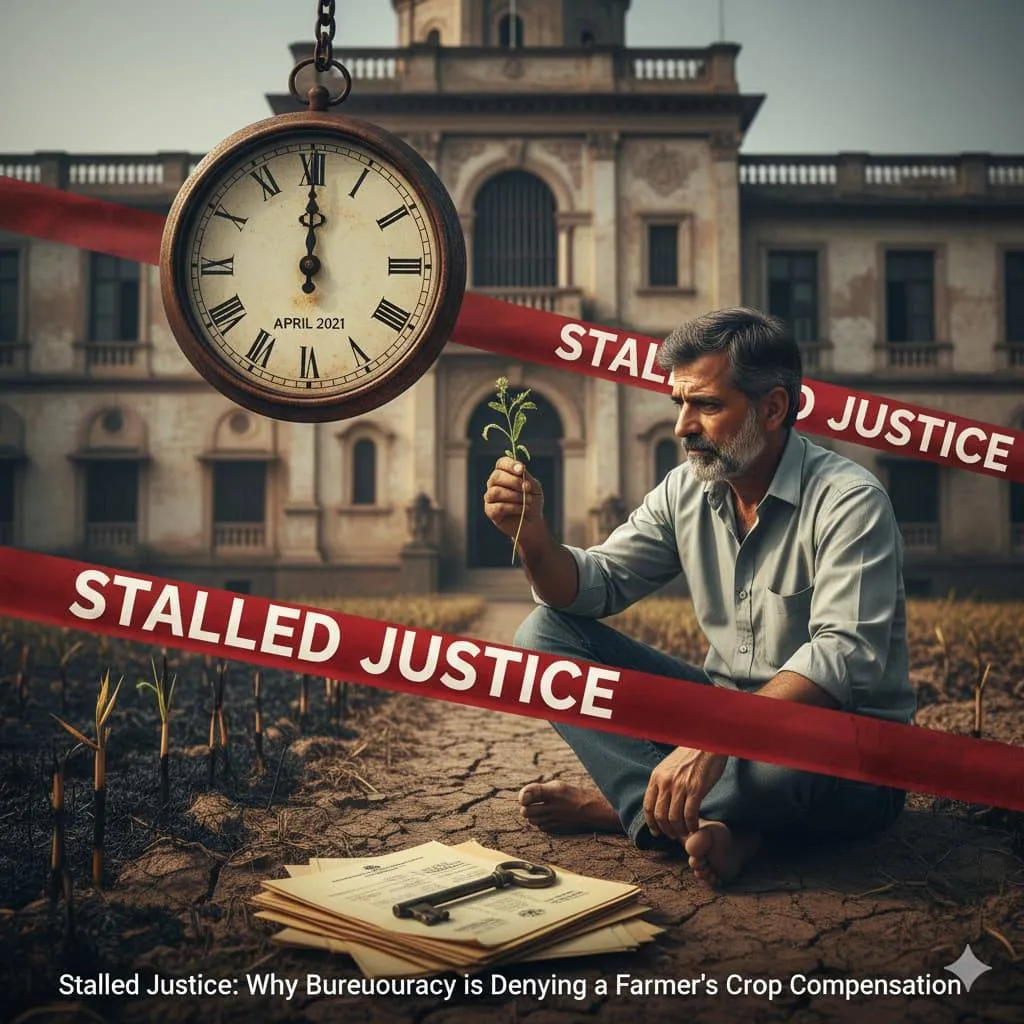
Stalled Justice: Why Bureaucracy is Denying a Farmer’s Crop Compensation 🌾
The case highlights the frustrating pace of government bureaucracy. It exemplifies stalled justice by delaying compensation for those who have suffered significant losses.
In April 2021, a significant incident for crop compensation began. Farmers in Mirzapur, Uttar Pradesh, reported devastation due to adverse weather. These conditions severely affected their yield.
However, officials have stalled the compensation process between two departments. This has created a complex web of red tape. As a result, it leaves these vulnerable individuals without the support they desperately need.
Hope fades over time for the affected farmers. They remain in limbo, waiting for the necessary funds. These funds are essential to help them recover and sustain their livelihoods. Meanwhile, they witness the government’s inaction.
Mr. Dayanand Singh’s crops reportedly burned, and he deserves compensation. The mechanism for seeking justice faces a challenge as delays stall compensation. He had to file a major government grievance (GOVUP/E/2024/0083513). He also needed to submit an RTI inquiry. This was just to move the file from one desk to another.
The Two-Office Tussle in the matter of Stalled Justice by delaying compensation
The delay is centered on two administrative offices. These offices oversee critical aspects of the process. They are responsible for coordination and communication between various departments.
These offices have faced unexpected challenges. These challenges include staffing shortages. Additionally, there is an increased volume of requests. These factors have contributed to the lag in progress.
Stakeholders are urging for a comprehensive review of the operational workflows. They aim to identify potential areas for improvement. Additionally, they want to expedite the resolution of pending matters.
- The Electricity Department: The Executive Engineer’s office has stated it’s ready to pay the requisite amount. Still, this is pending the completion of necessary administrative processes. Nevertheless, they need an official report to continue with the payment. They formally requested an investigation report from the Tehsildar Sadar on October 21, 2024 (Letter No. 6482), which will supply the essential details and assessments needed for the finalization of the payment procedure.
- The Tehsildar Sadar’s Office: The staff at the Tehsildar Sadar’s Office has stalled the file and keeps it under scrutiny. They must conduct the necessary inquiry thoroughly and diligently. Alternatively, they can confirm an earlier inquiry, as long as it meets current standards. After completing the investigation, they must send a clear report back to the Electricity Department. The report should be detailed. It needs to outline all findings and recommendations. Until they provide this investigation report, they cannot release the compensation check. This situation further perpetuates stalled justice by delaying compensation. Prompt compensation is critical for the affected parties.
This procedural dependency has effectively created a three-year administrative black hole for the aggrieved farmer.
The RTI: A Weapon for Accountability
When official channels move too slowly, citizens look for alternatives. They often turn to the Right to Information (RTI) Act to bridge the gap between bureaucracy and accountability.
The complainant, Yogi M. P. Singh, has strategically used this powerful tool. He obtains information about his concerns. He also compels authorities to take meaningful action. Additionally, he ensures transparency in their operations.
By navigating the complexities of the RTI process, he highlights the inefficiencies that often plague governmental procedures.
In doing so, he actively fights stalled justice caused by delays in compensation. He sheds light on the systemic issues that hinder timely resolutions.
His efforts empower himself. They also serve as a rallying cry for other citizens facing similar challenges. His actions encourage them to utilise the RTI Act to hold public officials accountable and demand the justice they deserve.
The RTI inquiry is brilliant in its focus on accountability. It asks:
- Who received the critical letter? (Identifying the first point of contact.)
- Who is holding the file now? (Identifying the official responsible for the current delay.)
- How does the Action Taken Report (ATR) prove progress? (Demanding proof that work is, actually in progress.)
- Why was an earlier 2021 Revenue Inspector’s report, unsigned by the administrative head? (Exposing a potential procedural flaw that may have been, used to deny the claim for years.)
The RTI asks these pointed questions. It aims to pierce the veil of bureaucracy. The goal is to remove the excuses used to postpone a simple, necessary administrative task.
Why Does This Matter?
This case isn’t just about one farmer’s loss. It’s a testament to the administrative struggle faced by countless citizens. They find themselves entangled in red tape and bureaucratic inefficiencies.
When public servants fail to process a routine file promptly, it damages public trust. This failure fosters frustration and disillusionment.
Justice stalls when compensation is delayed, resulting in significant hardships for those who depend on timely resolutions.
Forcing a citizen to navigate complex legal mechanisms to achieve their goal causes unnecessary stress. It also undermines the fundamental purpose of sound governance. Governance should prioritise constituents’ welfare. It must ensure their rights are upheld promptly and fairly.
Such systemic issues highlight the urgent need for reform to restore faith in public institutions and promote accountability.
The grievance has been forwarded to the Chief Minister’s Secretariat in Uttar Pradesh. Now, all eyes are on the Tehsildar Sadar’s office. They must recognize that justice delayed is justice denied. They should give the crucial investigation report within the stipulated 30-day RTI timeline.
Justice for Mr. Dayanand Singh’s claim should be the priority, not procedural perfection.
U.P.H.R.C. Lucknow registered matter of Dayanand Singh against Executive Engineer
Station House Officer Kotwali Vindhyachal did not redress grievance


Facing a similar challenge? Share the details in the box below, and our team of experts will do their best to help.