
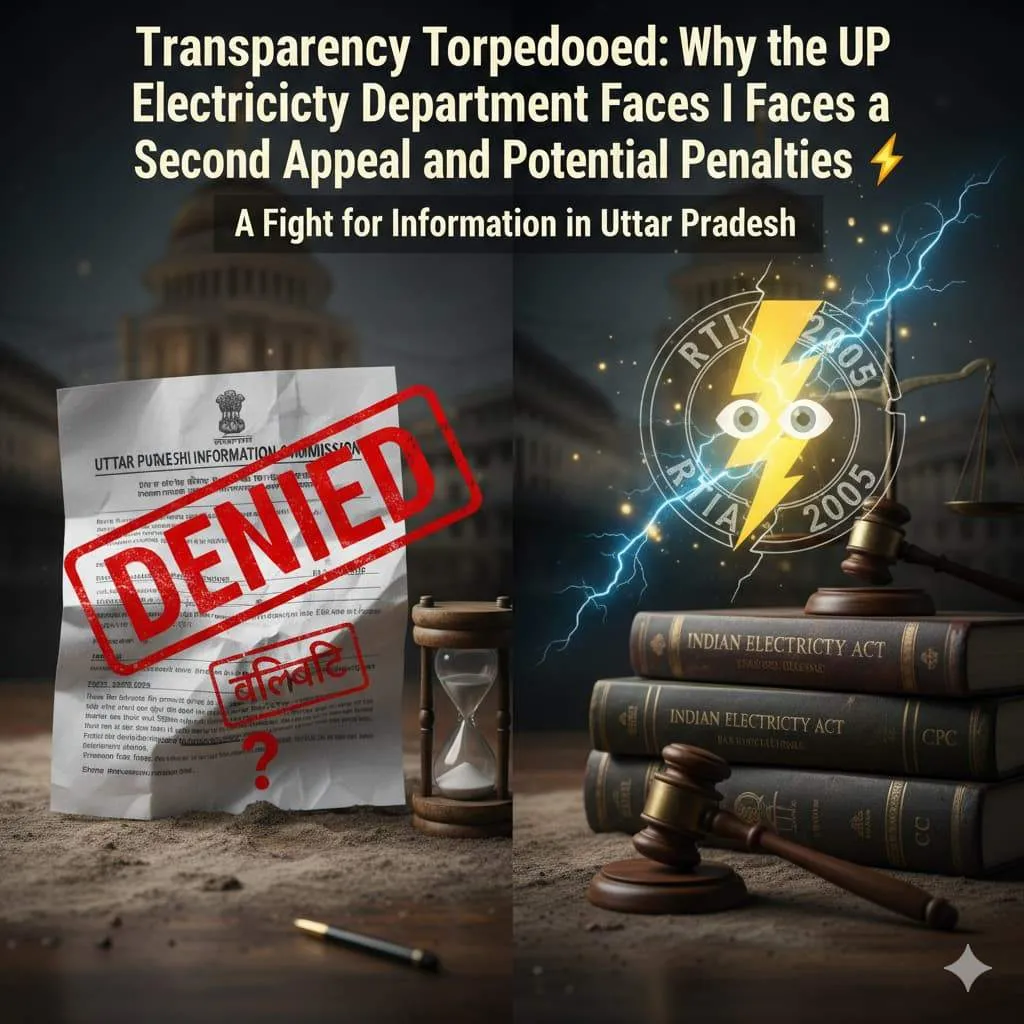
Transparency Torpedoed: Why the UP Electricity Department Faces a Second Appeal and Potential Penalties ⚡️
In a classic case of transparency torpedoed, a routine request for public information has escalated into a serious case before the Uttar Pradesh Information Commission (UPICR), shining a spotlight on the dire need for accountability in public offices.
This situation has revealed a significant failure in implementing the Right to Information (RTI) Act, 2005 within the state’s Energy Department, where bureaucratic hurdles and a lack of responsiveness have hindered citizens’ access to essential information.
As stakeholders and advocates for transparency voice their concerns, this has become a critical issue that not only affects public trust in governance but also underscores the importance of ensuring that the provisions of the RTI Act are upheld diligently.
The implications of this oversight are vast, with potential repercussions that could undermine democratic processes and the equitable distribution of energy resources in the state.
The Appellant, Kamlesh Singh from Mirzapur, has filed a Second Appeal. He accuses the Public Information Officer (PIO) of defying the law, essentially making transparency efforts appear as torpedoed. He also accuses the First Appellate Authority (FAA) of the same. This is because they failed to respond at two successive stages. His appeal seeks not just the information but also disciplinary action and a hefty penalty against the officers involved.
The Core of the Dispute: Deemed Refusal
The case centres on what the law terms ‘deemed refusal.’ This legal concept arises when a Public Information Officer fails to provide the requested information within the stipulated 30-day period, thereby denying the applicant access to the necessary data.
It also happens if the officer does not reject the application in that time frame, which can leave applicants in a state of uncertainty. A lack of response in these circumstances shows that transparency can be torpedoed by inaction, leading to frustration among citizens who expect accountability from public institutions.
This situation raises significant concerns about the effectiveness of information access laws, as individuals may feel compelled to navigate bureaucratic red tape while their requests go unanswered, culminating in a detrimental impact on public trust in these officials responsible for maintaining openness and communication with the community.
Timeline of Failure
| Event | Date | Statutory Deadline | Status |
| Original RTI Application | July 7, 2025 | August 6, 2025 (30 days) | Deemed Refusal (PIO provided no response) |
| First Appeal (u/s 19(1)) | August 27, 2025 | October 11, 2025 (45 days max.) | Deemed Refusal (FAA passed no order) |
| Second Appeal (u/s 19(3)) | October 16, 2025 | N/A | Filed with UP Information Commission |
Export to Sheets
The PIO, Mr. Manish Kumar Srivastava, and the FAA, Mr. Ram Das, both from the Energy Department, Mirzapur, are now under scrutiny. They failed to act as required, rendering transparency completely torpedoed in this instance. This violates Section 7(1) and Section 19(6) of the RTI Act.
The Information They Don’t Want to Share is a reflection of transparency torpedoed 🕵️
Kamlesh Singh’s request pertains to a specific case of electricity theft under Section 135 of the Indian Electricity Act, 2003, which outlines the severe legal repercussions for those found guilty of such violations.
It is against an individual whose name is Dileep Singh, who is alleged to have unlawfully consumed electricity, significantly impacting the revenues of the electricity board.
The requested documents are highly specific and directly relate to the public function of the electricity board’s enforcement wing, including records of inspections, notices served, and any fines imposed.
In actions like these, transparency can often feel like it has been torpedoed, as stakeholders demand clarity on how enforcement actions are taken, ensuring that they are justified and equitably administered, thus restoring public trust in the regulatory framework governing electricity distribution.
Details of Information Sought:
- A copy of the First Information Report (FIR).
- The date and a copy of the Charge Sheet filed.
- The name, designation, and posting details of the Investigating Officer.
- The current status of the case.
- Statistical data on the total actions taken in electricity theft cases in the last financial year.
Why Is This Information Not Exempt?
The Appellant firmly argues that the requested information is not exempt. It does not fall under any of the exemptions listed in Section 8 of the RTI Act.
- FIRs and Charge Sheets are Public: Legal precedents from the Supreme Court and High Courts have established this. Once an investigation is complete, the case is then before a court. Documents like the FIR and Charge Sheet are considered public documents. The exemption under Section 8(1)(h) (which protects information that would impede investigation) is thus generally not applicable.
- Public Interest and Transparency: Information concerning criminal action taken by a public authority is a matter of public interest. Statistical data on anti-theft measures is essential for transparency, as per the preamble of the RTI Act. When such transparency is torpedoed, it leaves a significant gap in public knowledge.
What the Appellant Demands: More Than Just the Document
The Second Appeal to the UP Information Commission is a heartfelt plea for justice, underscoring the urgent need for transparency and responsiveness from public authorities.
It calls for accountability and the restoration of public faith in the RTI process, encouraging citizens to actively participate in governance and demanding answers to their queries.
This appeal highlights how prolonged silence and lack of proper communication from authorities can undermine democracy and erode trust between the government and its citizens.
By advocating for a more open and accountable governmental process, the citizens aim to ensure their voices are heard and considered in the policymaking sphere.
The key reliefs sought by Kamlesh Singh include:
1. Immediate Disclosure
A directive to the PIO to immediately furnish all point-wise information sought in the original RTI application.
2. Imposition of Penalty (Section 20(1)) to curb Transparency Torpedoed
A demand to impose a monetary penalty on the PIO, Mr. Manish Kumar Srivastava, for the “unjustifiable and malicious delay” in providing the information. The Act stipulates a penalty of ₹250 per day of delay, up to a maximum of ₹25,000.
3. Disciplinary Action (Section 20(2))
Both the PIO and the FAA faced a recommendation for disciplinary action. This was due to their “deliberate and repeated failure” to perform their statutory duties. This failure effectively torpedoed transparency.
This case serves as a stark reminder. Public servants must fulfill their clear and legally binding duty under the RTI Act. When public servants do not follow the time limits, they commit more than just a procedural error. They violate the citizen’s fundamental right to know. RTI activists across Uttar Pradesh will closely watch how this Second Appeal unfolds. Which marked as torpedoed transparency.
Superintending Engineer EDD II revealed action on Dileep Singh S/O Raghuvar Dayal Singh under section 135






Facing a similar challenge? Share the details in the box below, and our team of experts will do their best to help.