
Key Takeaways
- The police in Mirzapur neglected to follow the Chief Information Commissioner (CIC) directives and the government’s paperless mandate.
- Key issues include ambiguous responses, omission of crucial evidence, and violation of digital governance by sending physical correspondence.
- The appellant, Yogi M P Singh, demands corrective measures, including acknowledgment of non-compliance and adherence to digital communication guidelines.
- This case highlights a serious erosion of public trust due to the disregard for statutory obligations related to transparency.
- The CIC must take strong action to uphold accountability and guarantee the rule of law prevails over bureaucratic negligence.
🛑 Authority Undermined: Police Disobedience to CIC Order Raises Transparency Alarm resulted in Non-Compliance with UP Information Commission Orders
A recent submission to the Chief Information Commissioner (CIC) of Uttar Pradesh has revealed a serious incident involving non-compliance that raises numerous concerns about accountability and transparency. Specifically, it involves blatant non-compliance and procedural negligence by police authorities in Mirzapur, bringing to light the urgent need for reform within the local law enforcement practices.
The case was filed by Mahesh Pratap Singh (Yogi M P Singh), who has taken a courageous stand in bringing these issues to public attention. Moreover, it underscores a significant failure to adhere to both a clear Commission directive, which was established to ensure effective governance and protect citizens’ rights.
Furthermore, it also highlights non-compliance with the state government’s mandate for paperless administration, a crucial initiative aimed at reducing bureaucratic inefficiencies and promoting digital integration across various public services. This incident calls for immediate scrutiny and action to rectify the systemic issues that have allowed such negligence to persist unchecked.
The Core Issue is Non-Compliance: Disobedience of a Commission Order
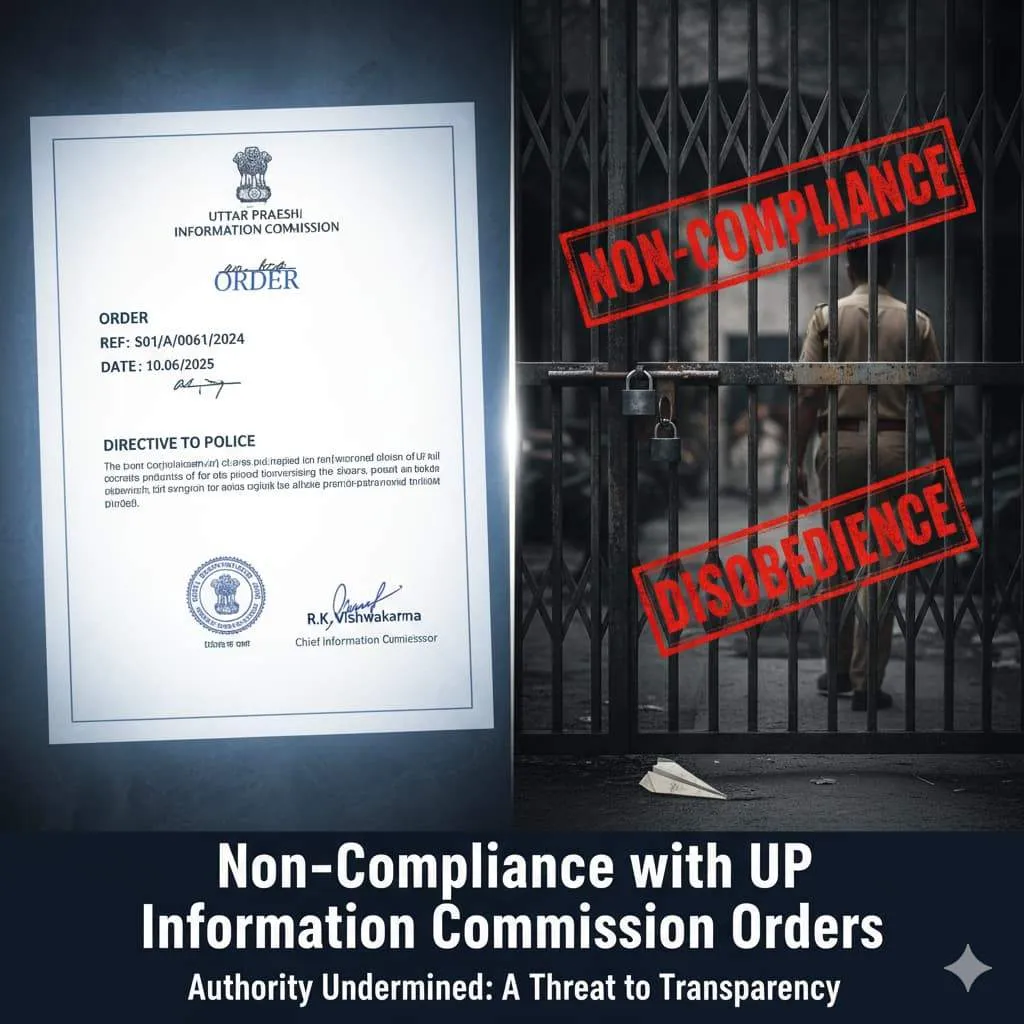
The main point is the Disobedience of Order of Commission. Specifically, on 10.06.2025, the Commission provided clear and straightforward orders to Shri Jitendra Kumar, Inspector, Police Station Kotwali Katra, Mirzapur, concerning the appellant’s case, which required immediate attention and adherence.
This directive was issued with the intention of ensuring that all protocols were followed thoroughly to enhance the investigatory process and deliver justice effectively.
Consequently, this act of disobedience not only undermines the authority of the Commission but also adds to the ongoing compliance issues, creating a ripple effect that could potentially jeopardize the integrity of the entire legal framework surrounding the appellant’s case and diminish public trust in law enforcement proceedings.
The order mandated the respondent to:
- Inform the appellant about the progress of the case.
- Give a detailed action-taken report before the next hearing.
- Handle the claims properly and give updated information to both the appellant and the Commission.
The appellant made follow-up representations on July 11th and July 16th, 2025. Despite these efforts, the respondents have not adhered to the substantive aspects of this binding directive. They have also not adhered to the procedural aspects.
Key Lapses and Violations
The communication from the police, specifically the handwritten note from Kotwali Katra dated 30/07/2025, revealed several critical shortcomings that have raised significant concerns among various stakeholders.
These shortcomings collectively undermine the Mandatory Legal Obligation of the police and highlight a troubling pattern of indifference toward established protocols.
The authorities neglected to honor the Commission’s decisions, resulting in worrying non-compliance that not only erodes public trust but also sets a dangerous precedent for future interactions between law enforcement and the community.
Furthermore, the apparent lack of accountability in addressing these issues reflects a systemic problem that requires immediate attention and corrective measures to restore faith in the justice system.
1. Ambiguous and Non-Specific Compliance
The police, through the Senior Superintendent of Police, Mirzapur, provided a response that judges to lack clarity and specificity. They seem to make an implicit effort to “sidestep the substantive concerns” of the original application. The response fails to offer a meaningful report on case progress. It does not tackle the disposition of allegations. This continues the pattern of non-compliance.
2. Omission of Crucial Evidence
The most serious omission is, therefore, the failure to mention the Taxpayer Information Summary. This summary, furthermore, details over 200 companies that allegedly misused the appellant’s PAN. Additionally, the appellant submitted the summary, and the Commission itself made it available to the police. Consequently, its exclusion from the compliance report signifies a serious lapse in addressing the core of the grievance. This, in turn, reflects a clear act of non-compliance.
3. Violation of Paperless Mandate
The respondents also violated the idea of digital governance. The police ignored Supreme Court and Government instructions to encourage paperless administration. They overlooked the appellant’s repeated requests for email communication. Instead, the police decided to send a registered post. This action places an unneeded financial burden on the public budget. It weakens the digital plan and adds to non-compliance.
Corrective Measures Demanded
The appellant, Yogi M P Singh, has requested immediate Corrective Measures from the Hon’ble Chief Information Commissioner, Shri R.K. Vishwakarma Sir, to uphold institutional accountability and reinforce the rule of law.
The key requests are:
- Cognizance of Non-Compliance: A formal acknowledgment of the police’s failure to comply and issuance of appropriate directions.
- Enforcement of Digital Mandate: Make sure all teams send all future communications via email, in adherence to the paperless directive.
- Comprehensive Digital Report: Instruct the respondents to send a clear and comprehensive compliance report. They must send this report digitally. It must include the Taxpayer Information Summary.
This case serves as a clear reminder that when authorities ignore legal and constitutional duties—especially about openness—they damage public trust. The Commission must take decisive action now to guarantee that it respects its authority. It is also crucial for the rule of law to confront bureaucratic delays or intentional neglect. We can’t overstate the significance of addressing non-compliance.
Conclusion
The situation in Mirzapur shows a worrying trend of overlooking government rules, a phenomenon that is increasingly common and undermines the very foundation of our democratic institutions.
This is especially true regarding openness and responsibility in public administration, where transparency should be a guiding principle.
Moreover, the police did not follow the Chief Information Commissioner’s orders, which raises serious questions about accountability and adherence to oversight mechanisms designed to protect citizens’ rights.
This not only shows careless behavior by officials but also poses a serious risk to public trust in government, as citizens begin to feel disillusioned and skeptical about the integrity of those who are meant to serve and protect them.
Therefore, quick and decisive action is needed to restore faith in it, encompassing reforms that emphasize transparency, accountability, and a renewed commitment to the rule of law.
Yogi M P Singh’s demands must be taken seriously. In particular, they include acknowledgment of non-compliance, enforcement of digital communication mandates, and provision of a comprehensive compliance report. Furthermore, upholding the rule of law is crucial. Action is necessary to ensure bureaucratic processes serve the public effectively. These processes should not hinder public access to justice.
Would you like to review the specific legal guidelines mentioned about the paperless mandate in India?
4 second appeals arbitrarily rejected by research officer of U. P. S.I.C.
More than two dozen second appeals rejected by research officer of UPSIC now saying returned to appellant for rectification



Facing a similar challenge? Share the details in the box below, and our team of experts will do their best to help.