
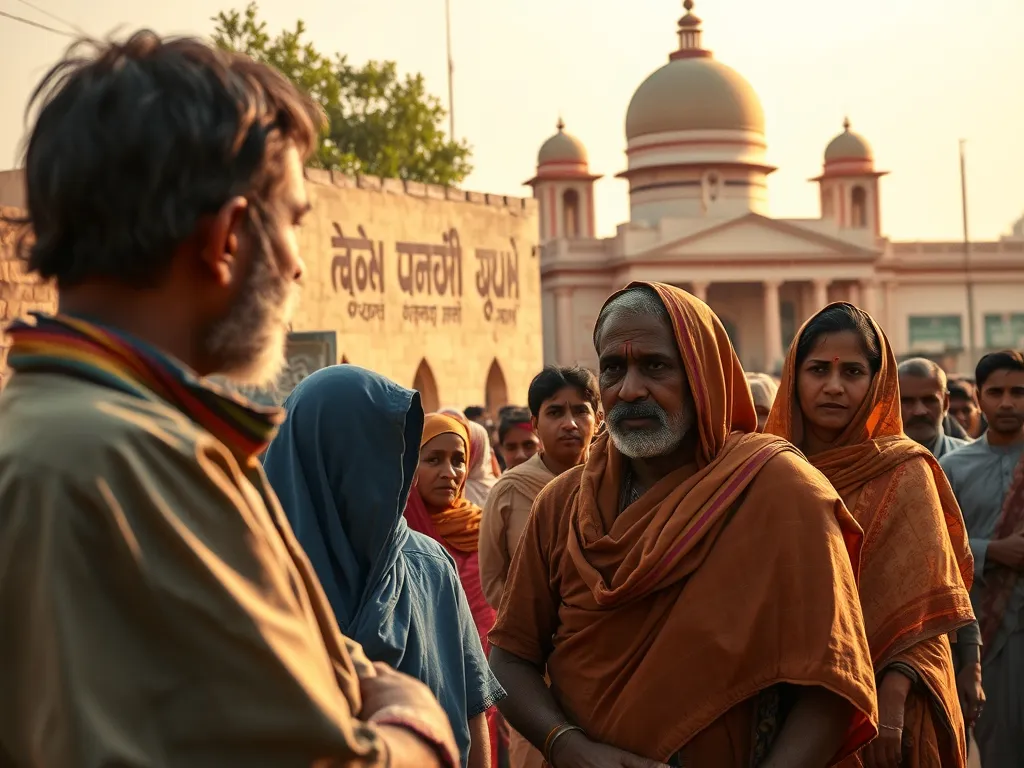
📝 Analysis of Grievance and Investigation Report: Mugdada Gram Panchayat Corruption Claims
This post analyzes the provided grievance details and the official investigation report. The report concerns alleged corruption and irregularities in developmental works conducted by the Gram Panchayat Mugdada, Nagaur, Rajasthan. It primarily focuses on the Mahatma Gandhi National Rural Employment Guarantee Act (MGNREGA) scheme.
1. 🔍 Grievance Summary and Background
The core of the grievance, filed by Yogi M. P. Singh on behalf of villagers, is the allegation of deep-rooted corruption. This includes the embezzlement of government funds related to developmental works in Mugdada Gram Panchayat. The Panchayat includes Phalki village. Villagers such as Ram Nivas and Mahipal support this grievance.
- Location: Village- Phalki, Gram Panchayat- Mugdada, Block/Tehsil – Merta, District – Nagaur, State- Rajasthan.
- Concern: Substantial evidence of corruption and irregularities in developmental works, specifically concerning MGNREGA funds.1
- Constitutional Reference: The complainant invokes Article 51A of the Constitution of India (Fundamental Duties). They are requesting transparency and accountability in the inquiry process.
- Prior Representations: The grievance outlines nine previous representations that the complainants submitted to various authorities. These authorities include the PMO, DORLD, and the Rajasthan Government. The complainants made these representations between December 2024 and March 2025, demonstrating their persistent effort.
2. 📋 Official Investigation Outcome
The district-level investigation committee officially closed the case registered as GOVRJ/E/2025/0001190 based on their findings.
- Date of Action: 16/07/2025
- Investigating Body: District-level investigation committee.
- Official Finding (Remarks): The investigation report submitted by the committee concluded that there were no irregularities. It found no double payments in the works carried out by Gram Panchayat Mugdada. The report explicitly states that the complainant’s repeated complaints regarding the Gram Panchayat’s work are “baseless” (तथ्यहीन).2
- Outcome: Case closed.
3. 🛡️ Complainant’s Dissatisfaction and Follow-up Grievance
The official closure and the ‘no irregularity’ finding did not satisfy the complainant. They expressed dissatisfaction and marked the complaint as “Not Resolved”. They chose the reason “Others.” This highlights a significant disconnect between the official findings and the perception of the aggrieved villagers.
The complainant filed a subsequent grievance (GOVRJ/E/2025/0001865, dated 02/04/2025), suggesting that someone used potential intimidation tactics against them:
- Allegation: The complainant claims that an anonymous person is hurling abuses on their mobile number. This person is also making inquiries regarding the corruption complaint (GOVRJ/E/2025/0001190).
- Concern: This grievance expresses fear. It raises concern for the safety of the complainant. It also questions the integrity of the process. This implicates the working of the District Magistrate’s office.
- Context: The complainant implies that they are trying to exercise their fundamental duty under Article 51A. External pressure obstructs this attempt.
4. ⚖️ Conclusion on Status of the Matter
The matter is characterized by a conflict between official findings and persistent allegations:
- Official Stance: The district-level investigation committee has cleared the Mugdada Gram Panchayat of irregularities. They have also cleared it of embezzlement. The committee has classified the complaints as baseless.
- Complainant’s Stance: The complainant and villagers remain dissatisfied. They suggest the official inquiry lacked transparency and accountability. The matter has been escalated through multiple channels over several months.
- Intimidation Allegation: The later grievance introduces a serious claim of intimidation. This complicates the matter. It suggests potential external interference aimed at silencing the ongoing complaint process.
The persistent nature of the complaints and the specific allegation of intimidation are significant. They call for a higher-level review of the district-level investigation’s methods and findings. This review is necessary. It ensures the inquiry was truly transparent and accountable. This was requested by the complainant under the spirit of Article 51A.
That’s an important request, as the concepts of Article 51A and MGNREGA are central to the complainant’s argument.
Here is a structured explanation of the two topics.
📜 Article 51A of the Constitution of India (Fundamental Duties)
Article 51A, contained in Part IV-A of the Indian Constitution, outlines the Fundamental Duties of every citizen. These duties are intended to promote a sense of civic responsibility, discipline, and commitment towards the nation.
Key Points of Article 51A
- Nature: Unlike Fundamental Rights (which are justiciable/enforceable by courts), Fundamental Duties are non-justiciable. They are moral and civic obligations. However, they guide the courts in determining the constitutionality of a law.
- Origin: Added to the Constitution by the 42nd Amendment Act of 1976 (based on the Swaran Singh Committee recommendations). The 11th duty was added later in 2002.
- Relevance to the Grievance: The complainant invoked Article 51A. They demanded an inquiry into the transparency and accountability of the public staff. While the duties are not legally enforceable, duty (h) and (i) are particularly relevant to the complaint’s spirit:
- (h) To develop the scientific temper, humanism and the spirit of inquiry and reform;
- (i) To safeguard public property and to abjure violence;
| Selected Fundamental Duties (Article 51A) | Implication in Grievance Context |
| (c) To uphold and protect the sovereignty, unity, and integrity of India | Implies a duty to expose activities (like corruption/embezzlement) that undermine the state’s integrity. |
| (h) To develop the spirit of inquiry and reform | Justifies the citizen’s repeated complaints and demand for a transparent investigation. |
| (i) To safeguard public property and abjure violence | Directly relates to the alleged misuse of public funds (MGNREGA funds) for developmental works. |
🚜 Mahatma Gandhi National Rural Employment Guarantee Act (MGNREGA), 2005
MGNREGA is a landmark Indian social security and rural development scheme. It guarantees the ‘right to work’ as an entitlement for rural households.
Core Mandate and Objectives
- Legal Guarantee: Provides a legal guarantee for at least 100 days of guaranteed wage employment in a financial year. This is available to every rural household. These households must have adult members who volunteer to do unskilled manual work.
- Demand-Driven: Employers actively provide employment on demand. If they fail to provide work within 15 days of application, the applicant qualifies for an unemployment allowance.
- Asset Creation: Aims to create durable assets (such as water conservation structures, rural connectivity roads, wells, etc.) to strengthen the natural resource base and enhance rural livelihoods.
- Decentralization: Gram Panchayats (GPs) must carry out at least 50% of the works. Involvement of contractors is, banned.
- Transparency and Accountability:
- The Gram Panchayat must maintain a ratio of 60:40 for wage costs to material costs.
- The Gram Sabha (village assembly) carries out a Social Audit as mandated by the Act. This process allows for monitoring all works and expenditures, fostering transparency and accountability at the grassroots level. It ensures transparency and accountability.
Relevance to the Grievance
The complainant alleges “embezzlement of the fund” provided under MGNREGA. The scheme is legally mandated to create assets and provide employment under strict rules. These rules include the 60:40 ratio and the ban on contractors. Allegations of irregularities and double payments directly point to a failure to adhere to the core provisions of the Act. This is a serious matter of public accountability.
That’s an excellent question, especially since the grievance references the Rajasthan government’s redressal system.
The main citizen portal for the Government of Rajasthan is:
- State Portal, Government of Rajasthan (General Information)
- Link:
https://rajasthan.gov.in/ - Purpose: This serves as the primary gateway to the state government. It offers information on various sectors, departments, and services for residents.
- Link:
- Rajasthan Sampark Portal (Grievance Redressal)
- Link:
https://sampark.rajasthan.gov.in/ - Purpose: This is the specific portal used for registering public grievances. It also tracks public grievances. The GOVRJ/E/ registration numbers in your text relate to this system. It is often referred to as the CM Helpline (181).
- Link:
- SSO ID Rajasthan (Single Sign-On for Services)
- Link:
https://sso.rajasthan.gov.in/ - Purpose: This is the unified digital identity portal used by citizens to log in and access a vast range of individual government services (like e-Mitra, scholarships, employment applications, etc.) with a single set of credentials.
- Link:
The most relevant link, based on the GOVRJ/E/… registration number and the “Grievance Status” format in your request, is the Rajasthan Sampark Portal:
- Rajasthan Sampark Portal:
https://sampark.rajasthan.gov.in/
Key Takeaways
- This article analyses a grievance concerning alleged corruption in Mugdada Gram Panchayat, Rajasthan, involving the MGNREGA scheme.
- The complainant claims deep-rooted corruption and embezzlement of development funds, supported by local villagers.
- The official investigation concluded no irregularities, leaving the complainant dissatisfied and alleging intimidation.
- The conflict persists between official findings and ongoing complaints, highlighting a need for a higher-level review of the investigation methods.
- Understanding Article 51A and MGNREGA is crucial, as these legal frameworks underpin the complainant’s demands for accountability.


Facing a similar challenge? Share the details in the box below, and our team of experts will do their best to help.