
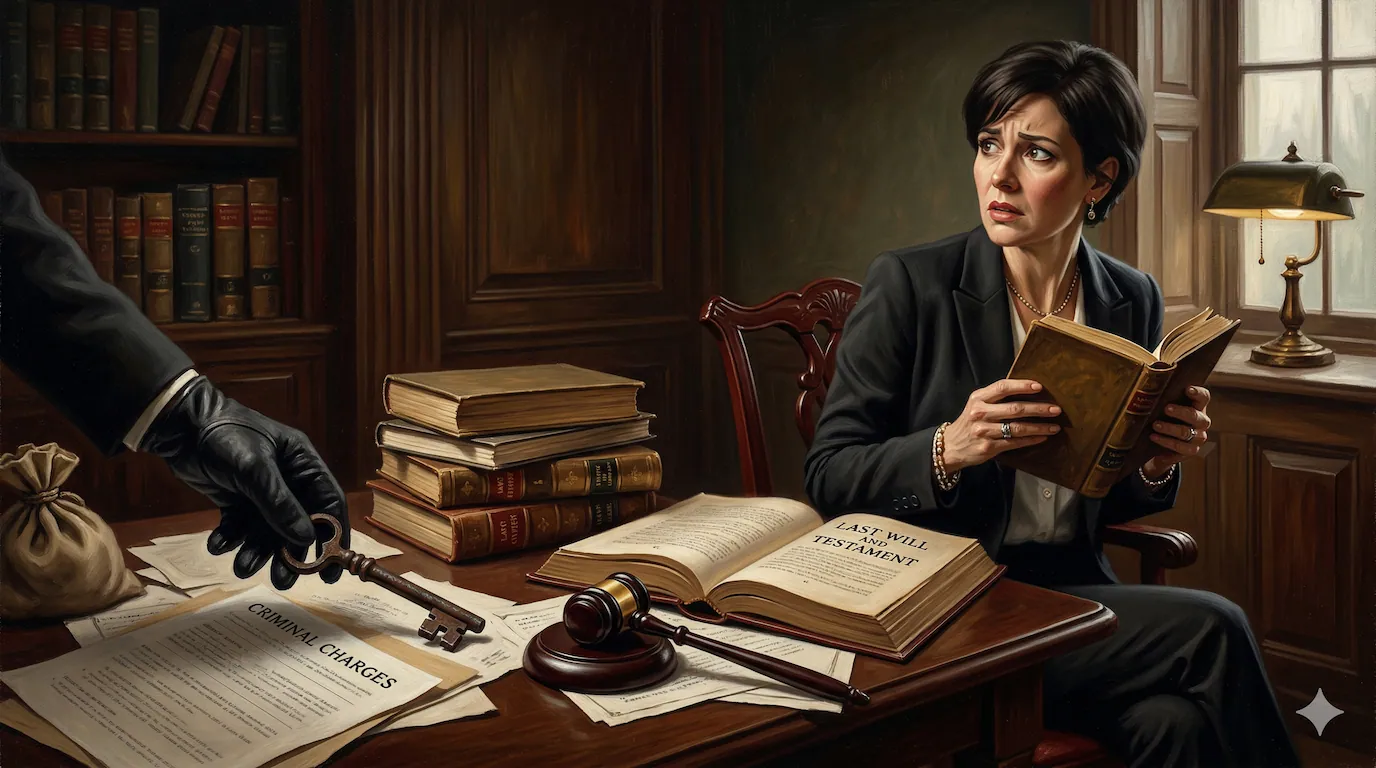
Key Takeaways: The Mirzapur Property Dispute — Criminal Allegations & Civil Excuses
1. The police are suppressing criminal allegations by labelling them as a “civil dispute.” This is a situation where Criminal Allegations & Civil Excuses become dangerously blurred. The police reframed a violent break-in, robbery, and assault as a hereditary property dispute. This raises serious concerns about how law enforcement categorises intra-family crimes to avoid registering cognizable offences.
2. The victim faced serious violence, not just a property disagreement. Archana Devi, who was pregnant at the time, and her husband faced assault and threats with a firearm. They lost jewellery worth ₹8 lakh and offenders stole household appliances. Also, offenders forcibly evicted the family from their ancestral home.
3. The police investigation focused on a counter-narrative. The Circle Officer shifted the focus of the investigation. They centred it on a bank locker dispute raised by the mother-in-law. This shift effectively transferred the burden of proof onto the victim.
4. The registered charges fell far short of the allegations. Despite the severity of the incident, the BNS charges filed covered only voluntary hurt, criminal intimidation, and house-trespass. They did not include charges for robbery, destruction of evidence, or firearm use.
5. CCTV evidence was allegedly destroyed and never properly investigated. Archana claims the offenders destroyed installed cameras. The police failed to address the camera system in their reports. They also did not prepare a Seizure Memo for the DVR. This was a critical gap in the investigation.
6. The RTI Act became the victim’s primary tool for accountability. After the investigation yielded unsatisfactory results, Archana used the RTI Act, 2005, to demand transparency. Her initial request was wrongfully rejected but later upheld by the First Appellate Authority.
State Information Commission
7. The case has now reached the State Information Commission. Archana filed a Second Appeal (No. A-20260400401) on April 4, 2026. She is seeking certified records and missing General Diary entries. Additionally, she requests details about the CCTV Seizure Memo. Archana is also pursuing penalties against the PIO for the malicious rejection of her RTI request.
8. The outcome could set a broader precedent. The State Information Commission hearing may decide Archana’s fate. It could also impact how similar cases are handled across Uttar Pradesh. These cases involve criminal allegations dismissed as civil disputes.
The Mirzapur Property Dispute: Criminal Allegations & Civil Excuses
The case of Archana Devi vs Vikas Dubey in Mirzapur, Uttar Pradesh, reveals the masking of criminal allegations. It shows how such allegations are disguised as civil disputes. This case demonstrates a significant issue. This shows how criminal allegations can be oriented into civil disputes. The family alleges violent robbery and dispossession, but police reframed it as a property issue. Both sides used the RTI Act to defend their positions. This situation prompts urgent questions. How does law enforcement handle intra-family crimes? There is also concern about the misuse of the “civil dispute” label to avoid criminal accountability.
1. The Incident: A House Divided
On October 24, 2025, Archana Devi alleges that her brother-in-law, Vikas Dubey, and several accomplices broke into their home in Ghurahu Patti. She claims they exploited her family’s absence to commit the crime. Archana described the alleged theft of jewellery and appliances. She also reported the forcible seizure of the residence. When she and her husband returned, they experienced assault and threats.
Theft of Assets: The offenders allegedly stole jewellery worth approximately 8 lakh rupees. They also stole major household appliances, including a TV, fridge, and washing machine.
Forcible Occupation: The offenders allegedly broke the existing locks, replaced them with their own, and forcibly seized the residence.
The offenders allegedly assaulted Archana, who was pregnant at the time. They also assaulted her husband, Amit Kumar Dubey. The attackers brandished a firearm and issued direct threats. This escalated what might have been a property dispute into a violent criminal incident.
Archana and Amit Kumar Dubey, now living in a rented room, have lost access to their ancestral home. This prolonged legal ordeal adds emotional and financial strain to their initial criminal complaint.
2. The Police Narrative: Civil Excuses Over Criminal Allegations
Circle Officer (City) Vivek Jawla’s investigation shifted focus. It moved from cognizable criminal offences to the family’s internal property dispute. This redefined the case as a civil matter. It potentially denied the victims legal protections.
The “Bank Locker” Conflict
The police investigation centred on a statement from the mother-in-law, Savitri Devi. She claimed the real issue is a bank locker held by Amit Dubey, allegedly containing family jewellery. Furthermore, she told investigators she would allow a house partition only after opening the locker and dividing the jewellery.
Authorities labelled the case a hereditary property dispute. They dismissed the criminal allegations. This limited legal recourse by not pursuing serious charges like robbery or intimidation.
Advised Judicial Recourse: Directed the applicant to seek relief through a civil court for the property partition.
Dismissed Robbery Claims: Investigators found insufficient evidence. There was also no witness corroboration for the alleged theft of 8 lakh rupees in jewellery.
3. The Legal Battle: Criminal Allegations Reduced to Minor Charges
Despite the civil framing, the police eventually registered a case (No. 188/25 at Thana Kotwali City) under the Bharatiya Nyaya Sanhita (BNS), but the charges were narrower than the initial allegations.
Section 352: Assault or criminal force.
Moreover, Section 351(2): Criminal intimidation.
Section 333: House-trespass (illegally entering or remaining in someone’s residence).
A charge sheet (A-164/25) was submitted against Vikas Dubey on October 12, 2025. However, the family remains homeless. The charges do not address major allegations like robbery, destruction of evidence, or firearm use. For Archana, this represents ongoing neglect of her criminal complaint.
4. The RTI Struggle: Fighting for Evidence
Archana Devi used the RTI Act, 2005, to seek clarity on the investigation but encountered repeated obstacles.
Initial Resistance
Public Information Officer Manish Kumar Mishra rejected the RTI request on December 31, 2025. He labelled it a complaint. However, the First Appellate Authority, Aparna Rajat Kaushik, overturned the rejection in February 2026. She ordered the release of the investigation files.
A central dispute is the missing CCTV footage, which Archana claims was destroyed. Police said no video was in the case diary, and no official videography occurred.
Notably, the reports say nothing about whether police inspected the camera system or prepared a Seizure Memo for the DVR.
5. The Second Appeal: Challenging Civil Excuses, Reviving Criminal Allegations
Unsatisfied with the information she received, Archana Devi found it misleading and incomplete. She filed a Second Appeal with the Uttar Pradesh Information Commission on April 4, 2026 (Appeal No. A-20260400401).
She is seeking:
Justice for Dispossession: An inquiry into why the authorities ignored a violent house-breaking. They hid behind civil excuses. This enabled the offenders’ illegal occupation.
The Mirzapur case shows how intra-family criminal allegations are often dismissed as civil disputes. This approach can deny justice. It can embolden perpetrators. Archana’s effort is not just about property. It’s also about recognition of her criminal allegations. The upcoming State Information Commission hearing offers a last chance for transparency. It could set a precedent for handling such cases in Uttar Pradesh.
Certified Records: Specifically, Archana requests (1) the missing General Diary (GD) entries. These entries are daily police station logs used as official records. (2) She also requests a clear answer regarding the CCTV Seizure Memo. This document would confirm the formal collection of video evidence.
Accountability: Penalties against the PIO for the initial “malicious” rejection of her request.
Based on the provided documents and the recently filed Second Appeal, here are the identification details for the public authorities involved in your case:
1. RTI Application & Appeal Identifiers
- Initial RTI Application No:
SPMZR/R/2025/60364 - First Appeal No:
SPMZR/A/2026/60005(Internal Police Ref:05/2026) - Second Appeal Registration No:
A-20260400401 - UPIC User ID:
UPICR20260002329 - IGRS (Grievance) Reference Nos:
60000250270983and60000250270981
2. Public Information Officer (PIO) Details
- Name: Manish Kumar Mishra
- Designation: Additional Superintendent of Police (ASP) Operation, Mirzapur
- Mobile Numbers:
9454401105,9473567333 - Email Addresses:
aspopmzp@gmail.com,asp-op.mi@up.gov.in
3. First Appellate Authority (FAA) Details
- Name: Smt. Aparna Rajat Kaushik
- Designation: Superintendent of Police (SP), Mirzapur
- Mobile Numbers:
9454400299,9473567333 - Email Address:
spmzr-up@nic.in
4. Investigation Officer (IO) Details
- Name: Vivek Jawla
- Designation: Circle Officer (CO) City, Mirzapur
- Mobile Number:
9454401590
5. Web Link Details for Tracking
- UP RTI Online Portal: rtionline.up.gov.in (Used for the initial application and first appeal tracking).
- UP Information Commission (UPIC) Portal: upic.up.nic.in (Where your Second Appeal
A-20260400401is registered). - IGRS (Jansunwai) Portal: jansunwai.up.nic.in (Used for the initial representations to the SP regarding the house-breaking and robbery).


Facing a similar challenge? Share the details in the box below, and our team of experts will do their best to help.