
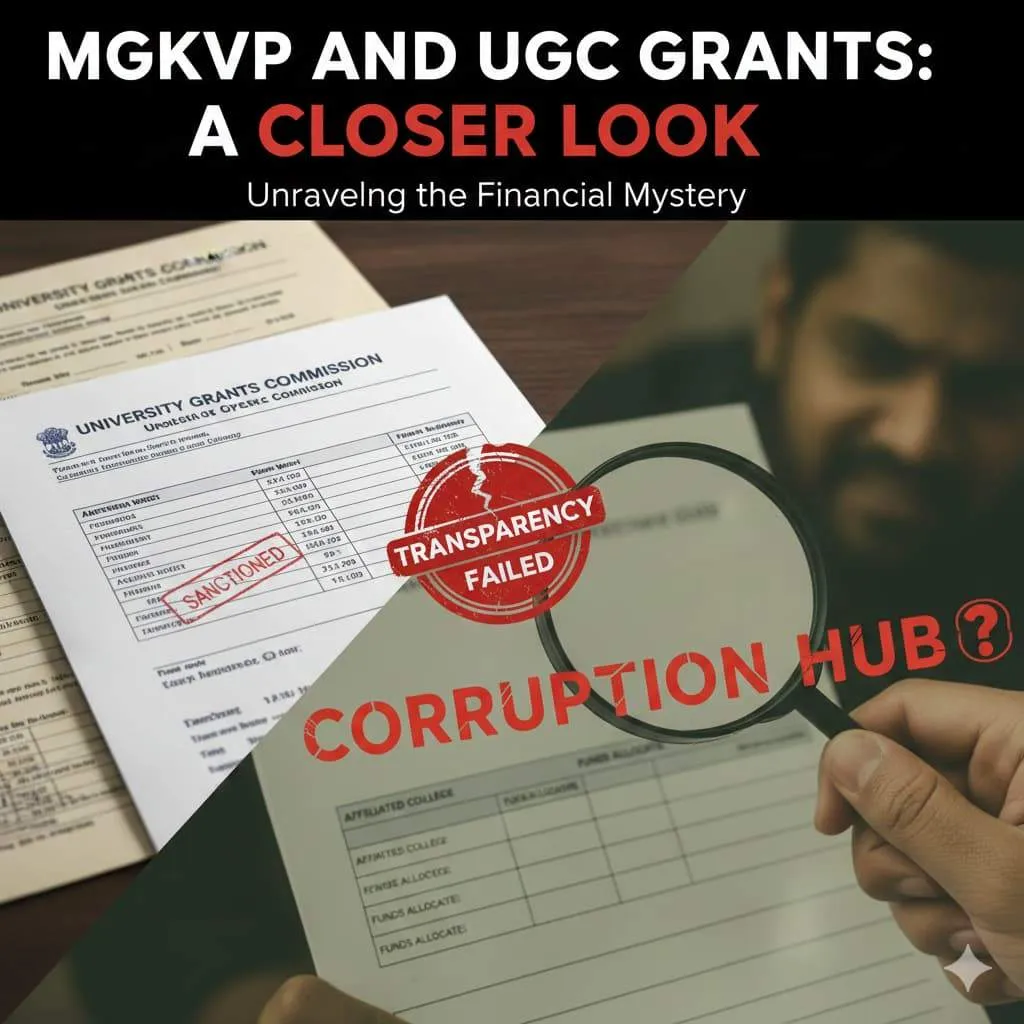
MGKVP and UGC Grants are essential avenues for funding academic and research initiatives in India.
MGKVP, or Mahatma Gandhi Kashi Vidyapith, collaborates closely with the University Grants Commission (UGC) to provide opportunities for students and faculty to pursue innovative projects.
These grants support various disciplines, encouraging educational growth and enhancing research capabilities.
With increased financial assistance, researchers can explore new ideas, fostering an environment of creativity and scholarly excellence.
Furthermore, the grants promote collaboration between institutions and aim to uplift the standards of education across the country.
Ultimately, this contributes to the development of a knowledgeable society.
Key Takeaways (MGKVP and UGC Grants)
- MGKVP and UGC Grants provide vital funding for academic initiatives in India, promoting educational growth and research capabilities.
- Mahatma Gandhi Kashi Vidyapith faces scrutiny over UGC fund usage amid allegations of corruption and accountability issues.
- The application of RTI in 2025 aims to uncover detailed fund utilisation and the allocation process for affiliated colleges.
- Legal challenges arise from vague responses regarding fund distribution, leading to a second appeal before the Uttar Pradesh Information Commission.
- The outcome of the appeal will impact governance transparency and accountability in public universities, especially concerning UGC grants.
🚨 MGKVP and UGC Grants: UGC Funds, MGKVP, and the Fight for Transparency
Mahatma Gandhi Kashi Vidyapith (MGKVP), Varanasi, is a prominent State University. It has been at the center of a public demand for accountability. This is regarding the significant MGKVP and UGC Grants it received from the University Grants Commission (UGC). A detailed paper trail of UGC allocations sharply contrasts with recent public allegations of corruption. There have also been difficulties in obtaining utilisation details through the Right to Information (RTI) Act.
1. 💰 The Initial Promise: UGC’s XI Plan Allocation (2009)
The UGC conducted a detailed review by a Visiting Committee in December 2008. Following this review, the UGC approved a substantial tentative allocation for MGKVP under the XI Five-Year Plan (2007–2012) to fuel development initiatives, improve quality, and promote social equity initiatives. (MGKVP and UGC Grants)
| Grant Scheme | Amount (₹ in Lakhs) |
| General Development Grant | 532.50 |
| Merged Schemes | 489.00 |
| Internal Quality Assurance Cell (IQAC) | 5.00 |
| Total Tentative Allocation | 1026.50 |
Conditions of the Grant
The funding was strictly conditional on the implementation of key reforms, including:
- Administrative Reforms: Expedite the filling of all vacant teaching posts.
- Appoint statutory posts per UGC regulations.
- Ensure strict adherence to the Reservation Policy for SC/ST.
- Financial Discipline: The university was warned to utilize the grant proportionately. This should occur on a half-yearly basis. If the unutilized portion is not used, it would lapse. The unutilized funds could then be reallocated to better-performing institutions.
2. 🔍 UGC Visiting Committee’s Observations
The 2008 UGC committee report provided a mixed assessment of the university’s status at the time: (MGKVP and UGC Grants)
- Positive Notes: The State Government acknowledges the university for maintaining its reservation policy and for making efforts towards barrier-free access for students, particularly those from rural areas.
- Critical Gaps: Key deficiencies include the need to appoint teachers on a regular basis for stability, enhance the digital library concept, and address the lack of staff (e.g., an Allopathic Doctor and Nurse) in the Health Centre.
3. 🚨 The Catalyst: The 2025 RTI Inquiry and Allegations (MGKVP and UGC Grants)
Serious, though unverified, public allegations claiming that “not a single norm set up by the university grant commission is being followed” and that the university is a “hub of corruption” prompted a detailed RTI application (Registration No. MGKVV/R/2025/60034) in May 2025.
The applicant sought comprehensive financial data from 2010–11 to 2024–25, specifically demanding the following:
- Total UGC funds received and detailed utilisation.
- Names and locations of affiliated institutions that received sub-grants from MGKVP.
- The formal mechanism used for fund allocation.
4. 📝 MGKVP’s Response and the Legal Challenge
The response provided by the Public Information Officer (PIO) of MGKVP triggered a legal battle due to its lack of specificity and delay.
Key Points from the PIO’s Reply: (MGKVP and UGC Grants)
- Funds Received: MGKVP received major funds in 2010–11, 2012–13, and 2013–14, with smaller amounts in 2016–17 and 2018–19. Significantly, no funds were reported under the UGC plan heads for the period 2021–22 to 2024–25. (MGKVP and UGC Grants)
- Utilisation: The organization used the funds for seminars, invited professors, appointed technical staff, and made payments to the Uttar Pradesh State Construction Corporation for construction.
- Affiliated Colleges: A crucial gap: The response failed to provide a detailed breakdown of which of the university’s 400+ affiliated colleges received any portion of these development grants.
- Mechanism: The competent authorities govern the allocation process through a committee they constitute.
Status of the Appeal (MGKVP and UGC Grants)
The applicant filed a Second Appeal before the Uttar Pradesh Information Commission, citing multiple violations of the RTI Act, including:
- Violation of Section 7(1): Failure to provide the information within the mandated 30-day limit.
- Incomplete/Misleading Information: The response evaded the issue by withholding the detailed utilisation report for affiliated colleges.
- Lack of Due Diligence: A typographical error in the original query carried forward into the official reply.
This ongoing case highlights the importance of proactively disclosing financial information and effectively enforcing the RTI Act to ensure that authorities use public funds, earmarked for improving education, transparently and responsibly.
The outcome of the appeal will set a precedent for forthcoming cases.
Yes, the concerned parties actively filed the Second Appeal regarding the UGC grant to MGKVP, and the Uttar Pradesh Information Commission (UPIC) has registered it.
The public information available confirms that the appeal has moved past the university’s internal review stage and is now before the state’s highest transparency authority.
📅 Timeline of the Second Appeal (MGKVP and UGC Grants)
The progression of the RTI request highlights a clear pattern of delay and alleged evasion that led the applicant, Yogi M. P. Singh, to escalate the matter.
- RTI Application Filed: May 2025 (Registration No. MGKVV/R/2025/60034).
- PIO’s Reply: Received in July 2025, which was late and deemed incomplete/misleading, as it failed to provide the breakdown of funds allocated to affiliated colleges.
- First Appeal Filed: July 2025.
- First Appellate Authority (FAA) Decision: The FAA reportedly failed to issue a decision within the legally mandated period.
- Second Appeal Filed: September 2025.
When the UPIC registers the Second Appeal, it conducts a public hearing to check whether the university’s Public Information Officer (PIO) and the FAA are following the Right to Information (RTI) Act, 2005.
🏛️ Implications of the UP Information Commission Case (MGKVP and UGC Grants)
The case goes beyond just the utilisation of the ₹10.265 crore grant from the XI Plan of the UGC; it challenges fundamental issues of governance and transparency.
- Penal Action (Section 20): The applicant has requested the UPIC to initiate penal proceedings under Section 20(1) against the PIO for the delay and for providing incomplete information.
- Disciplinary Action (Section 20(2)): The FAA has faced action for dereliction of duty by failing to adjudicate the First Appeal.
- Direction for Compliance: The ultimate goal is to obtain a direction from the Commission that compels MGKVP to furnish complete, point-wise information, including crucial details of grants distributed to its affiliated institutions, which it currently withholds.
- Proactive Disclosure (Section 4): The appeal also seeks to ensure MGKVP adheres to its statutory obligation under Section 4(1)(b) of the RTI Act to proactively disclose financial information on its website. (MGKVP and UGC Grants)
The outcome of this appeal will be critical in establishing accountability and setting a precedent for the public disclosure of centrally funded development grants in State Universities.


Facing a similar challenge? Share the details in the box below, and our team of experts will do their best to help.