
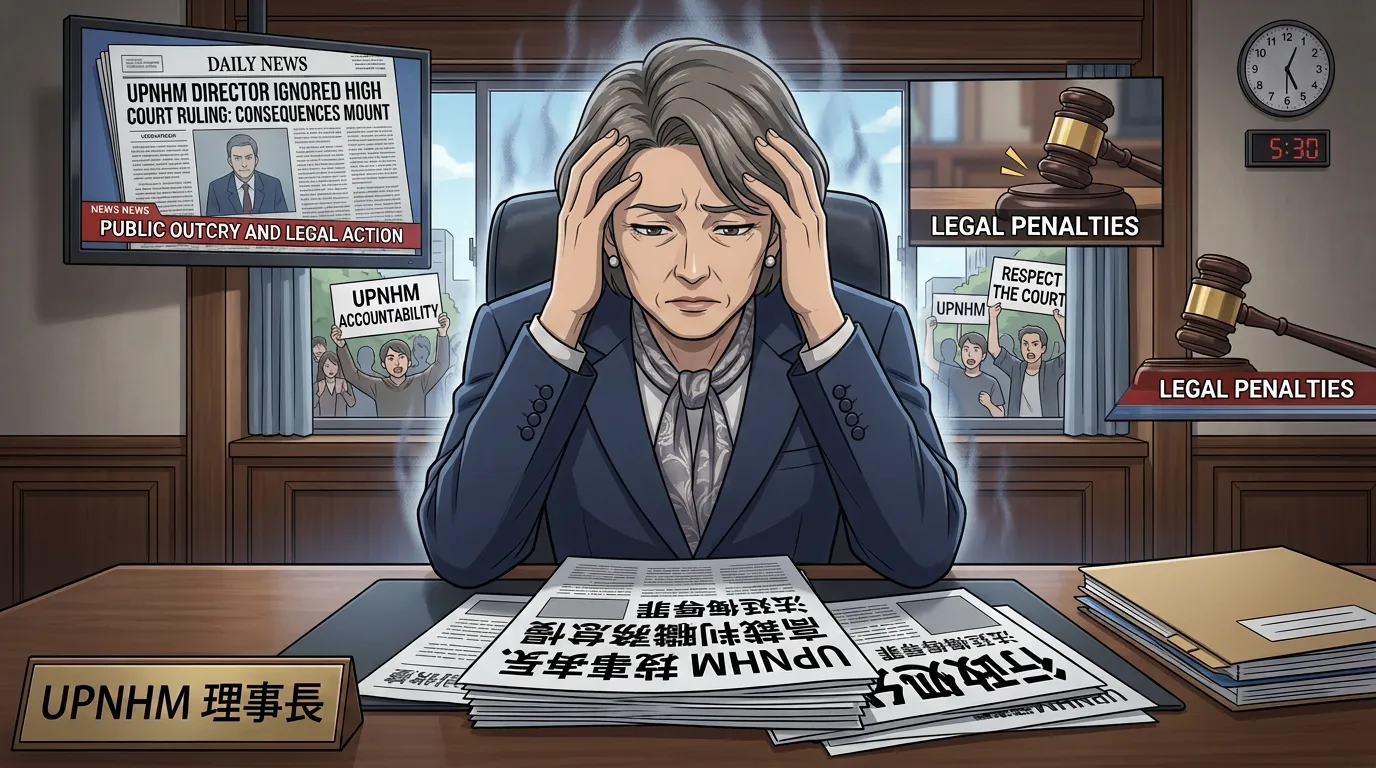
The Director UPNHM ignored a High Court order for over two months, which raised significant concerns among local residents about the accountability of public officials. Frustrated by the lack of action, a concerned citizen took the initiative to file dual grievances with both the central and state governments, highlighting the urgency of the situation. This citizen’s proactive approach aims to ensure that justice is served and that the rule of law is upheld. By addressing the issue at both levels of government, the citizen hopes to attract attention to the negligence displayed by the Director. The actions taken not only seek to rectify the oversight but also serve as a call to action for other citizens to stand up for their rights and demand governmental accountability in similar situations.
Key Takeaways
- The Director UPNHM ignored a High Court order, raising accountability issues in Uttar Pradesh.
- A citizen filed dual grievances with central and state governments to highlight this neglect.
- The NHM oversees public healthcare in Uttar Pradesh, and the Director’s inaction undermines its credibility.
- Both grievances reveal systemic issues in governance and the bureaucratic grievances process.
- If the Director continues to disregard the order, contempt proceedings may follow, probing the effectiveness of accountability mechanisms.
Director UPNHM Ignored High Court: A Health Mission Complaint
The Director UPNHM ignored a High Court order. That failure now sits at the center of a growing accountability dispute in Uttar Pradesh. High court orders shape how public authority staff behave. Today, that relationship is under strain. These orders uphold justice and protect the rule of law. However, when an official like the Director UPNHM ignores a High Court directive, they weaken judicial authority. This, in turn, breeds insecurity among citizens.
As a result, people lose trust in the legal system. Society needs that trust to stay orderly and to keep citizens safe under the law. Furthermore, when respect for court rulings erodes, public officials grow more reluctant to enforce orders. Ultimately, this hurts how public authorities function. Consequently, both trust in governance and the strength of legal institutions suffer.
What Is the UPNHM, and Why Did Its Director Ignore a High Court Order?
The National Health Mission (NHM) runs India’s public healthcare programmes at the state level. In Uttar Pradesh, this becomes the UPNHM. It manages recruitment, staffing, and healthcare delivery across the state. Its Director holds significant power over hiring decisions and representations from aspirants and employees.
This role carries real responsibility. Thousands of healthcare workers and job aspirants depend on timely, fair decisions from this office. So, when the Director UPNHM ignored a High Court order tied to a recruitment matter, the consequences reached far beyond one case. They touched the credibility of the entire health administration in the state.
Unpacking a Dual Grievance: A Tale of Two Complaints Against Government Inaction
Citizens who pursue accountability often face a confusing, frustrating bureaucratic maze. Yogi M. P. Singh now faces exactly that. He filed two grievances, both dated January 9, 2025. Both raise the same core issue: the Director UPNHM ignored a High Court order and never acted on it. Singh filed the grievances strategically. One went to the central government, the other to the state government. Together, they expose a serious breakdown in the administrative process and push officials to answer for it.
The Origin of the Conflict: How the Director UPNHM Ignored a High Court Order
Both complaints trace back to one order from the High Court of Judicature at Allahabad, dated October 21, 2024. The case is WRIT – A No. 14572 of 2024, filed by petitioners led by Kanhaiya Lal. The court directed “respondent No. 2” — the Director of the National Health Mission (NHM) in Uttar Pradesh — to decide on a submitted representation. It set a firm two-month deadline, starting from the date the petitioners submitted the certified copy of the order.
The petitioners acted quickly. They submitted their representation on October 28, 2024. That started the two-month clock, which ran out by the end of December 2024. Yet the Director UPNHM ignored the High Court’s deadline entirely. According to the grievances, no decision ever came.
Why It’s Serious When a Director Ignores a High Court Writ Order
Courts issue writ orders under Article 226 of the Constitution when citizens seek relief against government inaction or overreach. A writ order isn’t a mere suggestion. It carries the full force of judicial authority.
When a court sets a specific deadline, as it did here, that deadline becomes binding. Officials cannot treat it as optional. So, when the Director UPNHM ignored a High Court order with a clear, court-mandated timeline, that inaction amounts to more than an administrative delay. It represents a direct disregard for judicial instruction, and it opens the door to contempt proceedings if the pattern continues.
The Dual Approach: Reporting the Director UPNHM’s Ignored High Court Order to Two Governments
By filing two separate grievances, Singh took a deliberate, comprehensive approach. This strategy let him present each problem clearly, instead of burying them in one combined complaint. So, each grievance gets the attention it deserves from the right authority. In short, this approach shows a proactive push for justice and fairness.
- Grievance to the Central Government (DHLTH/E/2025/0000615): Singh sent this complaint to the Ministry of Health & Family Welfare, the NHM’s parent ministry. It directly names Shri Harsh Mangla, Director of NHM-1. The status currently reads “Under process.” By raising the issue at the central level, Singh hopes to bring in a higher authority that can pressure the unresponsive state official.
- Grievance to the State Government (GOVUP/E/2025/0002832): At the same time, Singh filed a second grievance with the Uttar Pradesh government. It was forwarded to the Chief Minister’s Secretariat, addressed to Joint Secretary Shri Arvind Mohan. This complaint appeals directly to the state’s top administrative office. It brings the issue straight to leaders who have a stake in upholding judicial authority and easing public frustration.
How the Grievance Redressal System Is Supposed to Work
India’s grievance redressal portals exist to give citizens a formal channel when normal processes fail. The Centralised Public Grievance Redress and Monitoring System (CPGRAMS) routes complaints to the relevant department. It also assigns tracking numbers and expected timelines.
In theory, this system should hold officials accountable quickly. In practice, as Singh’s case shows, complaints can sit for weeks under vague statuses like “Under process.” This gap between design and delivery fuels public frustration and raises questions about whether these portals genuinely function as accountability tools or merely as a bureaucratic formality.
The Deeper Implication: Good Governance on Trial
Across both grievances, Singh’s language goes beyond a simple request for action. It questions the state of governance in Uttar Pradesh itself. He asks whether this alleged inaction reflects the “good governance” that Chief Minister Yogi Adityanath claims to deliver. He also asks whether it matches the governance Prime Minister Narendra Modi promises nationally. His frustration comes through clearly. He says the Uttar Pradesh government, including the Chief Minister’s Office, neither responds properly to grievances nor shares information as required under the Right to Information Act, 2005.
So, this case does more than highlight one ignored court order. It points to a broader failure of transparency and accountability. Singh isn’t just asking for a decision. He’s demanding an inquiry into why the Director UPNHM ignored a High Court order without consequence. In this way, the grievances become a public record of one citizen’s fight. They aim to make the rule of law a lived reality, not just a concept on paper.
A Pattern of Officials Ignoring High Court Orders, Not an Isolated Incident
This case doesn’t stand alone. Singh’s broader body of work documents similar patterns across Uttar Pradesh — police departments ignoring RTI requests, officials overlooking court directives, and public authorities delaying responses to citizen complaints. Taken together, these cases suggest a systemic issue rather than a one-off lapse.
When one office ignores a court order without consequence, it can normalise similar behaviour elsewhere. That’s precisely why cases like this one matter beyond their immediate facts. They test whether the system holds any official accountable, regardless of rank or department.
What Happens Next If the Director UPNHM Keeps Ignoring the High Court
Both grievances remain open as of this writing. The central complaint sits “Under process,” and the state complaint has moved to “Grievance received.” Neither status guarantees a resolution or a timeline.
If the Director UPNHM continues to ignore the High Court order, the petitioners retain the option to file a contempt petition. Courts in India can and do hold officials personally responsible for non-compliance, including through fines or, in serious cases, imprisonment. That threat gives these grievances real teeth, even if the outcome remains uncertain for now.
Together, the two complaints push both central and state authorities to face the issue. Their current statuses show that two separate administrative bodies now recognize the matter. Ultimately, these grievances will decide the fate of the original court order. They will also test how well India’s grievance redressal mechanisms actually work. And they will reveal whether the case of the Director UPNHM ignoring a High Court order finally leads to real accountability.oring a High Court order finally leads to real accountability.


Facing a similar challenge? Share the details in the box below, and our team of experts will do their best to help.