
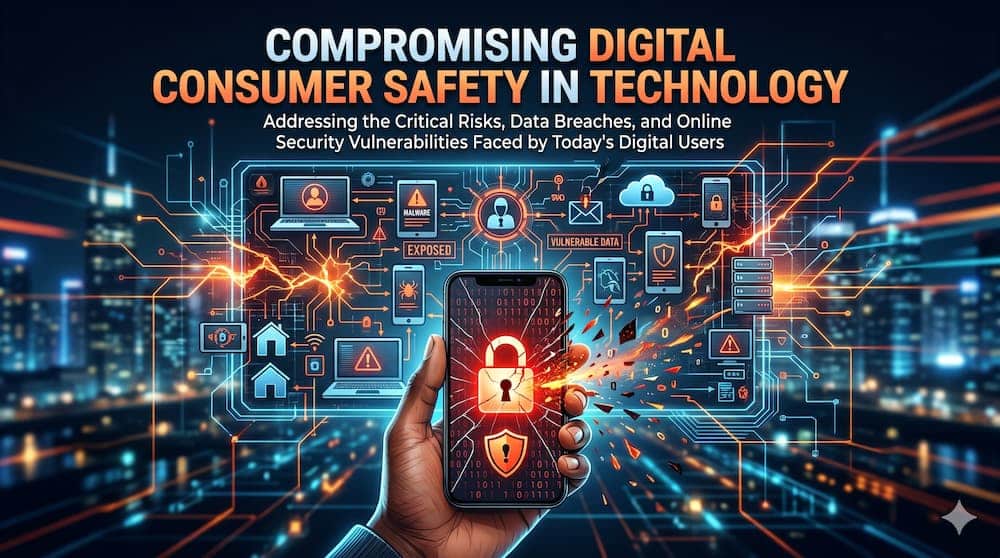
Compromising Digital Consumer Safety is obvious from the fact of the post. A consumer paid 5 US dollars, but OpenAI did not commence services as expected. After expressing concern, the consumer made another payment of 5 US dollars. This time, OpenAI did commence service, yet confusion still surrounds the concept of credit in this context. The question arises: what does ‘credit’ truly mean in a digital transaction? Is it merely a placeholder for a service yet to be provided, or does it imply a guarantee of reliability? Moreover, it seems OpenAI halted services due to exhausted credits, raising further issues regarding transparency. Customers deserve clarity and assurance in their dealings, highlighting the need for responsible practices in digital consumer safety and service delivery.
Key Takeaways
- OpenAI’s service delays and unclear credit usage jeopardise digital consumer safety, raising concerns about transparency.
- Prepaid accounts should stop services at zero balance, yet OpenAI’s lagging system created unauthorized negative balances.
- Automated billing practices threaten linked bank accounts, demonstrating serious risks to digital consumer safety.
- Public grievance portals fail to address these issues effectively, ultimately compounding the risks to consumers.
- Consumers should leverage mediation logs as legal tools, escalating unresolved issues to consumer courts for real accountability.
Compromising Digital Consumer Safety: How Tech Delays and Passed Bucks Harm Consumer Safety
Global tech firms want us to trust their tools. Yet, a major flaw hides under their clean software setups. Specifically, that flaw is data reporting delay. When system delays mix with background scripts, they break the basic promise of any prepaid account. Consequently, these practices are compromising digital consumer safety every day.
Furthermore, when citizens seek help from public grievance portals, they get stuck in an endless loop. Instead of helping, main portals quickly pass complex money disputes down to helpless helpline desks. In short, they trade real answers for quick closure data. Therefore, this case study looks closely at OpenAI’s unauthorized debt creation. Ultimately, it shows how slow tech systems and weak portals are compromising digital consumer safety.
1. How a Prepaid Account Fails: The Crash of Real-Time Limits
Prepaid accounts exist to protect your wallet. For example, you load a set balance like $10.00 USD into your profile. Therefore, you expect the service to stop the exact moment your balance hits zero.
[Load $10.00 Balance] ➔ [Massive Parallel Use] ➔ [System Tracker Delays] ➔ [Zero Limit Fails] ➔ [Unauthorized Debt Created]
However, OpenAI’s billing tracker suffers from a severe lag. To illustrate, on June 11, 2026, an automated app ran 433 quick requests at the same time. On top of that, this app used over 500,000 tokens in just a few minutes.
Meanwhile, OpenAI’s internal system did not calculate this usage in real time. Because of this lag, the platform missed its own hard cutoff switch. As a direct result, the tracker woke up late and found an unapproved negative balance of $12.42 USD. Surely, forcing a prepaid account into debt without your real-time approval is an unfair practice. In conclusion, this structural loophole is actively compromising digital consumer safety.
2. Financial Risks: The Threat to Your Linked Bank
An unauthorized negative balance is not just a minor error. On the contrary, it triggers automatic billing rules that target your private bank accounts. Consequently, these background actions end up compromising digital consumer safety.
Right after creating the debt, the foreign firm’s system started an automated auto-recharge loop. Specifically, the script tried to pull cash directly from the linked card to cover their own lag error. Fortunately, secondary bank shields blocked the attempt. Even so, the safety threat remains highly dangerous:
- Secret Cash Drainage: If the auto-recharge works, a looping script can hit your bank repeatedly. Thus, it will drain your primary assets without ever asking you first.
- Forced Emergency Steps: As a result, you must step in manually to stop the attack. For instance, you have to delete your API keys and unlink cards to protect your money.
Therefore, tech companies must build strict, physical stop signs into their platforms. Otherwise, turning a hard prepaid limit into a soft boundary is a major flaw that is compromising digital consumer safety.
3. The Portal Loop: Passing the Buck to Clear the Desk
When a citizen reports this billing flaw to CPGRAMS, they hit a second wall. Then, the government’s weak response ends up compromising digital consumer safety on an official level.
In this specific case, the public grievance officer simply marked the filings as closed. Moreover, the officer did not waive the debt. Similarly, the officer did not issue a warning to the tech firm. Instead, the desk just moved the files over to the National Consumer Helpline (NCH) under Docket Number 9503768.
The Closed Status Trick: Marking a case closed just because you forwarded it creates a fake success metric. Consequently, it cleans the department’s desk but leaves the citizen stranded. Ultimately, this delay is compromising digital consumer safety.
4. The Toothless Watchdog: Helpless Helpline Desks
Furthermore, the portal that received the file has a major flaw. Specifically, the National Consumer Helpline (NCH) lacks any real legal power.
Subordinate project managers staff and operate this desk. In fact, they run a basic mediation center, not a real enforcement court. Therefore, staff can only send automated emails. For example, on June 19, 2026, the tracker showed that they sent “Reminder 1” to OpenAI.
However, tech companies face no penalties if they ignore these emails. In addition, the helpline workers have no power to levy fines. They cannot seize assets or issue binding orders. Thus, this lack of authority creates a corporate buffer zone that is compromising digital consumer safety.
5. Flipping the Track: The Legal Path to Real Results
Granted, an administrative brush-off is frustrating. However, you can use this helpless mediation log as a legal weapon. Indeed, under the Consumer Protection Act of 2019, you need this failed helpline record before you can go to court.
| Phase | Action Portal | What They Do | Impact on Consumer Safety |
| Step 1 | CPGRAMS Portal | File the Grievance | Creates the official government log of the system breach. |
| Step 2 | Consumer Helpline | Send Email Reminders | Documents that the tech firm refuses to answer or settle. |
| Step 3 | e-Daakhil Court | File a Legal Case | Forces compliance via official summons from a real judge. |
When the helpline flags the case as unresolved, you win a major tactical advantage. Subsequently, you can bypass the helpline staff entirely. First, open the e-Daakhil portal. Next, file a formal complaint. Consequently, this action brings your case straight to the District Consumer Commission.
Conclusion: How to Protect Your Digital Rights
In brief, tech giants are compromising digital consumer safety when they fail to enforce real-time prepaid limits. Clearly, a prepaid model must mean that service cuts off at zero. Therefore, tech firms must pay for their own system delays. They cannot shift that cost onto your bill as an unapproved debt.
In short, do not look at the National Consumer Helpline as your final stop. Instead, treat it as a tool to gather evidence. When automated emails fail to get answers, definitely use that paper trail. Finally, take that proof straight to a consumer court. There, a real judge will issue binding legal orders to force true accountability.ils fail to get answers, use that paper trail. Take that proof straight to a consumer court. There, a real judge will issue binding legal orders to force true accountability.
Here is a consolidated, clear index of all the application tracking IDs, personal contact markers, official phone numbers, email addresses, and web links for the public authorities handling your cases.
📌 1. Your Core Reference & Case IDs (Compromising Digital Consumer Safety)
These numbers connect your original public grievances directly to the active enforcement track.
| Authority / Portal | Registration or Docket Number | Status as of June 19, 2026 |
|---|---|---|
| National Consumer Helpline (NCH) | 9503768 | In Process (Reminder 1 Sent) |
| CPGRAMS (Part 1 – Technical Details) | DOCAF/E/2026/0010621 | Closed (Merged into NCH Docket) |
| CPGRAMS (Part 2 – Security Risks) | DOCAF/E/2026/0010622 | Closed (Merged into NCH Docket) |
| CPGRAMS First Appeal | DOCAF/C/A/26/0002785 | Closed (Disposed by Appeal Officer) |
📞 2. Public Authority Contact Information (Compromising Digital Consumer Safety)
National Consumer Helpline (NCH)
This is the active mediation unit communicating with the service provider.
- Concerned Officer: Mr. Manish Gupta (Project Manager)
- Official Office Address: Krishi Bhawan, New Delhi, Delhi, 110001
- Primary Contact Number: 011-23232135
- Alternate Desk Number: 011-23382395
- Official Support Email ID:
support-nch2@gov.in - Alternate Monitor Email ID:
sonch-ca@gov.in
🌐 3. Essential Web Links & Digital Channels (Compromising Digital Consumer Safety)
You can monitor the active case or prepare for the next step using these official government links:
- Primary Live Tracking Page: National Consumer Helpline Grievance Tracker
- Instant WhatsApp Tracking Assistant: Send your status query text to +91 88000 01915
- Next-Step Judicial Filing Portal: e-Daakhil Online Consumer Court Filing
- Central Public Grievance Portal: CPGRAMS Official Portal
👤 4. Your Registered Applicant Profile Markers (Compromising Digital Consumer Safety)
The system has linked the dockets to your verified contact information below:
- Applicant Legal Name: Yogi M. P. Singh (Mahesh Pratap Singh)
- Registered Email ID:
yogimpsingh@gmail.com - Registered Mobile Number:
7379105911 - Communication Address: Mohalla Surekapuram Colony, Jabalpur Road, Sangmohal, Mirzapur, Uttar Pradesh, Pincode: 231001


Facing a similar challenge? Share the details in the box below, and our team of experts will do their best to help.