
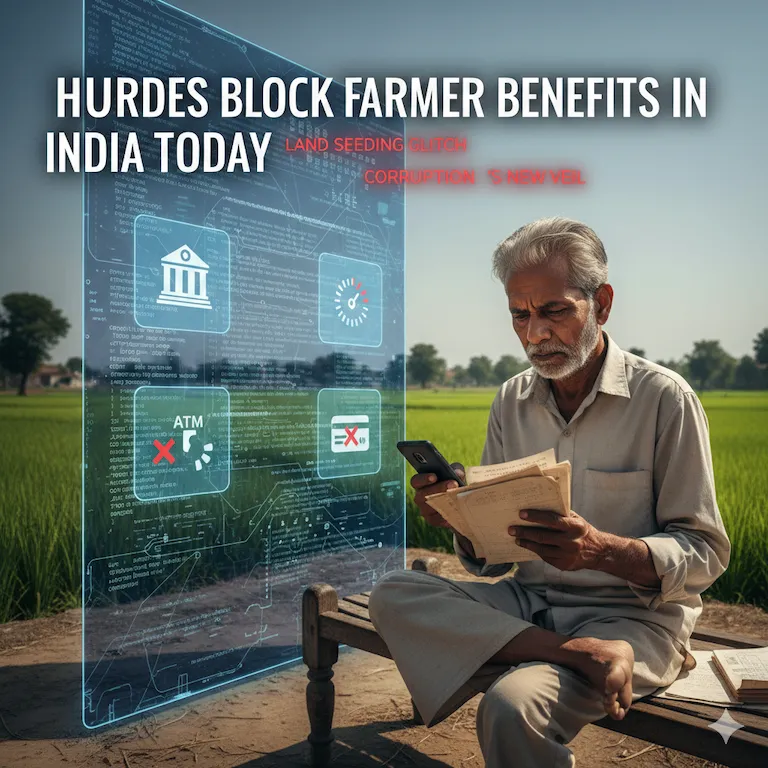
Here are the key takeaways from the blog post regarding the PM-Kisan case of Arun Pratap Singh. In the case discussed, various hurdles, consequently, block farmer benefits. As a result, this makes it harder for eligible individuals to access the support they need.
- Verified Eligibility and Past Success: The system officially registered the beneficiary (No: 91701000211126005390). He successfully received ₹4,000 in February 2025, proving that the system previously validated his Aadhaar and bank details.
- The Land Seeding Bottleneck: Land ownership of 0.2238 hectares is verified in the AgriStack Farmer Registry as of January 10, 2026. However, the local Tehsil office has failed to update the “Land Seeding” status on the PM-Kisan portal.
- Administrative Misinformation: Local staff, specifically Lekhpal Ashok Pal, provided misleading reports and advised the farmer to “apply again.” This advice misleads the already registered beneficiary and only serves to stall the process.
- Pattern of Arbitrary Rejections: The application faced cryptic hurdles from the start. It included a rejection based on “blurred documents.” This happened despite the applicant providing clear physical hard copies to the department.
- Systemic Failure in Grievance Redressal: The state recently closed grievances with vague remarks. They categorized a legitimate complaint about withheld legal aid as a mere “demand.” This approach allowed them to avoid a formal investigation into local negligence.
The Administrative Maze: How Local Hurdles Block Farmer Benefits
The PM-Kisan Samman Nidhi scheme aims to provide a direct financial lifeline to India’s small and marginal farmers. Moreover, it uses digital technology to bypass middle-men and ensure aid reaches the intended hands. However, the case of Arun Pratap Singh (Registration: 91701000211126005390) from Nibi Gaharwar, Mirzapur, shows a different reality. In many cases, significant hurdles block farmer benefits. Administrative obstacles often prevent agricultural support from reaching its intended recipients. Consequently, local apathy can transform a digital mission into a manual trap. Even with a valid registration, the journey remains a struggle against bureaucratic gatekeeping.
1. Initial Hurdles and Unfair Rejections (Hurdles Block Farmer Benefits)
The journey for this beneficiary began on July 9, 2023. Initially, local staff acted swiftly; however, they stalled the progress of the first application by rejecting the file. Specifically, the staff claimed the uploaded revenue records were blurred and illegible. Nevertheless, this excuse was cryptic, as the applicant had submitted clear paper copies directly to the department office. Consequently, we see that unfairly applied criteria may block future farmer benefits. Moreover, staff often use the tactic of “blurred documents” to reject valid claims without conducting a real inspection.
2. A Brief Window of Success
After a long struggle with the local staff, the local staff finally recognized the farmer’s eligibility. On February 24, 2025, the farmer successfully received 4,000 rupees. The India Post Payments Bank credited these two instalments to his account. This successful transaction was critical because it proved that his Aadhaar number and bank seeding were perfectly functional. The central system had once accepted his right to the funds. This overcame hurdles that would normally block the realization of farmer benefits.
3. Shifting Ground and Misleading Reports (Hurdles Block Farmer Benefits)
The financial help stopped again without warning; consequently, this clear record of payment was disregarded. When the farmer sought answers, the local staff, unfortunately, misled him with a report in November 2024. Lekhpal Ashok Pal told the farmer to apply online again, providing factually incorrect and harmful advice. Specifically, a registered farmer with an active registration number cannot re-apply. Furthermore, officials often use such advice as a tactic to avoid the actual work of verification and land seeding. Notably, shifting local hurdles, therefore, block farmer benefits through bad information and delay.
4. The Digital Record Conflict
The primary obstacle today is a technical flag known as Land Seeding. For payments to continue, the local Tehsil office must flag the land as verified on the PM-Kisan portal. On January 10, 2026, the farmer completed his AgriStack Farmer Registry enrolment. This official digital record proves he owns 0.2238 hectares in Nibi Gaharwar. The government now possesses this data in its own digital registry. Still, the local office has failed to update the PM-Kisan portal to match this reality. In fact, digital record conflicts are one more way that hurdles block farmer benefits for those entitled to support.
5. Why Local Apathy and Corruption Hurt
Corruption thrives in the gaps where local staff act as gatekeepers to digital benefits. Specifically, they use technical steps like land seeding to withhold aid from those who do not provide “convenience money.” When a farmer files a grievance, the staff, unfortunately, often closes the case with vague remarks. Recently, they labelled a legal claim for benefits as a mere “demand.” Consequently, this allows the administration to avoid a real audit into why they stopped the money. Frequently, such inertia and unethical barriers, therefore, become key hurdles that block important farmer benefits.
6. Fixing the System for True Transparency
To protect farmers like Arun Pratap Singh, the state and central governments must act:
- Automatic Integration: The system should use AgriStack data to verify and seed land records automatically.
- Independent Audits: High-level officers should audit local claims regarding “illegible files” when hard copies are available.
- Disciplinary Action: Staff who give bad advice, such as telling approved farmers to re-register, must face accountability.
India must not let the digital dream die due to local delays and cryptic hurdles. We must reform the process to prevent hurdles from blocking farmer benefits and ensure transparency. Additionally, we must guarantee that public assistance reaches the needy without interference.
Based on the documents and grievances provided, here are the specific application IDs, contact details, and web links for the public authorities involved in your case:
1. Personal Application & Registration IDs (Hurdles Block Farmer Benefits)
- PM-Kisan Registration Number:
91701000211126005390 - Farmer Enrolment Number:
9_170_1000_211126_005390 - UP IGRS Grievance ID (State):
GOVUP/E/2026/0020089(Current) - CPGRAMS Grievance ID (Central):
DOAAC/E/2026/0004086 - Previous Grievance IDs:
60000240020006A,600002400021467,40019924024448
2. Public Authority Contact Details
| Authority Name | Officer / Department | Contact Number | Email Address |
| CM Secretariat (UP) | Shri Arvind Mohan (Joint Secretary) | 0522-2226350 | arvind.12574[at]gov[dot]in |
| Agriculture Ministry (India) | Shri Avinash Lavania (Director) | Not Provided | a.lavania[at]ias.nic[dot]in |
| Agriculture Dept (Mirzapur) | Deputy Director of Agriculture | Not Provided | Not Provided |
| Unique Identification (UIDAI) | Help Desk | 1947 | help@uidai.gov.in |
| India Post Payments Bank | Customer Service | 155299 | contact@ippbonline.in |
3. Important Web Links (Hurdles Block Farmer Benefits)
- PM-Kisan Official Portal: pmkisan.gov.in
- UP IGRS (Jansunwai): jansunwai.up.nic.in
- Central Grievance (CPGRAMS): pgportal.gov.in
- UP Bhulekh (Land Records): upbhulekh.gov.in
- UIDAI (Aadhaar): [suspicious link removed]
Would you like me to help you draft a specific email to the Joint Secretary (Shri Arvind Mohan)? You can use the contact details above.


Facing a similar challenge? Share the details in the box below, and our team of experts will do their best to help.