
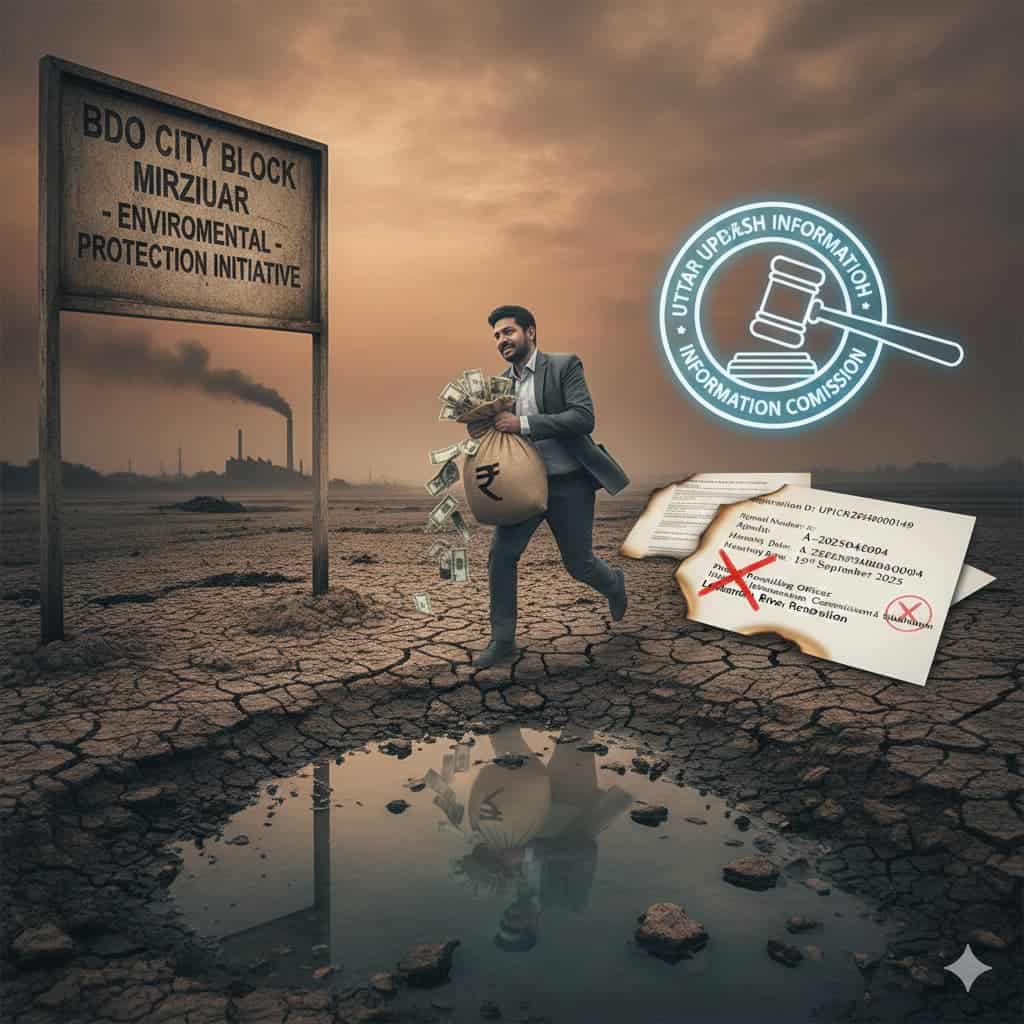
Renovation of the Lohandi river, which is currently at the verge of extinction, is indeed the urgent need of the hour to restore its ecological balance and support the local ecosystem.
Unfortunately, the BDO City block in Mirzapur is playing a detrimental role in this crucial matter concerning the protection of our environment and the delicate ecology that depends on the river’s health.
Despite the BDO sanctioning a significant amount of ₹1.04 crore for the river restoration project, the funds appear to have been mismanaged, leading to disappointing outcomes.
The entire government investment has seemingly gone to waste as there are no visible improvements or efforts made to revive the Lohandi river.
Moreover, the BDO is now evading transparency by running away from providing any further information regarding the Lohandi initiative, leaving the community in the dark about vital efforts and future plans aimed at mitigating the environmental crisis that the river faces.
Misleading Information by BDO City Mirzapur in RTI Response: A Case Before UPIC
Registration ID: UPICR20240000149
Appeal Number: A-20250400904
File Number: S09/A/0634/2025
Diary Number: D-060920250011
Hearing Date: 15th September 2025
Hearing Room: S-9
Presiding Officer: Hon’ble Information Commissioner Madam Shakuntala Gautam
Introduction
In a significant case of alleged misinformation and procedural lapses under the Right to Information Act, 2005, appellant Yogi M. P. Singh has raised serious objections regarding the handling of his request for information.
These objections are specifically directed against the Public Information Officer (PIO), Shravan Kumar Rai, who serves as the Block Development Officer (BDO) for City Mirzapur. Singh highlights concerns about the transparency of the processes and the adequacy of responses provided to him.
The matter is scheduled for a detailed hearing before the Uttar Pradesh Information Commission in Lucknow, where the implications of the alleged lapses will be examined closely.
In addition, the panel is expected to address critical issues concerning the protection and rights of residents affected by these lapses, thereby exploring the broader impact on the community’s right to access information.
Lohandi’s protection issues will also be discussed, adding another layer of complexity to the proceedings and underscoring the importance of adherence to the principles of the right to information in governance.
Background
The RTI application dated 16 April 2025 sought detailed information about the renovation of the Lohandi River, which has been a subject of growing concern among local communities and environmental activists alike. It requested financial sanctions, technical details, and environmental precautions that are necessary for ensuring the sustainability of the river’s ecosystem during the renovation process.
Furthermore, it also asked for comprehensive documentation of work execution, including timelines, methodologies, and oversight mechanisms that were put in place to monitor the progress.
The PIO’s response, dated 04 September 2025, has been challenged for being misleading, incomplete, and evasive, raising questions about transparency and accountability in governmental operations.
This has led to increased scrutiny and public debate, highlighting Lohandi river issues prominently, as various stakeholders express their apprehensions regarding the potential impacts of the renovation on both the environment and the livelihoods of those who depend on this vital water source.
Key Points of Contention
1. Sanctioning Authority of ₹1.04 Crore
The PIO claimed that the BDO sanctioned ₹1.04 crore for the river restoration. Yet, such financial authority typically rests with the District Magistrate (DM) or Chief Development Officer (CDO). The Bhoomi Pujan led by the DM, as reported in Amar Ujala (13 March 2024), contradicts the PIO’s statement regarding the Lohandi river.
2. Proposal Copy for River Renovation
While the PIO mentioned proposals from 11 Gram Panchayats, the appellant specifically requested a formal, technical proposal that would provide clear and detailed insights into the methodologies and strategies to be employed in the restoration project.
The documents provided were vague, undated, and illegible—violating Section 7(9) of the RTI Act, which explicitly mandates that authorities must supply intelligible and usable information.
This lack of clarity not only hinders the appellant’s understanding but also raises serious concerns regarding the commitment to transparency in the efforts surrounding the Lohandi river restoration initiatives.
Furthermore, the absence of actionable data makes it difficult for stakeholders to engage effectively in the process or to hold responsible parties accountable, thereby undermining the overall objective of environmental restoration and community involvement.
3. Details of Technical Experts
The response included names but omitted designations, postings, and tenure details. This lack of transparency obstructs public oversight and violates the principle of full disclosure, especially in matters relating to Lohandi restoration.
4. Precautionary Measures Against Pollution
The PIO’s statement that “water is flowing smoothly” is misleading and does not adequately address the critical query regarding the necessary pollution control measures that should be in place.
It fails to provide the public with essential information about how environmental standards are being maintained, which is particularly concerning in light of the ongoing industrial discharge issues related to Lohandi that are glaringly overlooked.
This lack of transparency not only raises suspicions but also serves to undermine environmental accountability under Section 4(1)(d), which emphasizes the importance of clear and honest communication about environmental management practices.
The public deserves full disclosure on these matters, as the health of local ecosystems and communities is at stake.
By evading these important subjects, the PIO does a disservice to the very principles of environmental stewardship that are supposed to guide regulatory oversight.
5. Discharge of Excretions and Intimation to CDO
The PIO denied responsibility, stating the issue is unrelated to the BDO. However, since the BDO implemented the scheme, coordination with the CDO is essential. The failure to transfer the query under Section 6(3) is a procedural lapse affecting Lohandi’s ecological balance.
6. Estimates, Work Booklets, and Invoices
Redirecting the appellant to a website that returns a 404 error is not a valid response and clearly indicates a lack of due diligence in addressing the request.
Such financial documents are not typically hosted online and, therefore, must be provided directly by the record custodian to ensure that the information is accurate and complete.
This oversight not only undermines the integrity of the process but also violates Section 7(1) of the RTI Act, which mandates the timely disclosure of information.
Moreover, this lapse significantly impacts the records concerning Lohandi, as it deprives the appellant of essential documentation needed for their case and undermines the principles of transparency and accountability that the RTI Act aims to uphold.
Such failures in the process can lead to further complications and diminishes public trust in the system.
Prayer for Relief
The appellant has requested the Hon’ble Commission to:
- Direct the PIO to provide complete and correct information on all six points regarding Lohandi.
- Initiate penal proceedings under Section 20(1) of the RTI Act.
- Ensure accountability for non-compliance and procedural lapses.
Conclusion
This case underscores the importance of transparency, accountability, and procedural integrity in public administration, especially concerning Lohandi. These elements are fundamental to maintaining public trust and ensuring that the actions of government entities align with the principles of justice and fairness.
The upcoming hearing on 15th September 2025 will be crucial, as it not only represents a pivotal moment for the involved parties but also serves as a landmark event for the broader implications of governance in the region. It will decide whether the RTI Act’s provisions are upheld, potentially setting a precedent for future cases that could either strengthen or undermine the public’s right to information.
Furthermore, the outcomes of this hearing will affect how these provisions are enforced effectively, ultimately determining the level of transparency with which public institutions operate and the accountability they hold towards the citizens they serve. This decision could lead to significant changes in the administration’s approach to handling requests for information, impacting the relationship between the government and the public in profound ways.
Information sought concerning corrupt information board images of G.P. Lohandi Kala


Facing a similar challenge? Share the details in the box below, and our team of experts will do their best to help.