
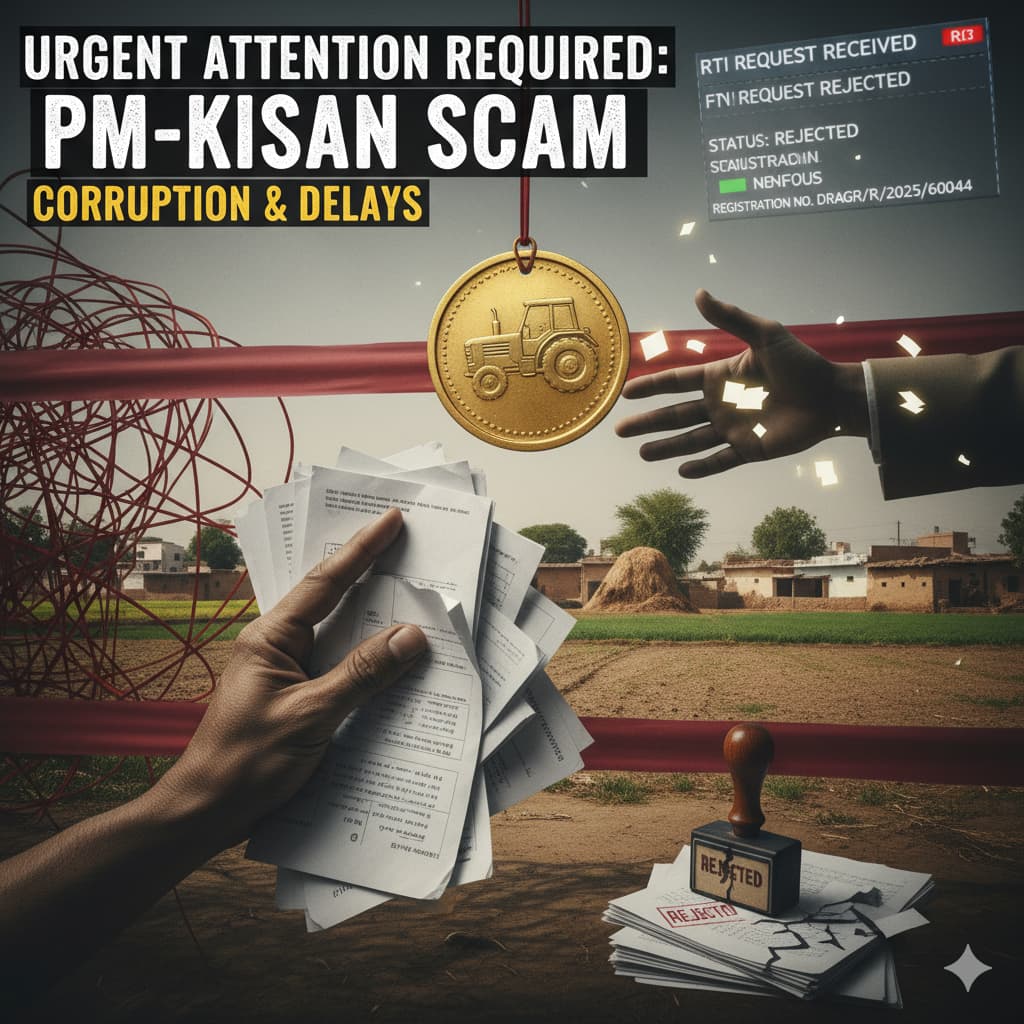
The PM Kisan Samman Nidhi scheme has run into significant problems. Arbitrary application rejections and drawn-out delays have become a troubling trend. Together, they undermine the scheme’s intended purpose. Despite the government’s efforts to support farmers, rampant corruption has marred the implementation. As a result, funds fail to reach needy farmers as effectively as PM Kisan Samman Nidhi was designed to do. Consequently, many farmers now face precarious financial situations. They struggle to make ends meet while they wait for assistance that never arrives. This inefficiency erodes trust in the scheme. It also deepens the economic challenges the rural farming community faces. Clearly, the programme urgently needs reform so it truly benefits those it was meant to serve.
Key Takeaways
- The PM Kisan Samman Nidhi scheme faces problems like arbitrary rejections and delays undermining its purpose.
- Corruption hampers the scheme, preventing funds from reaching needy farmers effectively.
- An RTI application in Mirzapur highlights grievances in the distribution process and administrative hurdles.
- Immediate reforms are necessary to ensure transparency, streamline verification, and tackle corruption in the scheme.
- To truly support vulnerable farmers, authorities must act decisively and restore trust in the PM Kisan Samman initiative.
Urgent Attention Required: Alleged Corruption and Delays in PM Kisan Samman Nidhi Scheme
The Pradhan Mantri Kisan Samman Nidhi (PM-KISAN) scheme, run by the Department of Agriculture and Farmers Welfare, sets out a noble objective. It aims to provide income support to all landholding farmer families. In turn, this support should enhance their financial stability and improve their quality of life. However, what appear to be arbitrary rejections have hampered this well-intentioned goal. As a result, many deserving families face uncertainty and distress. Furthermore, applicants also report procrastination: officials delay the processing of applications unnecessarily. Rampant corruption compounds the problem and undermines the integrity of the system. Consequently, this troubling situation reportedly keeps intended financial aid from reaching genuinely needy farmers. These farmers rely on the support to sustain their livelihoods and invest in their agricultural activities. Ultimately, the delays jeopardise both their future and that of the agricultural sector as a whole.
The following details come from an RTI application. They highlight specific grievances tied to the scheme’s implementation in Mirzapur, Uttar Pradesh. In particular, they show how these issues affect outcomes under the PM Kisan Samman Nidhi programme.
Case Study: RTI Highlighting Grievances in Mirzapur
Yogi M P Singh has filed a Right to Information (RTI) application under the RTI Act, 2005, seeking answers about the PM Kisan Samman Nidhi scheme. The application addresses the status of a specific beneficiary. It also questions the process that local agriculture department officials follow. Specifically, it examines how they handle PM Kisan Samman Nidhi distribution.
| Detail | Information |
|---|---|
| RTI Registration Number | DRAGR/R/2025/60044 |
| Date of Filing | 11/03/2025 |
| Public Authority | Agriculture Directorate |
| Concerned PIO | Deputy Director Agriculture (DDA), Mirzapur |
| Beneficiary Concern | Keshav Pratap Singh, S/O: Rajendra Pratap Singh (Serial No. 244 in beneficiary list) |
Specific Allegations and Information Sought:
The applicant seeks clear, point-wise responses from the Deputy Director of Agriculture, Mirzapur, on the following issues:
- Exclusion of Father’s Name: The beneficiary list excludes the father’s name. Yet the applicant’s own name appears on the same PM Kisan Samman Nidhi beneficiary list.
- Demand for Documents: The Deputy Director of Agriculture (DDA) has requested copies of the Khatauni (land record). Officials also require the applicant’s Aadhaar card and passbook.
- Basis of Document Demand: Which Government Order, circular, or office memo authorises the DDA to demand these documents? The applicant asks officials to provide a copy of that gazette.
- District-Level Intervention: Why do officials demand documents after online approval at the Sub-District or Block level? And why do they route these documents from the district level down to the block level?
- Withholding of Installments: The authorities are not sending PM-KISAN installments to the beneficiary’s bank account. This happens even though Keshav Pratap Singh’s name appears at serial number 244 on the official beneficiary list.
- Seeking Bank Details: The applicant asks officials to clarify why they seek bank details and to cite the relevant circular. This question matters because payments often flow through the India Post Payments Bank via Aadhaar seeding.
The Concern: A PM Kisan Samman Nidhi Accountability Crisis
This detailed RTI application points to a significant bureaucratic bottleneck. It also suggests a potential misuse of power at the local level:
- Information Asymmetry: Officials are demanding documents that the initial online application process should already have verified. This demand shows distrust in the established system. It may also signal a new, unpublished procedural hurdle within PM Kisan Samman Nidhi.
- Procedural Opacity: The RTI specifically requests the government circular behind the demand for documents (Khatauni, Aadhaar, Passbook). This request highlights a real concern: the process may be arbitrary and may not rest on clear, mandated guidelines.
- Failure of Delivery: The core issue stays simple. Funds are not reaching a farmer whose name already appears on the official beneficiary list. This failure defeats the very purpose of the scheme.
- Aadhaar-Based Payment Bypass: The demand for bank account details raises suspicion. After all, Aadhaar-based payments through India Post Payments Bank remain a prevalent method. Therefore, the intent behind the request becomes questionable.
Overall, this case exemplifies a larger trend of administrative roadblocks. Indeed, alleged corruption often keeps welfare schemes like PM-KISAN from achieving their intended impact on the ground. For this reason, authorities must act immediately. They need to provide transparent responses. Doing so will restore public faith in the system and ensure benefits reach the rightful farmers under the PM Kisan Samman Nidhi initiative.
🎯 Conclusion: Reforming PM Kisan Samman Nidhi for Accountability and Impact
Taken together, the extensive evidence highlights a troubling gap. This gap sits between the noble intent of the PM-KISAN scheme and its on-ground execution. The detailed RTI application from Mirzapur makes that gap especially clear. Procedural opacity, arbitrary rejections, and alleged corruption continue to block financial relief from reaching rightful beneficiaries. Ultimately, this goes beyond a bureaucratic inconvenience. It represents a crisis of accountability that directly affects the financial stability of the nation’s farmers.
To restore faith in the scheme, authorities must take immediate and decisive action. Only then can the programme achieve its mandated goal of supporting vulnerable farmer families:
- Mandatory Transparency: Officials must back every document demand and application rejection with a publicly available, dated, and cited Government Order or circular.
- Streamlined Verification: Officials must stop demanding already-verified documents at the district level. Instead, they should treat the initial online approval process as the final administrative gateway.
- Zero Tolerance for Corruption: The government needs a dedicated, fast-track grievance redressal mechanism. This mechanism should investigate and penalise officials and intermediaries who engage in corrupt practices or cause unnecessary delays.
The success of the PM-KISAN initiative matters enormously to agricultural welfare. Therefore, the concerned authorities must provide transparent responses now. They must also implement robust systemic reforms. Only a firm commitment to efficiency, integrity, and farmer-centric delivery can help this vital programme truly serve those it was designed to empower. In short, farmers cannot afford to wait any longer. The time for decisive administrative action is now.designed to empower. In short, farmers cannot afford to wait any longer. The time for decisive administrative action is now. hub of brokers and intermediaries who are stumbling block


Facing a similar challenge? Share the details in the box below, and our team of experts will do their best to help.