
Key Takeaways
- Yogi M. P. Singh’s case reveals the serious issue of the Tax Department ignoring police investigations related to PAN fraud.
- Despite registering an FIR, the Income Tax Department remains unresponsive, preventing police from investigating crucial fraudulent activities.
- Victims face potential prosecution due to inaction from the Tax Department, as they often ignore police reports substantiating their claims.
- Options for victims include filing grievances through CPGRAMS or seeking judicial intervention with a Writ of Mandamus to compel ITD action.
- Immediate escalation is essential to break the deadlock and address the flaws in the system where the Tax Department ignores police efforts.
🛑 The Systemic Failure: When the Tax Department Ignores Police on PAN Fraud
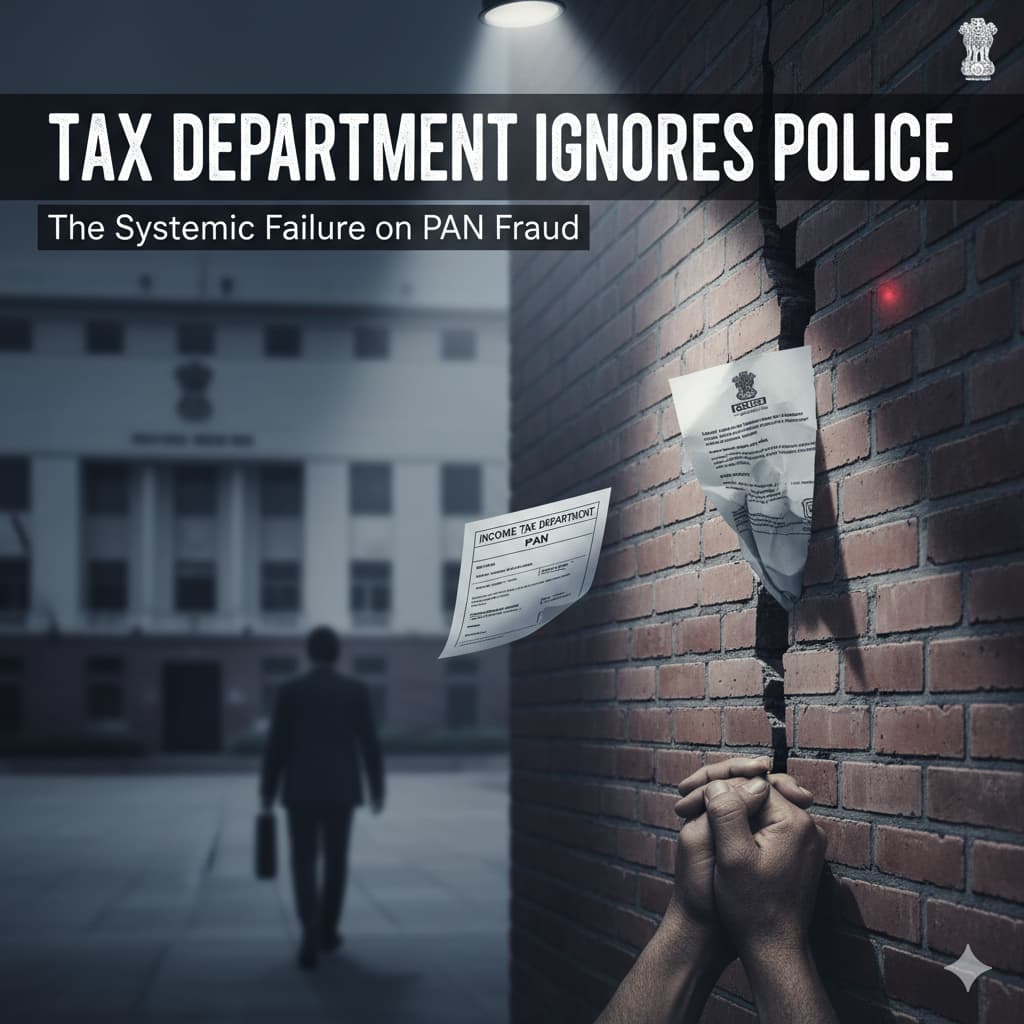
The case of Yogi M. P. Singh, a low-income citizen battling fraudulent transactions exceeding ₹34 crore linked to his PAN, exposes a critical flaw in India’s tax administration: the Income Tax Department (ITD)’s refusal to cooperate with police investigations into identity theft. This situation highlights how the Tax Department ignores police efforts in such crucial matters.
Despite the complainant having successfully registered a First Information Report (FIR) in November 2023 and the Senior Superintendent of Police (SSP) having written at least two letters seeking cooperation, the ITD remains unresponsive. This inertia traps the victim, forcing them to face legal and financial ruin for a crime they did not commit, largely because the tax department ignores police notifications.
The Legal Deadlock: ITD vs. Police
The Income Tax Department closed the starting appeal. They directed the taxpayer to treat the matter as a “criminal activity.” The taxpayer was advised to approach the Police/Cyber Crime authorities. The taxpayer complied, but he soon realised the challenge when the Tax Department ignores police actions.
- The Police’s Action: The police registered the FIR. Through the SSP, they officially requested information or action from the ITD. This is a standard step to investigate the source of the fraudulent business. It also covers GST and rent transactions appearing in the victim’s Annual Information Statement (AIS).
- The ITD’s Failure: By not responding to the SSP’s letters, the ITD is effectively obstructing a criminal investigation. This non-cooperation prevents the police from formally confirming that the transactions are illegitimate and helps the original fraudsters evade scrutiny.
This stalemate leaves the victim in a dangerous limbo. Police can’t finish their investigation without ITD data. The ITD will not correct the victim’s tax records without a conclusive police report. This report is often ignored by the tax department.
Why Immediate Escalation is Essential? Because Tax Department Ignores Police.
For the victim, every day of ITD inaction increases the risk of receiving a massive tax demand. It also raises the risk of prosecution for income they never earned. This happens because the Tax Department ignores police reports that substantiate their case.
1. Administrative Hammer: The CPGRAMS Route
The victim must now escalate the non-cooperation to the highest administrative levels outside the ITD’s local office.
- Target: The Central Public Grievance Redress and Monitoring System (CPGRAMS).
- Focus: The grievance should be filed against the Ministry of Finance (CBDT). The core of the complaint is not the fraud itself. The issue is that accountable ITD officers fail to carry out their duty. They do not respond to the SSP’s official requests. Additionally, the tax department frequently ignores police collaboration efforts.
- Proof: Attach the FIR copy. Clearly cite the fact that the SSP has sent two letters. Mention the dates/reference numbers if available.
2. Judicial Action: The Writ of Mandamus
If the administrative channels fail, the victim’s most potent weapon is the judicial system, specifically the High Court. When the tax department seems to ignore policing efforts, judicial measures become crucial.
- The Goal: File a Writ Petition of Mandamus.
- The Command: This writ commands a public authority to carry out a duty it is legally bound to execute. The court can order the ITD to follow the SSP’s investigation letters promptly. It can also direct them to give the necessary data to resolve the fraud case.
- Low-Income Citizen Advantage: As a low-income citizen, the complainant should seek free legal aid. They can do this through the District Legal Services Authority (DLSA). This is recommended to pursue this Writ Petition. It is often the quickest way to end administrative inaction.
Action Steps to Break the Deadlock
The victim has done the hardest part (getting the FIR). The next steps are about leverage:
- Re-File the Grievance on CPGRAMS: Make the non-cooperation the sole focus, documenting the SSP’s ignored letters.
- Contact the CCIT: The tax department is ignoring the police. Send a physical letter to the Chief Commissioner of Income Tax. Detail the SSP’s communication in the letter. Mention the lack of response from the Jurisdictional Assessing Officer (JAO).
- Seek Legal Aid: Promptly contact the DLSA. Obtain legal counsel for filing a Writ of Mandamus in the High Court. This is crucial when the tax department ignores police advice.
The legal remedy is a critical step. It compels the ITD to act. This action clears the victim’s name from this monstrous financial burden.
Would you like me to find the contact information for the District Legal Services Authority (DLSA) in Mirzapur, Uttar Pradesh? This can help you start the process of obtaining free legal aid.
Transparency International’s Annual Membership Meeting 2025 Elects New Board Members and Adopts Key Resolutions Addressing Corruption and Pressures on Civil Society. Modi Sir this is democracy. You only curb the corruption at the time of election by using the old history of opposition parties. Most surprising thing is that you never speak about the rampant corruption occurred in your tenure. Think about the gravity of situation, your Department of income tax is targeting an anti-corruption crusader and your office is silent on this issue. Undoubtedly it reflects the honesty in your working and relevance of your promises.


Facing a similar challenge? Share the details in the box below, and our team of experts will do their best to help.