
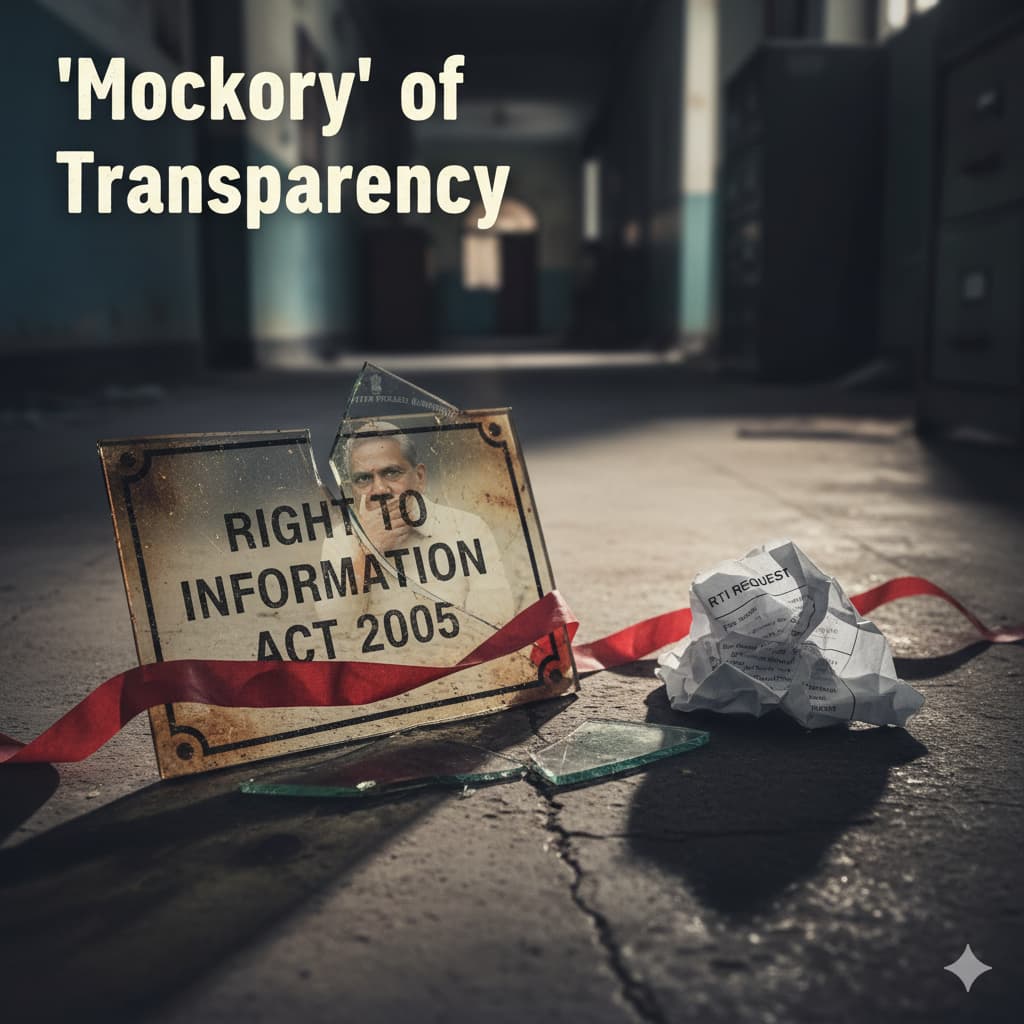
Silence of the framework: How an RTI Appeal Exposes ‘Mockery’ of Transparency in Mirzapur, UP
The Right to Information (RTI) Act, 2005, is vital for transparency and accountability in India’s democracy. Yet, the situation has been called a ‘Mockery’ of Transparency. A recent First Appeal in the District Magistrate Office, Mirzapur, shows how public servants can undermine its effectiveness.
The appeal highlights a critical failure of the mechanism—a total and calculated silence from a Public Information Officer (PIO), which raises serious concerns about the accountability of public officials.
The applicant suggests this is nothing less than a “mockery of provisions of the right to information act 2005,” underscoring the importance of accessible information for citizens and the dangers posed when such rights are ignored.
The applicant emphasizes a systemic neglect that can undermine transparency, leading to a significant erosion of public trust in governmental processes and further complicating the relationship between citizens and their government.
This deliberate lack of communication not only reflects poorly on the PIO but also jeopardizes the very foundation of democracy, where informed citizens are essential for effective participation in governance.
Such failures must be addressed to uphold the integrity of the right to information and ensure that governmental bodies operate with the openness required in a democratic society.
📜 The Unanswered Query: From Request to First Appeal and no information reflects Mockery’ of Transparency
The case involves an original RTI application (Registration No. DMOMR/R/2024/60106) filed by Sadhana Tiwari on September 28, 2024. The request was directed to the PIO, Tarun Pratap Singh, Tehsildar Lalganj.
The Case Details: A Breakdown of Bureaucratic Delay
| Milestone | Detail |
| RTI Filed | 28/09/2024 |
| PIO Addressed | Tarun Pratap Singh, Tehsildar Lalganj |
| Statutory Deadline | Approximately 28/10/2024 (30 Days) |
| Appeal Filed | 12/11/2024 (Registration No. DMOMR/A/2024/60059) |
| Ground for Appeal | No Response Within the Time Limit |
As the applicant notes, over one month and two weeks passed after the RTI’s submission. Yet, no action was taken by the concerned PIO. The lack of response made it necessary to file a First Appeal $u/s$ 19(1) to the Appellate Authority. Gulab Chandra Second (SDM Lalganj) highlighted a mockery of transparent practices.
⚖️ The Core Violation: A Statutory Failure
The failure to respond within the stipulated time is a direct violation of Section 7(1) of the RTI Act, 2005. This mandates a reply or refusal within 30 days. The appeal strongly asserts that this inaction is not merely administrative oversight. It is a deliberate tactic. This approach is almost a mockery of transparency laws.
The applicant states:
One month and two weeks have passed. Unfortunately, the concerned public information officer did not take any action on the RTI application… which is a mockery of provisions of the provisions of the right to information act 2005.
The concern is not just about the information; it is about the integrity of the law itself. When PIOs can ignore RTI requests with impunity, the entire accountability framework collapses. This leads to a perceived mockery of the setup.
🛑 Beyond Bureaucracy: Allegations of Deep Corruption
The appeal escalates its critique beyond mere process failure. It suggests that the PIO’s silence is a conscious effort to conceal underlying corruption.
The Shadow Over Tehsil Lalganj
The appeal’s “Prayer or Relief Sought” section addresses “deep rooted corruption in tehsil Lalganj,”. It asserts that corrupt officials enable the misappropriation of women’s and girls’ property. Thus, it calls out what seems like a mockery of transparency by these officials.
The repeated failure to offer information on multiple RTI applications, as mentioned by the appellant, raises serious questions. It questions the operating culture within the Tehsil office. Whether such an “irresponsible system can deliver justice to the common people” is a crucial question. This is posed by this appeal. It reflects a mockery of transparency ideals.
The Promise vs. The Reality of Good Governance
The appeal makes a direct, pointed challenge to the prevailing narrative of governance in the state: it questions the assumptions that have long guided policy decisions and seeks to highlight the inconsistencies and shortcomings inherent in the current administration’s approach.
By presenting alternative perspectives and solutions, it encourages a re-examination of the established norms and practices that have been accepted without scrutiny, urging citizens and lawmakers alike to consider new, innovative strategies for effective governance that prioritize transparency, accountability, and public engagement.
Our Chief Minister Yogi Adityanath claims to offer justice to women and girls… Whether such working style reflects the good governance in the working of the government of Uttar Pradesh…?
This case changes a simple administrative appeal into a litmus test. It tests the state’s claimed commitment to anti-corruption and good governance. If public officials can ignore the RTI Act, it allows them to unilaterally defeat the law. The government’s stated efforts to promote transparency then ring hollow. It makes the transparency claims a mockery.
🎯 The Integrity of the Act: A Matter of Concern is Mockery’ of Transparency
The appeal in Mirzapur serves as a stark reminder that the fight for transparency is ongoing and far from over.
It highlights the importance of vigilance and determination in advocating for greater openness in governance.
The effectiveness of the RTI Act is not determined solely by its provisions but also hinges significantly on the moral responsibility and adherence of the public authorities, who must be held accountable for their actions.
Citizens must not only understand their rights under this act but also actively engage with it, ensuring that their voices are heard and that their inquiries are met with the respect and seriousness they deserve.
Only through collective effort and commitment can we hope to foster a culture where transparency is seen as a fundamental right rather than a privilege, thereby strengthening democracy and empowering citizens.
This First Appeal now rests with the SDM Lalganj. The decision on this appeal will not just handle the grievance of Sadhana Tiwari. It will send a critical signal about whether the state of Uttar Pradesh prioritizes accountability. Alternatively, it tacitly endorses the silent concealment of public information. The law of the land requires supremacy. The public is eagerly waiting for justice. There appears to be a mockery of transparency standards.
Would you like me to search for the current status of this First Appeal? Do you want any news related to RTI violations by Tehsildar Lalganj?


Facing a similar challenge? Share the details in the box below, and our team of experts will do their best to help.