
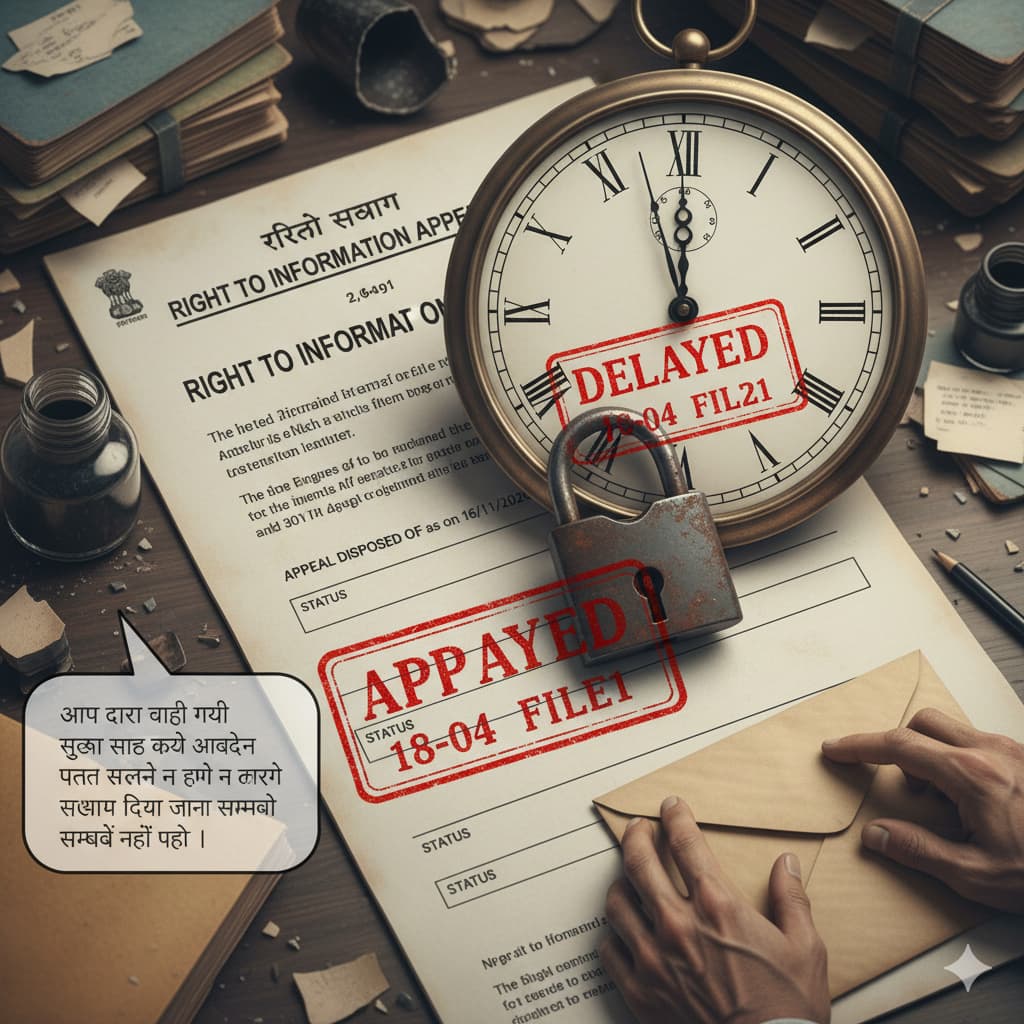
🚨 Unanswered Queries and Delayed RTI Responses: A Case Study on RTI Failure 🚨
The Right to Information (RTI) Act of 2005 serves as a cornerstone of India’s democracy, representing a significant step towards ensuring the citizens’ right to know. It aims to guarantee transparency and accountability in governance, empowering individuals to seek information from public authorities. Nonetheless, the ground reality often presents a different picture, marked by bureaucratic inertia that undermines its intended purpose.
Delayed responses to RTI applications and a blatant disregard for statutory timelines occur far too often, leaving citizens frustrated and disillusioned.
In a troubling instance, Yogi M P Singh filed an RTI application regarding a matter of public interest, significantly hampering a citizen’s right to information that is not just a privilege but a fundamental entitlement.
With the absence of timely and reliable responses, this situation ultimately forced the citizen to file an appeal, revealing the systemic challenges individuals face in exercising their rights under the act and shedding light on the urgent need for reforms that reinforce the RTI’s effectiveness and accessibility.
The RTI Application in which PIO Delayed RTI Responses
The Basic Education Directorate received a straightforward inquiry that initiated the journey for information, yet the subsequent delays in receiving timely RTI responses significantly hindered progress, creating frustration for the parties involved.
As the inquiry sought to uncover vital educational data, the prolonged wait for essential information not only slowed down the process but also raised concerns about transparency and accountability within the organization.
Stakeholders were eager to see the results, underscoring the importance of efficient communication channels in facilitating educational initiatives and improving overall outcomes in the sector.
| Detail | Information |
| Applicant | Yogi M P Singh |
| Initial Filing Date | February 18, 2021 (Registration No. DRBED/R/2021/80141) |
| Public Authority | Basic Education Directorate |
| PIO Approached | Sanyukt Sachiv Basic Shiksha Parishad |
Export to Sheets
The earlier communication (Registration No. DPBED/R/2021/60132) referenced a protracted effort to obtain the necessary details.
The Violation: Silence Beyond 30 Days in Delayed RTI Responses
The core of the issue lies in the violation of the RTI Act’s Section 7(1). This section mandates that the Public Information Officer (PIO) must give the requested information within 30 days. This period starts from the date of receipt of the application. Such procedural delays in RTI responses are common.
In this instance:
- RTI Date: February 18, 2021
- Appeal Date: April 18, 2021
By the time the appeal was filed, more than two months had elapsed. The applicant made his grievance clear. The concerned public information officer neither provided information nor forwarded it to the concerned mandate…” This non-response directly flouted the law, forcing the applicant to seek redressal.
The First Appeal (u/s 19(1))
Frustrated by the PIO’s silence, which is a hallmark of delayed RTI processes, Mr. Singh found himself increasingly disheartened by the lack of communication regarding his request for information.
He had hoped for a prompt response that would shed light on his queries and help him understand the intricacies of the matter at hand.
After waiting in vain for a substantial period, he decided to take action and filed a First Appeal with the First Appellate Authority (FAA), seeking not only the information he had initially requested but also to address the systemic issues that seemed to plague the functioning of the RTI framework.
Mr. Singh believed that asserting his rights through this appeal would not only assist him but also contribute to accountability and transparency within the government processes.
| Detail | Information |
| Appeal Registration No. | DRBED/A/2021/60112 |
| Date of Filing Appeal | April 18, 2021 |
| Ground for Appeal | No Response Within the Time Limit |
| Appellate Authority (FAA) | Sachiv Basic Shiksha Parishad |
The Disappointing Outcome: Appeal Disposed Of
On November 16, 2024, authorities disposed of the appeal, a decision that has stirred deep concern among various stakeholders. Nonetheless, they offer a bureaucratic puzzle, raising further questions about procedural fairness and transparency in their decision-making processes.
This issue often entangles with delayed RTI responses, which have become increasingly prevalent in recent times, leading citizens to question the efficacy of systems intended to uphold their rights.
As a result, many individuals now find themselves in a frustrating limbo, unable to access essential services and information, further complicating their circumstances and potentially exacerbating existing inequities within public assistance frameworks.
Reply: “आप द्वारा चाही गयी सूचना के साथ कोई आवदेन पत्र संलग्न न होने के कारण सूचना दिया जाना सम्भव नहीं हो पा रहा है।” (It is not possible to provide the information as no application form was attached with the information sought by you.)
The authorities rejected the appeal on a technicality, citing the absence of the original application copy as the reason. They made this rejection despite the appeal itself clearly referencing the original RTI registration numbers (DRBED/R/2021/60132 and DRBED/R/2021/80141). The online RTI appeal does not require the submission of the RTI application.
Key Takeaways for RTI Applicants in Delayed RTI Responses
This case is a critical lesson for every citizen, highlighting the importance of understanding the nuances of the Right to Information (RTI) mechanism.
It shows that when using the RTI mechanism, individuals should not only be aware of their right to seek information but also anticipate potential delayed responses to their RTI applications due to various systemic challenges.
Such delays can arise from bureaucratic processes, incomplete documentation, or even the unavailability of the information requested.
Therefore, it is essential for citizens to remain patient, proactive, and adequately prepared for possible follow-ups to ensure that their inquiries are addressed in a timely manner.
1. Track Statutory Deadlines
When you file an RTI, mark the 30-day deadline on your calendar. Be vigilant for delayed RTI responses and if no response is received, file your First Appeal promptly.
2. Document Everything in cases of Delayed RTI Responses
Online filing systems should manage record-keeping. Yet, attaching all relevant earlier documents is crucial when filing a First Appeal. This includes the original RTI application copy and proof of fee payment. This pre-empts the use of technical grounds for rejection, as seen in this case.
In summary: Make sure to accurately give the Registration Number. Include the details of the PIO’s decision or non-response when submitting your online appeal.
3. Be Ready for the Second Appeal
If the First Appellate Authority fails to give a satisfactory answer, you can continue to the Second Appeal. This appeal is about Delayed RTI Responses. This step lets you appeal when the authority disposes of the appeal on dubious grounds. You can appeal to either the State Information Commission or the Central Information Commission.
The failure to respond within the stipulated time is more than an administrative error. It is a denial of a fundamental right. There is an ongoing need for rigorous enforcement of the RTI Act. Public authorities must treat information requests with the seriousness they deserve.


Facing a similar challenge? Share the details in the box below, and our team of experts will do their best to help.